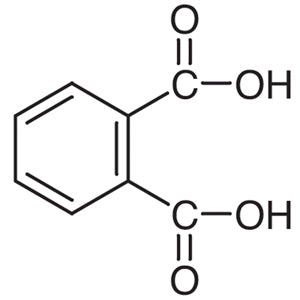
1,3-Adamantanedicarboxylic Acid is a complex organic compound that plays a crucial role in the synthesis of advanced chemical materials. It is widely used in scientific research, particularly in the development of innovative organic-inorganic hybrid materials. In the laboratory, this compound serves as a key raw material for the creation of Metal Organic Frameworks (MOFs), which are highly structured porous materials with unique properties. Due to its chemical versatility, it is an essential component in various material science applications.
The compound's molecular structure allows it to form strong chemical bonds with metals, making it ideal for the synthesis of stable three-dimensional MOF networks. Its ability to interact with metal ions contributes to the formation of highly ordered crystalline structures. Additionally, its solubility in organic solvents facilitates ease of handling and processing in laboratory settings. These properties make it a preferred choice for researchers working on advanced material development.
In Indonesian laboratories, 1,3-Adamantanedicarboxylic Acid is commonly used in chemical material research and environmental technology studies. Its application is relevant to the development of new materials and sustainable technologies. Researchers in Indonesia rely on this compound for its reliability and effectiveness in creating innovative hybrid materials with practical applications.
TCI brochures (PDF)
- Organic Linker Molecules for Metal Organic Frameworks (MOFs) 2026-05-11 · p. 3
- Biomaterials Research Reagents 2025-02-19 · p. 21
- Monomers 2025-05-28 · p. 34
Related TCI products
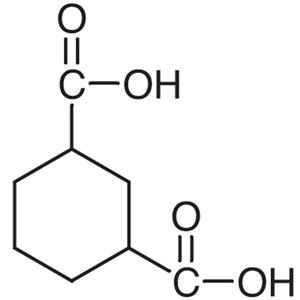
- TCI C2186 3971-31-1 1,3-Cyclohexanedicarboxylic Acid (cis- and trans- mixture)
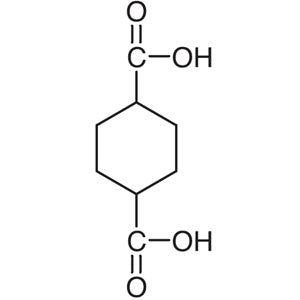
- TCI C0788 1076-97-7 1,4-Cyclohexanedicarboxylic Acid (cis- and trans- mixture)
- TCI A0088 142-45-0 Acetylenedicarboxylic Acid
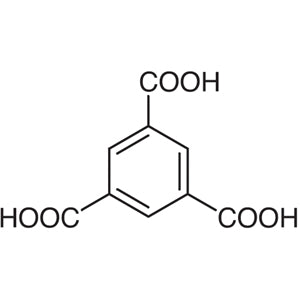
- TCI B0043 554-95-0 1,3,5-Benzenetricarboxylic Acid
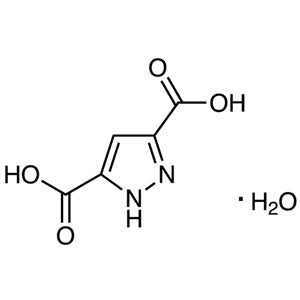
- TCI P1048 303180-11-2 Pyrazole-3,5-dicarboxylic Acid Monohydrate
- TCI P0545 89-01-0 2,3-Pyrazinedicarboxylic Acid
- Metal Organic Frameworks (MOFs) synthesis due to its ability to form strong metal-ligand bonds and contribute to the creation of highly ordered porous structures.
- Organic-inorganic hybrid material development because of its complex molecular structure and compatibility with various inorganic components.
- Environmental technology research for the creation of advanced materials used in pollution control and sustainable chemical processes.
- Chemical synthesis of functional materials as a versatile ligand that can participate in multiple chemical reactions and structural formations.
- Material science experiments requiring a compound with high solubility in organic solvents for ease of processing and integration into various material systems.
| Brand | TCI |
|---|---|
| CAS number | 39269-10-8 |
| Molecular formula | — |
| Purity | — |
| Category | Materials Science > Organic-Inorganic Hybrid Materials > Metal Organic Frameworks (MOF) and Their Raw Materials |
| Pack sizes | Available in various quantities as per standard laboratory supply practices |
| Physical form | Solid |
| Storage | Store in a cool, dry place away from direct sunlight and moisture |
This compound should be stored in a cool, dry environment to maintain its chemical integrity. It is recommended to use airtight containers to prevent exposure to moisture and air, which could affect its stability. Since it is a solid, it should be kept in a secure location away from incompatible substances. Laboratory personnel should handle it with care, using appropriate personal protective equipment when necessary. Proper storage ensures the compound remains effective for its intended applications in material science and environmental research. Always ensure that storage conditions are consistent with standard laboratory safety protocols to avoid any potential degradation or contamination.
—
Product Categories
- Organic-Inorganic Hybrid MaterialsMetal Organic Frameworks (MOF) and Their Raw MaterialsOrganic Linker Molecules [Metal Organic Frameworks (MOFs) Precursors]
- Polymer/Macromolecule ReagentsMetal Organic Frameworks (MOF) and Their Raw MaterialsOrganic Linker Molecules [Metal Organic Frameworks (MOFs) Precursors]
- Polymer/Macromolecule ReagentsMonomersDicarboxylic Acid Monomers
- Biomaterials/Biocompatible Materials Research ReagentsMonomers and Macromonomers [Biomaterials/Biocompatible Materials Research Reagents]Dicarboxylic Acid Monomers [Biomaterials/Biocompatible Materials Research Reagents]
Produk Terkait
-
1,3-CyclohexanedicarboxylicAcid(cis-andtrans-mixture) TCI C2186
Regular price From Rp 1.856.400,00Regular priceRp 1.297.800,00Sale price From Rp 1.856.400,00 -
1,4-CyclohexanedicarboxylicAcid(cis-andtrans-mixture) TCI C0788
Regular price Rp 743.400,00Regular priceRp 519.750,00Sale price Rp 743.400,00 -
AcetylenedicarboxylicAcid TCI A0088
Regular price From Rp 1.220.100,00Regular priceRp 868.350,00Sale price From Rp 1.220.100,00 -
1,3,5-BenzenetricarboxylicAcid TCI B0043
Regular price From Rp 1.035.300,00Regular priceRp 723.450,00Sale price From Rp 1.035.300,00 -
Pyrazole-3,5-dicarboxylicAcidMonohydrate TCI P1048
Regular price From Rp 1.483.650,00Regular priceRp 1.053.150,00Sale price From Rp 1.483.650,00 -
2,3-PyrazinedicarboxylicAcid TCI P0545
Regular price Rp 1.829.100,00Regular priceRp 1.294.650,00Sale price Rp 1.829.100,00 -
PhthalicAcid TCI P0287
Regular price From Rp 505.050,00Regular priceRp 352.800,00Sale price From Rp 505.050,00