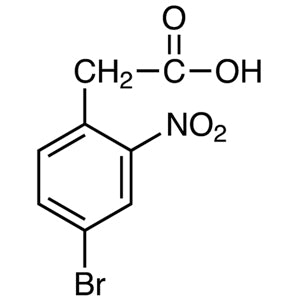
5-Bromo-3-nitrosalicylaldehyde is a chemical compound widely used as a building block in the synthesis of complex organic molecules. It serves as a versatile intermediate in various chemical reactions, enabling the creation of a wide range of functional compounds. This compound is particularly valuable in laboratory settings where the development of new materials, pharmaceuticals, or industrial chemicals is required. Its unique chemical structure, featuring both a nitro group and a bromo substituent, allows for multiple reaction pathways, making it a key component in synthetic chemistry workflows.
The compound's reactivity and stability under controlled conditions make it a preferred choice for organic chemists. Its ability to participate in nucleophilic and electrophilic reactions enhances its utility in diverse synthetic strategies. The high reactivity of 5-Bromo-3-nitrosalicylaldehyde facilitates the formation of new chemical entities with varied functionalities, supporting research in pharmaceutical development and chemical innovation. These properties make it an essential tool in both academic and industrial research environments.
In Indonesian laboratories, 5-Bromo-3-nitrosalicylaldehyde is commonly used by researchers and students for the synthesis of complex organic compounds. It is frequently found in experiments related to drug development, chemical synthesis, and educational purposes. Its availability in the local market supports ongoing research and teaching activities, contributing to the advancement of scientific knowledge in the region.
- Organic synthesis of heterocyclic compounds due to its reactive functional groups and structural versatility.
- Pharmaceutical research for the development of new drugs and medicinal compounds through chemical modification.
- Industrial chemical production as a key intermediate in the synthesis of various chemical products.
- Educational experiments in chemistry courses to demonstrate synthetic pathways and reaction mechanisms.
- Research in advanced chemical processes requiring precise and stable intermediates for complex molecule creation.
| Brand | TCI |
|---|---|
| CAS number | 16634-88-1 |
| Molecular formula | — |
| Purity | — |
| Category | Chemistry > Building Blocks > Non-Heterocyclic Building Blocks |
| Pack sizes | Available in standard laboratory quantities as per supplier specifications |
| Physical form | Solid or crystalline, depending on purity and storage conditions |
| Storage | Store in a cool, dry place away from light and moisture |
5-Bromo-3-nitrosalicylaldehyde should be stored in a cool, dry environment to maintain its chemical stability. It is recommended to keep the compound in a sealed container to prevent exposure to moisture and air, which could affect its reactivity. Suitable storage containers include glass or high-density polyethylene vessels with airtight closures. In laboratory settings, it is important to handle the compound with appropriate personal protective equipment, such as gloves and safety goggles, to ensure safe handling. The compound should be stored away from incompatible substances like strong oxidizers or reducing agents to prevent potential chemical reactions. Regular monitoring of storage conditions is advised to ensure the compound remains in optimal condition for use in research applications.
—
Produk Terkait
-
3-Bromo-5-nitrosalicylaldehyde TCI B3198
Regular price From Rp 1.167.600,00Regular priceRp 815.850,00Sale price From Rp 1.167.600,00 -
5-Chloro-3-nitrosalicylaldehyde TCI C2249
Regular price Rp 1.246.350,00Regular priceRp 871.500,00Sale price Rp 1.246.350,00 -
3-Chloromethyl-5-nitrosalicylaldehyde TCI C1305
Regular price From Rp 5.539.800,00Regular priceRp 3.873.450,00Sale price From Rp 5.539.800,00 -
3-Nitrosalicylaldehyde TCI N0823
Regular price From Rp 477.750,00Regular priceRp 333.900,00Sale price From Rp 477.750,00 -
5-Nitrosalicylaldehyde TCI N0255
Regular price From Rp 928.200,00Regular priceRp 664.650,00Sale price From Rp 928.200,00 -
Salicylaldehyde TCI S0275
Regular price From Rp 584.850,00Regular priceRp 408.450,00Sale price From Rp 584.850,00 -
Salicylaldehyde TCI S0004
Regular price From Rp 689.850,00Regular priceRp 481.950,00Sale price From Rp 689.850,00 -
4-Bromo-2-nitrophenylaceticAcid TCI B5159
Regular price From Rp 1.246.350,00Regular priceRp 887.250,00Sale price From Rp 1.246.350,00