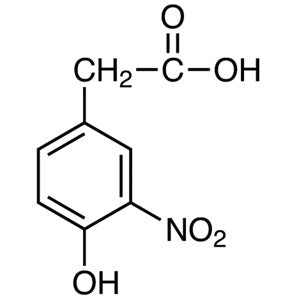
4-Bromo-2-nitrophenylacetic Acid is a chemical compound widely used in organic synthesis reactions within laboratory settings. It serves as a key building block for the creation of more complex molecules, particularly in the field of heterocyclic chemistry. This compound is essential for researchers aiming to develop new pharmaceuticals, industrial chemicals, or materials with specific functional properties. Its versatility makes it a valuable tool in both academic and industrial research environments.
The compound exhibits chemical stability under controlled conditions, which allows for precise manipulation in synthetic processes. However, it is sensitive to high temperatures and UV light, requiring careful handling to maintain its integrity. These properties make it ideal for reactions that demand strict environmental control. Its molecular structure also contributes to high reactivity, enabling efficient conversion into other compounds through various chemical transformations.
In Indonesian laboratories, 4-Bromo-2-nitrophenylacetic Acid is commonly used in research focused on organic synthesis, drug development, and material science. It is a staple in both educational institutions and research centers, where it supports experiments aimed at understanding aromatic reactivity and creating novel chemical structures. Its widespread use highlights its importance in advancing chemical knowledge and practical applications in the region.
Related TCI products
- Synthesis of heterocyclic compounds for pharmaceutical development due to its reactive functional groups and structural versatility.
- Aromatic substitution reactions in organic chemistry where controlled reactivity and molecular structure are critical for desired outcomes.
- Research on new chemical materials in industrial applications benefiting from its ability to form complex molecular frameworks.
- Educational experiments in chemical synthesis to demonstrate the principles of organic reaction mechanisms and molecular manipulation.
- Development of novel drugs through the creation of bioactive molecules that require precise chemical modifications and functional group transformations.
| Brand | TCI |
|---|---|
| CAS number | 6127-11-3 |
| Molecular formula | — |
| Purity | — |
| Category | Chemistry > Building Blocks > Non-Heterocyclic Building Blocks |
| Pack sizes | Available in various quantities as per standard laboratory supply |
| Physical form | Solid, crystalline appearance |
| Storage | Store in a cool, dark place away from heat and direct light |
This compound should be stored in a cool, dark environment to prevent degradation due to temperature fluctuations and UV exposure. It is recommended to use airtight containers made of materials that resist chemical interaction, such as glass or high-density polyethylene. Laboratory personnel should handle the compound with appropriate personal protective equipment, including gloves and safety goggles, to avoid direct contact. Due to its sensitivity, it should be kept away from heat sources and incompatible substances. Regular monitoring of storage conditions ensures the compound remains stable and suitable for use in research applications.
—
Produk Terkait
-
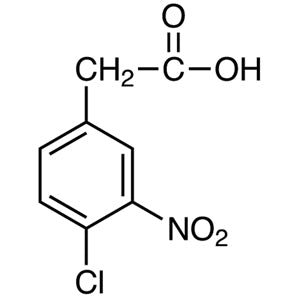
4-Chloro-3-nitrophenylaceticAcid TCI C3347
Regular price Rp 1.881.600,00Regular priceRp 1.331.400,00Sale price Rp 1.881.600,00 -
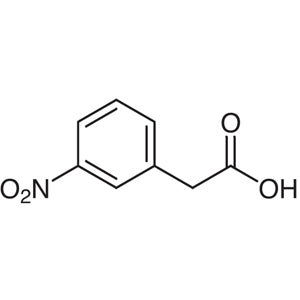
3-NitrophenylaceticAcid TCI N0442
Regular price From Rp 1.246.350,00Regular priceRp 887.250,00Sale price From Rp 1.246.350,00 -
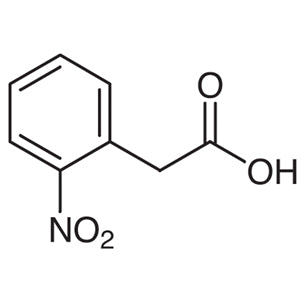
2-NitrophenylaceticAcid TCI N0353
Regular price Rp 1.618.050,00Regular priceRp 1.146.600,00Sale price Rp 1.618.050,00 -
4-NitrophenylaceticAcid TCI N0227
Regular price From Rp 717.150,00Regular priceRp 516.600,00Sale price From Rp 717.150,00 -
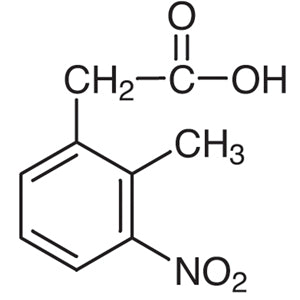
2-Methyl-3-nitrophenylaceticAcid TCI M1817
Regular price Rp 795.900,00Regular priceRp 572.250,00Sale price Rp 795.900,00 -
4-Hydroxy-3-nitrophenylaceticAcid TCI H1362
Regular price From Rp 1.696.800,00Regular priceRp 1.202.250,00Sale price From Rp 1.696.800,00 -
4-Bromo-3-nitrobenzaldehyde TCI B5101
Regular price From Rp 717.150,00Regular priceRp 500.850,00Sale price From Rp 717.150,00 -
3-Bromo-5-nitrobenzaldehyde TCI B4982
Regular price From Rp 637.350,00Regular priceRp 445.200,00Sale price From Rp 637.350,00