TCI M1817 2-Methyl-3-nitrophenylacetic Acid is an arylacetic acid that carries both a methyl group and a nitro group on the benzene ring in a neatly ordered substitution pattern. In the laboratory, this compound serves as a non-heterocyclic building block that provides three working points at once: a carboxylic acid group for amide and ester formation, a nitro group that can be converted into an amine, and a substituted aromatic ring that determines the geometry of the final product. That combination makes it an efficient starting material for constructing more complex molecular frameworks step by step.
The property that makes it a preferred choice is the balance between storage stability and directed reactivity. As a carboxylic acid solid, this compound is relatively easy to weigh out, purify by recrystallisation, and store without the elaborate special handling demanded by highly air-sensitive reagents. The carboxyl group can be activated using common coupling reagents to form amide bonds, while reduction of the nitro group yields an aromatic amine that frequently closes the ring intramolecularly to give lactam or nitrogen-containing heterocyclic systems. The electron-withdrawing character of the nitro substituent also modulates the reactivity of the aromatic ring in a predictable way.
In Indonesian laboratories, this building block is typically used in university and institutional organic synthesis groups, in research units developing candidate active compounds, and in analytical work that requires a well-defined reference material. Because it is supplied in laboratory-scale packaging, it suits multi-step synthesis planning, method optimisation trials, and teaching activities in advanced organic chemistry practicals, where a single reagent is expected to serve several different reaction routes.
Related TCI products
- Amide bond formation: the carboxylic acid group can be activated with standard coupling reagents, making this compound a direct acyl donor for building amide linkages in multi-step synthetic sequences.
- Ester synthesis and derivatisation: the free carboxyl group readily undergoes esterification, allowing researchers to prepare protected intermediates or modify solubility before subsequent transformation steps are carried out.
- Nitro group reduction to aromatic amines: the ring-bound nitro substituent can be reduced to an aniline-type amine, opening access to a broad family of downstream nitrogen-containing derivatives.
- Intramolecular cyclisation to lactam frameworks: after nitro reduction, the resulting amine often closes onto the carboxyl group, giving nitrogen heterocyclic and lactam scaffolds in a controlled manner.
- Reference material for chromatographic and spectroscopic method development: its defined substitution pattern makes it a consistent comparison compound when analytical procedures are being validated or optimised in the laboratory.
| Brand | TCI |
|---|---|
| CAS number | 23876-15-5 |
| Molecular formula | — |
| Purity | — |
| Category | Chemistry > Building Blocks > Non-Heterocyclic Building Blocks |
| Pack sizes | supplied in laboratory-scale research packaging; available sizes on request |
| Physical form | solid carboxylic acid |
| Storage | keep in a tightly closed original container, protected from moisture and direct light |
Store this compound in its tightly closed original container in a cool, dry, well-ventilated chemical store, away from direct sunlight, heat sources, and incompatible materials such as strong bases and strong oxidising agents. Amber glass or the manufacturer's original packaging is suitable for keeping the solid protected from light and moisture. Handle the material inside a fume hood while wearing safety goggles, nitrile gloves, and a laboratory coat, and avoid generating dust when weighing. Close the container immediately after use, label any transferred portions clearly, and consult the manufacturer's safety data sheet before first use and before disposal of residues or contaminated consumables.
—
Produk Terkait
-
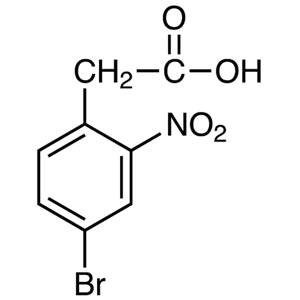
4-Bromo-2-nitrophenylaceticAcid TCI B5159
Regular price From Rp 1.193.850,00Regular price -
3-NitrophenylaceticAcid TCI N0442
Regular price From Rp 1.193.850,00Regular price -
2-NitrophenylaceticAcid TCI N0353
Regular price Rp 1.565.550,00Regular price -
4-NitrophenylaceticAcid TCI N0227
Regular price From Rp 664.650,00Regular price -
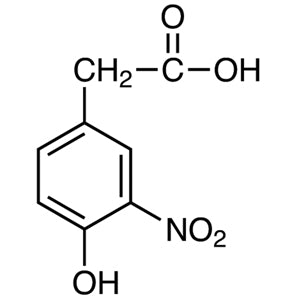
4-Hydroxy-3-nitrophenylaceticAcid TCI H1362
Regular price From Rp 1.644.300,00Regular price -
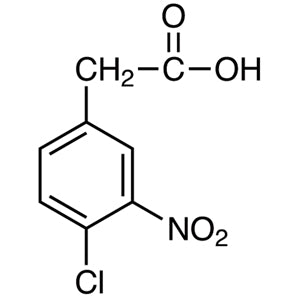
4-Chloro-3-nitrophenylaceticAcid TCI C3347
Regular price Rp 1.829.100,00Regular price -
5-Fluoro-2-nitrophenylaceticAcid TCI F1140
Regular price From Rp 1.193.850,00Regular price -
2,3-Difluoro-6-nitrophenylaceticAcid TCI D4583
Regular price Rp 848.400,00Regular price