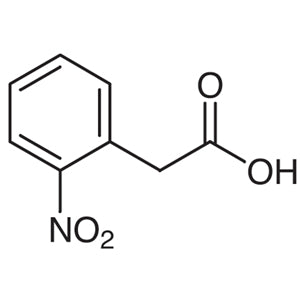
2-Nitrophenylacetic Acid (2-NPAA) is a chemical compound widely used in various chemical reactions, particularly in the synthesis of complex organic compounds. As a key building block in chemical research, it serves as a versatile reagent that can participate in multiple reaction pathways. In the laboratory, it is commonly employed to construct more intricate molecular structures through reactions with various reagents. Its role is essential in the development of new materials, pharmaceuticals, and advanced chemical products.
The compound is known for its stable chemical structure and polar nature, which allows it to dissolve easily in organic solvents such as ethyl acetate or acetone. These properties make it suitable for reactions requiring high reactivity and solubility. Additionally, its predictable chemical behavior enables researchers to control and optimize reaction conditions effectively. This reliability is crucial in maintaining the consistency and success of chemical experiments.
In Indonesian laboratories, 2-Nitrophenylacetic Acid is frequently used by chemists, pharmacologists, and materials scientists. Its availability, quality, and broad range of applications make it a preferred choice for both academic and industrial research. It plays a significant role in advancing scientific studies and innovation within the chemical and pharmaceutical sectors in Indonesia.
Related TCI products
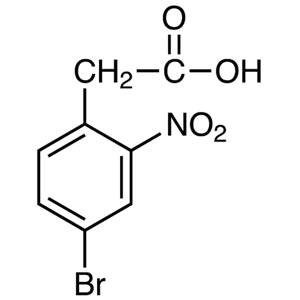
- TCI B5159 6127-11-3 4-Bromo-2-nitrophenylacetic Acid
- TCI N0442 1877-73-2 3-Nitrophenylacetic Acid
- TCI N0227 104-03-0 4-Nitrophenylacetic Acid
- TCI M1817 23876-15-5 2-Methyl-3-nitrophenylacetic Acid
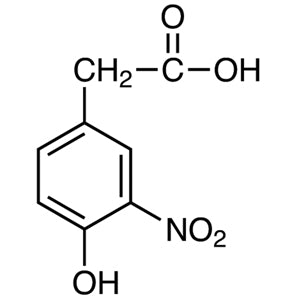
- TCI H1362 10463-20-4 4-Hydroxy-3-nitrophenylacetic Acid
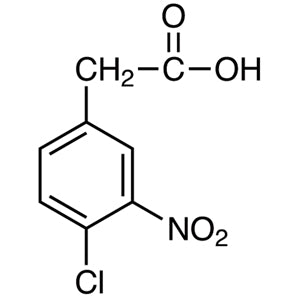
- TCI C3347 37777-68-7 4-Chloro-3-nitrophenylacetic Acid
- Organic synthesis applications benefit from 2-Nitrophenylacetic Acid due to its reactivity and ability to form complex molecular structures.
- Pharmaceutical research utilizes this compound for the development of new drugs and therapeutic agents through synthetic pathways.
- Material science experiments rely on 2-Nitrophenylacetic Acid to create novel compounds with specific physical and chemical properties.
- Chemical education and training programs use it as a standard reagent for teaching reaction mechanisms and synthetic techniques.
- Environmental studies incorporate it to analyze and synthesize compounds for assessing chemical behavior in different environments.
| Brand | TCI |
|---|---|
| CAS number | 3740-52-1 |
| Molecular formula | — |
| Purity | — |
| Category | Chemistry > Building Blocks > Non-Heterocyclic Building Blocks |
| Pack sizes | Available in various quantities as per supplier specifications |
| Physical form | Solid or crystalline, depending on the batch |
| Storage | Store in a cool, dry place away from direct sunlight and moisture |
2-Nitrophenylacetic Acid should be stored in a cool, dry place, away from direct sunlight and moisture to maintain its chemical stability. It is recommended to use airtight containers made of glass or high-density polyethylene to prevent contamination and degradation. Due to its polar nature, it is important to handle it with care to avoid exposure to skin or inhalation. Proper ventilation should be maintained in the laboratory when working with this compound. Always follow standard laboratory safety protocols, including the use of personal protective equipment such as gloves and safety goggles. Regular monitoring of storage conditions ensures the compound remains in optimal condition for use in research applications.
—
Produk Terkait
-
4-Bromo-2-nitrophenylaceticAcid TCI B5159
Regular price From Rp 1.193.850,00Regular price -
3-NitrophenylaceticAcid TCI N0442
Regular price From Rp 1.193.850,00Regular price -
4-NitrophenylaceticAcid TCI N0227
Regular price From Rp 664.650,00Regular price -
2-Methyl-3-nitrophenylaceticAcid TCI M1817
Regular price Rp 743.400,00Regular price -
4-Hydroxy-3-nitrophenylaceticAcid TCI H1362
Regular price From Rp 1.644.300,00Regular price -
4-Chloro-3-nitrophenylaceticAcid TCI C3347
Regular price Rp 1.829.100,00Regular price -
5-Fluoro-2-nitrophenylaceticAcid TCI F1140
Regular price From Rp 1.193.850,00Regular price -
2,3-Difluoro-6-nitrophenylaceticAcid TCI D4583
Regular price Rp 848.400,00Regular price