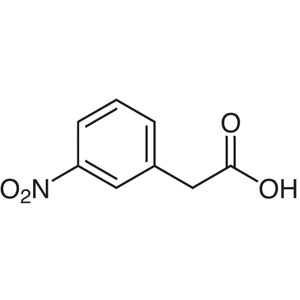
3-Nitrophenylacetic Acid (3-NPPA) is a chemical compound widely used as a foundational building block in the synthesis of complex organic compounds. This versatile reagent plays a crucial role in various chemical reactions, particularly in the formation of heterocyclic and aromatic compounds. Its structural stability and moderate reactivity make it an essential component in the development of pharmaceuticals, industrial chemicals, and advanced materials. As a key intermediate in organic synthesis, 3-NPPA supports a wide range of chemical transformations, including substitution, reduction, and nucleophilic reactions.
The chemical properties of 3-Nitrophenylacetic Acid, such as its reactivity and functional group versatility, make it a preferred choice for researchers seeking controlled chemical reactions. Its ability to participate in multiple reaction pathways allows for the synthesis of diverse molecular structures. This adaptability is especially valuable in laboratory settings where precise control over chemical processes is essential. The compound's predictable behavior under various reaction conditions ensures reliable outcomes, making it a trusted tool for both academic and industrial research.
In Indonesian laboratories, 3-Nitrophenylacetic Acid is extensively used in organic chemistry research, particularly in universities and research institutions focused on the synthesis of new compounds. It is commonly found in projects related to drug development, where its reactivity and structural features support the creation of novel pharmaceutical molecules. Its widespread application in chemical research highlights its importance in advancing scientific innovation in Indonesia.
Related TCI products
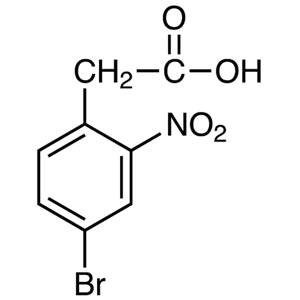
- TCI B5159 6127-11-3 4-Bromo-2-nitrophenylacetic Acid
- TCI N0353 3740-52-1 2-Nitrophenylacetic Acid
- TCI N0227 104-03-0 4-Nitrophenylacetic Acid
- TCI M1817 23876-15-5 2-Methyl-3-nitrophenylacetic Acid
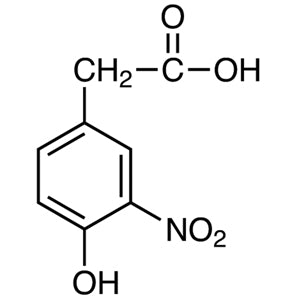
- TCI H1362 10463-20-4 4-Hydroxy-3-nitrophenylacetic Acid
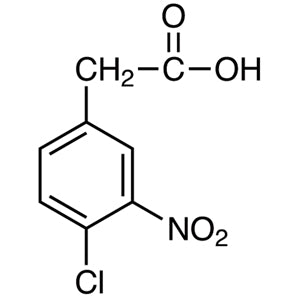
- TCI C3347 37777-68-7 4-Chloro-3-nitrophenylacetic Acid
- Organic synthesis of heterocyclic compounds due to its reactive functional groups and structural versatility.
- Pharmaceutical research for the development of new drug molecules through controlled chemical transformations.
- Industrial chemical production as a building block for the creation of complex organic materials.
- Academic research in universities focusing on the synthesis of novel compounds and molecular structures.
- Material science studies for the development of advanced polymers and functional materials.
| Brand | TCI |
|---|---|
| CAS number | 1877-73-2 |
| Molecular formula | — |
| Purity | — |
| Category | Chemistry > Building Blocks > Non-Heterocyclic Building Blocks |
| Pack sizes | Available in various quantities to meet laboratory needs |
| Physical form | Solid (crystalline or powder, depending on supplier) |
| Storage | Store in a cool, dry place away from light and moisture |
3-Nitrophenylacetic Acid should be stored in a cool, dry place away from direct light and moisture to maintain its chemical integrity. It is recommended to use airtight containers made of glass or polyethylene to prevent contamination and degradation. Due to its reactivity, it should be handled in a well-ventilated area with appropriate personal protective equipment. Avoid contact with incompatible substances such as strong oxidizers or bases. Always follow standard laboratory safety protocols when working with this compound to ensure safe and effective use.
—
Produk Terkait
-
4-Bromo-2-nitrophenylaceticAcid TCI B5159
Regular price From Rp 1.193.850,00Regular price -
2-NitrophenylaceticAcid TCI N0353
Regular price Rp 1.565.550,00Regular price -
4-NitrophenylaceticAcid TCI N0227
Regular price From Rp 664.650,00Regular price -
2-Methyl-3-nitrophenylaceticAcid TCI M1817
Regular price Rp 743.400,00Regular price -
4-Hydroxy-3-nitrophenylaceticAcid TCI H1362
Regular price From Rp 1.644.300,00Regular price -
4-Chloro-3-nitrophenylaceticAcid TCI C3347
Regular price Rp 1.829.100,00Regular price -
5-Fluoro-2-nitrophenylaceticAcid TCI F1140
Regular price From Rp 1.193.850,00Regular price -
2,3-Difluoro-6-nitrophenylaceticAcid TCI D4583
Regular price Rp 848.400,00Regular price