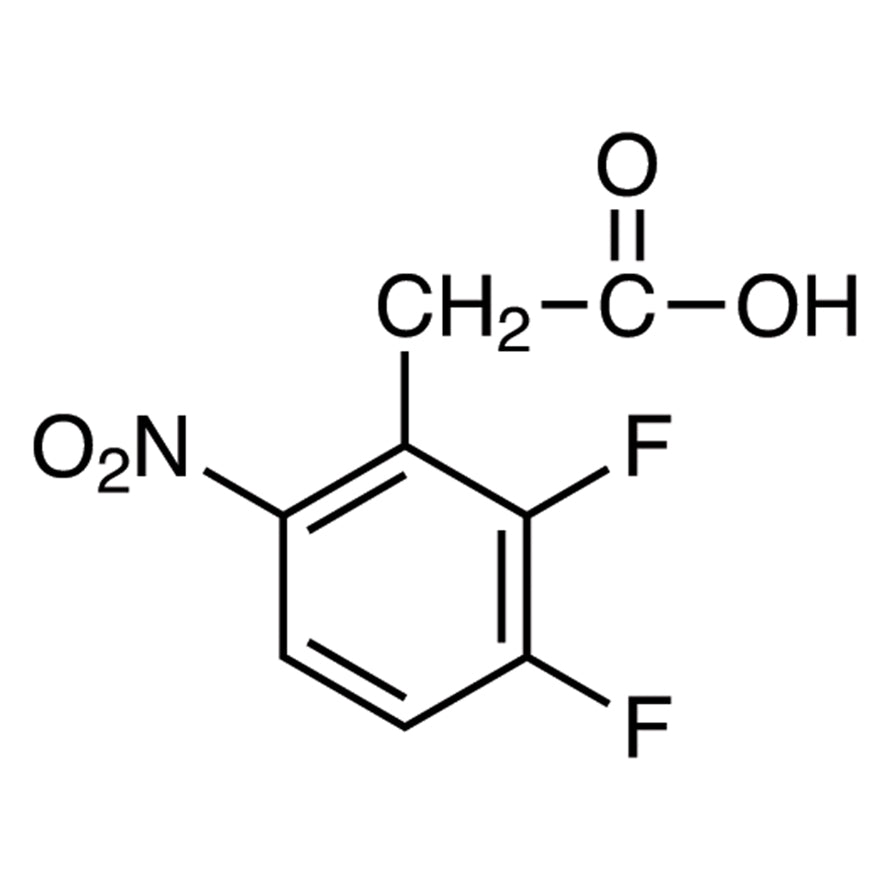
2,3-Difluoro-6-nitrophenylacetic Acid is a chemical compound widely used in organic synthesis reactions. It serves as a key building block in the development of complex molecules, making it an essential material for chemists working in research and development. This compound is commonly found in laboratories where synthetic pathways are explored, particularly in the creation of pharmaceuticals, materials, and specialty chemicals. Its structural complexity allows for a range of chemical transformations, contributing to its versatility in various synthetic strategies.
The presence of fluorine and nitro groups in its molecular structure provides unique chemical properties, such as enhanced stability and reactivity. These functional groups influence the compound’s behavior in different reaction conditions, making it a preferred choice for chemists seeking controlled and predictable outcomes. The combination of two fluorine atoms at positions 2 and 3, along with a nitro group at position 6, gives it distinct reactivity profiles that are valuable in targeted synthesis. This makes it a go-to compound for researchers aiming to design molecules with specific functional characteristics.
In Indonesian laboratories, 2,3-Difluoro-6-nitrophenylacetic Acid is utilized in scientific research and product development. It is commonly employed in academic and industrial settings where organic synthesis is a core activity. Institutions and research centers rely on this compound to conduct experiments that lead to the discovery of new materials and compounds. Its role in advancing chemical innovation is critical, especially in fields such as pharmaceutical development and material science.
TCI brochures (PDF)
- Fluorination Reagents, Fluorinated Building Blocks 2026-03-18 · p. 29
Related TCI products
- TCI F1140 29640-98-0 5-Fluoro-2-nitrophenylacetic Acid
- TCI B5057 115467-07-7 5-Bromo-1,3-difluoro-2-(trifluoromethoxy)benzene
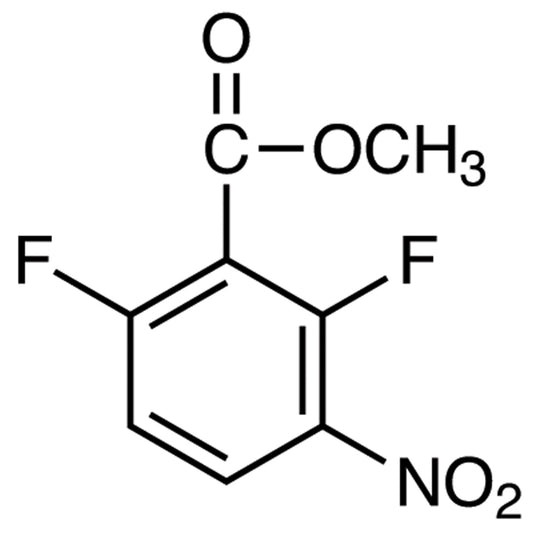
- TCI M2749 84832-01-9 Methyl 2,6-Difluoro-3-nitrobenzoate
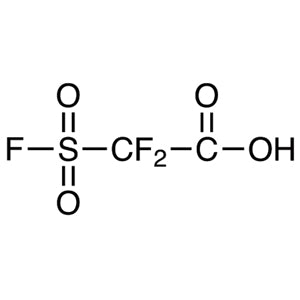
- TCI F0500 1717-59-5 2,2-Difluoro-2-(fluorosulfonyl)acetic Acid
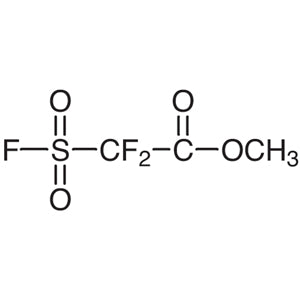
- TCI F0311 680-15-9 Methyl Difluoro(fluorosulfonyl)acetate
- TCI E0547 141546-97-6 Ethyl 3-Ethoxy-2,2-difluoro-3-hydroxypropionate
- Organic synthesis is a primary application for this compound due to its reactivity and structural versatility, allowing chemists to create complex molecules with specific functional groups.
- Pharmaceutical research benefits from its use in the development of new drug candidates, as its fluorinated and nitro groups can influence biological activity and molecular interactions.
- Material science applications leverage its chemical stability and reactivity to design advanced materials with tailored properties for industrial use.
- Academic research institutions use it to explore synthetic pathways and test new reaction conditions, supporting scientific discovery and innovation.
- Industrial chemical production incorporates it as a building block for the synthesis of specialty chemicals, enhancing product development and process optimization.
| Brand | TCI |
|---|---|
| CAS number | 141428-47-9 |
| Molecular formula | — |
| Purity | — |
| Category | Chemistry > Building Blocks > Fluorinated Building Blocks |
| Pack sizes | — |
| Physical form | — |
| Storage | Store in a cool, dry place away from light and moisture |
This compound should be stored in a cool, dry environment, away from direct sunlight and sources of moisture. It is recommended to keep it in a sealed container to prevent exposure to air and humidity, which could affect its chemical stability. Due to its reactivity, it should be handled in a well-ventilated laboratory setting, with appropriate personal protective equipment such as gloves and safety goggles. Avoid contact with incompatible substances, and ensure proper waste disposal procedures are followed. Regular monitoring of storage conditions is advised to maintain the integrity of the compound during its shelf life.
—
Produk Terkait
-
5-Fluoro-2-nitrophenylaceticAcid TCI F1140
Regular price From Rp 1.193.850,00Regular price -
5-Bromo-1,3-difluoro-2-(trifluoromethoxy)benzene TCI B5057
Regular price From Rp 1.087.800,00Regular price -
Methyl2,6-Difluoro-3-nitrobenzoate TCI M2749
Regular price From Rp 557.550,00Regular price -
2,2-Difluoro-2-(fluorosulfonyl)aceticAcid TCI F0500
Regular price Rp 1.856.400,00Regular price -
MethylDifluoro(fluorosulfonyl)acetate TCI F0311
Regular price From Rp 1.273.650,00Regular price -
Ethyl3-Ethoxy-2,2-difluoro-3-hydroxypropionate TCI E0547
Regular price Rp 6.360.900,00Regular price -
4,4-Difluoro-1-isobutylcyclohexan-1-amineHydrochloride TCI D6376
Regular price Rp 5.910.450,00Regular price -
(5,6-Difluoro-3-oxo-2,3-dihydro-1H-inden-1-ylidene)malononitrile TCI D5815
Regular price Rp 9.539.250,00Regular price