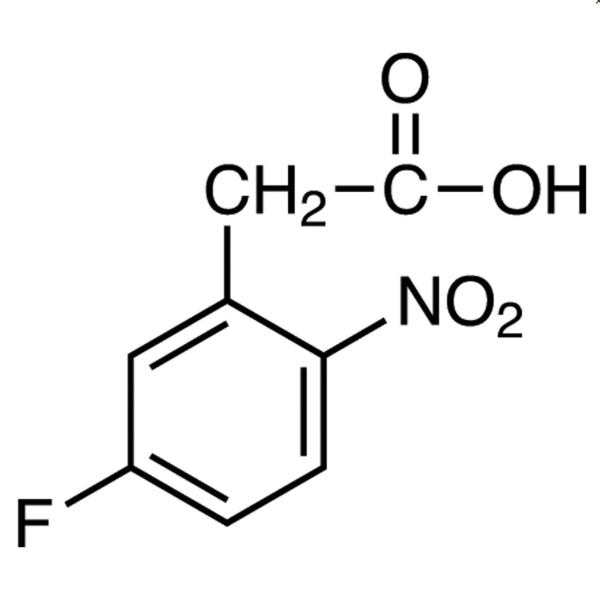
5-Fluoro-2-nitrophenylacetic Acid is a chemical compound widely utilized in synthetic reactions within laboratory settings. As a fluorinated building block, it serves as a fundamental component in the synthesis of complex organic molecules. This compound is particularly valued for its ability to introduce both fluorine and nitro groups into molecular structures, enabling the creation of compounds with unique electronic properties. Its versatility makes it an essential tool for chemists engaged in research and development.
The compound's molecular structure provides stability and controlled reactivity, making it ideal for targeted chemical reactions. The presence of fluorine and nitro groups imparts distinct electronic characteristics, which enhance the specificity of chemical interactions. These properties allow for precise control over reaction pathways, making it a preferred choice in synthetic chemistry. Its solubility in organic solvents further simplifies its handling and application in laboratory procedures.
In Indonesian laboratories, 5-Fluoro-2-nitrophenylacetic Acid is commonly used in organic synthesis research. It is a key reagent in the development of new compounds, especially in academic and industrial research settings. Its availability and chemical properties make it a reliable material for chemists working on complex molecular structures. Its role in advancing chemical research is significant, supporting both educational and applied scientific endeavors.
Related TCI products
- TCI D4583 141428-47-9 2,3-Difluoro-6-nitrophenylacetic Acid
- TCI B5213 537050-14-9 2-Bromo-4'-fluoro-3'-(trifluoromethyl)acetophenone
- TCI B5074 749927-69-3 4-Bromo-2-fluoro-N-methylbenzamide
- TCI B4872 10472-88-5 2-Bromo-4-fluoro-6-nitroaniline
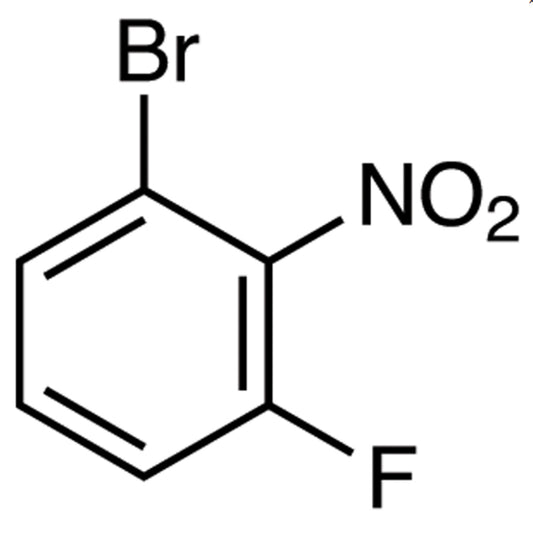
- TCI B4842 886762-70-5 1-Bromo-3-fluoro-2-nitrobenzene
- TCI B4237 362670-07-3 N2-(tert-Butoxycarbonyl)-4-fluoro-1,2-phenylenediamine
- Organic synthesis research benefits from this compound due to its ability to introduce fluorine and nitro groups, enhancing molecular diversity and reactivity.
- Drug development projects utilize it for the synthesis of pharmaceutical intermediates, leveraging its unique electronic properties for targeted molecular modifications.
- Academic laboratories incorporate it into curriculum-based experiments to teach students about fluorinated building blocks and their synthetic applications.
- Analytical chemistry studies use it as a standard reference for evaluating reaction mechanisms and spectroscopic properties in complex systems.
- Industrial research and development teams employ it to create novel compounds with tailored functional groups for specialized applications.
| Brand | TCI |
|---|---|
| CAS number | 29640-98-0 |
| Molecular formula | — |
| Purity | — |
| Category | Chemistry > Building Blocks > Fluorinated Building Blocks |
| Pack sizes | Available in standard laboratory quantities |
| Physical form | Solid or crystalline, depending on supplier packaging |
| Storage | Store in a cool, dry place away from moisture and direct sunlight |
This compound should be stored in a cool, dry environment to maintain its chemical integrity and prevent degradation. It is recommended to use airtight containers to protect it from moisture and contaminants. Due to its chemical nature, it should be handled in a well-ventilated area, ideally with appropriate personal protective equipment such as gloves and safety goggles. Avoid exposure to heat or direct sunlight to ensure stability. Proper labeling and storage conditions are essential to maintain its effectiveness and safety in laboratory settings. Always follow standard chemical handling procedures to minimize risks associated with its use.
—
Produk Terkait
-
2,3-Difluoro-6-nitrophenylaceticAcid TCI D4583
Regular price Rp 848.400,00Regular price -
2-Bromo-4'-fluoro-3'-(trifluoromethyl)acetophenone TCI B5213
Regular price From Rp 505.050,00Regular price -
4-Bromo-2-fluoro-N-methylbenzamide TCI B5074
Regular price From Rp 1.035.300,00Regular price -
2-Bromo-4-fluoro-6-nitroaniline TCI B4872
Regular price Rp 1.140.300,00Regular price -
1-Bromo-3-fluoro-2-nitrobenzene TCI B4842
Regular price From Rp 1.273.650,00Regular price -
N2-(tert-Butoxycarbonyl)-4-fluoro-1,2-phenylenediamine TCI B4237
Regular price From Rp 980.700,00Regular price -
N1-(tert-Butoxycarbonyl)-4-fluoro-1,2-phenylenediamine TCI B4236
Regular price From Rp 1.326.150,00Regular price -
1-Bromo-3-fluoro-4-(trifluoromethoxy)benzene TCI B3808
Regular price From Rp 689.850,00Regular price