


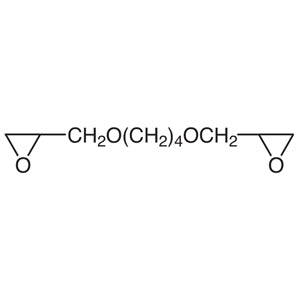
1,4-Butanediol Diglycidyl Ether is a chemical compound widely used in laboratory settings as a key building block for the synthesis of heterocyclic compounds. This reagent plays a crucial role in organic chemistry by enabling the formation of epoxide linkages, which are essential in the development of complex molecular structures. Its unique structure, consisting of two epoxide units connected by a butanediol chain, makes it highly versatile in various synthetic pathways. In the laboratory, it is a fundamental component for researchers aiming to create polymers, pharmaceuticals, and electronic materials.
The compound’s chemical properties, including its reactivity towards acids and bases, make it a preferred choice for applications requiring controlled chemical reactions. Its ability to form stable epoxide bonds under specific conditions allows for precise molecular modifications. Additionally, its liquid form facilitates easy handling and integration into diverse reaction systems, enhancing its usability in both small-scale and industrial settings. This reagent is particularly valued for its reliability and consistency in producing high-quality chemical products.
In Indonesian laboratories, 1,4-Butanediol Diglycidyl Ether is extensively used in organic chemistry research, especially in the synthesis of heterocyclic compounds and the development of new chemical materials. It is a staple in academic and research institutions, supporting experiments that require cross-linking or structural modifications. Its availability and chemical versatility make it an essential tool for advancing chemical innovation in the region.
TCI brochures (PDF)
- Epoxide Monomers 2025-09-19 · p. 2
- Monomers 2025-05-28 · p. 20
Related TCI products
- TCI N0448 17557-23-2 Neopentyl Glycol Diglycidyl Ether
- TCI D5576 21544-03-6 Diglycidyl 4-Cyclohexene-1,2-dicarboxylate
- TCI C1434 5493-45-8 Diglycidyl 1,2-Cyclohexanedicarboxylate
- TCI G0445 18180-30-8 Glycidyl Propargyl Ether
- TCI P3184 26403-72-5 Polyethylene Glycol Diglycidyl Ether (n=approx 4)
- TCI P3183 26403-72-5 Polyethylene Glycol Diglycidyl Ether (n=approx. 13)
- Organic synthesis of heterocyclic compounds due to its ability to form epoxide linkages and enable structural modifications.
- Development of polymers and advanced materials through controlled chemical reactions and cross-linking capabilities.
- Pharmaceutical research for the creation of complex molecular structures and drug compounds requiring epoxide functionality.
- Electronic material synthesis where stable and reactive epoxide groups are essential for device fabrication.
- Chemical modification of existing molecules to enhance properties or introduce new functionalities in research projects.
| Brand | TCI |
|---|---|
| CAS number | 2425-79-8 |
| Molecular formula | — |
| Purity | — |
| Category | Chemistry > Building Blocks > Heterocyclic Building Blocks |
| Pack sizes | Available in various quantities as per standard laboratory supply |
| Physical form | Liquid |
| Storage | Store in a cool, dry place away from direct sunlight and incompatible materials |
This compound should be stored in a cool, dry environment, away from direct sunlight and sources of heat. It is recommended to use airtight containers made of materials compatible with epoxide compounds, such as glass or high-density polyethylene. Due to its reactivity with acids and bases, it should be kept separate from such substances to prevent unintended chemical reactions. In laboratory settings, proper personal protective equipment, including gloves and safety goggles, should always be worn when handling this material. Regular monitoring of storage conditions ensures the stability and safety of the compound, making it suitable for use in both research and industrial applications.
—
Product Categories
- Building BlocksHeterocyclic Building BlocksNon-Halogenated Heterocyclic Building Blocks
- Chemical BiologyLinkers and CrosslinkersHomobifunctional Cross-Linkers
- Chemical BiologyBioconjugationHomobifunctional Cross-Linkers
- Pharmaceutical Development and Drug Discovery Research ReagentsLinkers and CrosslinkersHomobifunctional Cross-Linkers
Produk Terkait
-
NeopentylGlycolDiglycidylEther TCI N0448
Regular price From Rp 955.500,00Regular priceRp 667.800,00Sale price From Rp 955.500,00 -
Diglycidyl4-Cyclohexene-1,2-dicarboxylate TCI D5576
Regular price Rp 848.400,00Regular priceRp 593.250,00Sale price Rp 848.400,00 -
Diglycidyl1,2-Cyclohexanedicarboxylate TCI C1434
Regular price From Rp 1.140.300,00Regular priceRp 796.950,00Sale price From Rp 1.140.300,00 -
GlycidylPropargylEther TCI G0445
Regular price From Rp 980.700,00Regular priceRp 685.650,00Sale price From Rp 980.700,00 -
PolyethyleneGlycolDiglycidylEther(n=approx4) TCI P3184
Regular price From Rp 1.246.350,00Regular priceRp 887.250,00Sale price From Rp 1.246.350,00 -
PolyethyleneGlycolDiglycidylEther(n=approx.13) TCI P3183
Regular price From Rp 1.087.800,00Regular priceRp 760.200,00Sale price From Rp 1.087.800,00 -
PolyethyleneGlycolDiglycidylEther(n=approx.9) TCI P3180
Regular price From Rp 1.113.000,00Regular priceRp 793.800,00Sale price From Rp 1.113.000,00 -
PolyethyleneGlycolDiglycidylEther(n=approx.22) TCI P2928
Regular price Rp 743.400,00Regular priceRp 519.750,00Sale price Rp 743.400,00


