N,N-Bis(2-cyanoethyl)formamide is a chemical compound widely used in organic synthesis reactions. It serves as a key building block in the creation of complex molecules and is commonly found in chemical laboratories as a raw material for various synthetic processes. This compound plays a crucial role in the development of heterocyclic structures and molecules with specific configurations, acting as an essential component in forming chemical bonds. Its stable molecular structure and controlled reactivity make it a preferred choice for researchers seeking reliable and consistent results in their experiments.
The compound's ability to participate in substitution and condensation reactions with a variety of other chemicals enhances its versatility in synthetic applications. Its predictable behavior under different reaction conditions allows for precise control over the synthesis process, making it valuable for both academic and industrial research. The chemical's reactivity and stability ensure that it can be used in a wide range of experimental setups, contributing to the efficiency and success of organic synthesis projects.
In Indonesian laboratories, N,N-Bis(2-cyanoethyl)formamide is frequently utilized in scientific research, particularly in the fields of organic chemistry and material science. Researchers rely on this compound to develop new substances or improve existing synthesis methods. Its availability in the local market makes it a practical and accessible choice for laboratories requiring high-quality chemical building blocks.
- Organic synthesis reactions benefit from this compound's ability to participate in substitution and condensation reactions, enabling the formation of complex molecular structures.
- It is ideal for the synthesis of heterocyclic compounds due to its stable structure and controlled reactivity, which facilitates the formation of specific chemical bonds.
- In material science research, it is used to create functional materials with tailored properties by serving as a building block in polymer synthesis.
- Its role in developing new chemical compounds makes it a valuable tool for researchers working on drug discovery and chemical innovation.
- It supports the refinement of existing synthesis processes by providing a reliable and consistent reagent for controlled chemical transformations.
| Brand | TCI |
|---|---|
| CAS number | 3445-84-9 |
| Molecular formula | — |
| Purity | — |
| Category | Chemistry > Building Blocks > Non-Heterocyclic Building Blocks |
| Pack sizes | Available in standard laboratory quantities |
| Physical form | Solid or liquid, depending on the specific product variant |
| Storage | Store in a cool, dry place away from direct sunlight and moisture |
This compound should be stored in a cool, dry environment to maintain its chemical stability and prevent degradation. It is recommended to use airtight containers to protect it from moisture and air exposure. Proper labeling of containers is essential for safe handling and to avoid confusion with other chemicals. In a laboratory setting, it should be kept away from incompatible substances such as strong bases or reducing agents. Always ensure that storage areas are well-ventilated to minimize the risk of inhalation of vapors. Regular inspection of storage conditions and containers is advised to maintain the integrity and safety of the compound.
—
Produk Terkait
-
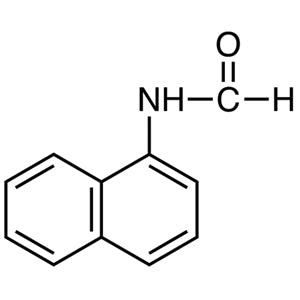
N-(1-Naphthyl)formamide TCI N1001
Regular price From Rp 2.227.050,00Regular priceRp 1.572.900,00Sale price From Rp 2.227.050,00 -
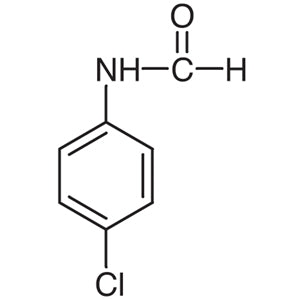
N-(4-Chlorophenyl)formamide TCI C1945
Regular price Rp 2.994.600,00Regular priceRp 2.109.450,00Sale price Rp 2.994.600,00 -
3-(1-Cyanoethyl)benzoicAcid TCI C2730
Regular price From Rp 795.900,00Regular priceRp 572.250,00Sale price From Rp 795.900,00 -
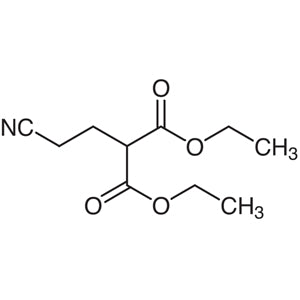
Diethyl(2-Cyanoethyl)malonate TCI C1153
Regular price Rp 1.618.050,00Regular priceRp 1.146.600,00Sale price Rp 1.618.050,00 -
Tris(2-cyanoethyl)amine TCI T1577
Regular price From Rp 2.914.800,00Regular priceRp 2.053.800,00Sale price From Rp 2.914.800,00 -
TetracyanoethyleneOxide TCI T1439
Regular price Rp 3.735.900,00Regular priceRp 2.628.150,00Sale price Rp 3.735.900,00 -
N-(2-Cyanoethyl)-N-ethyl-m-toluidine TCI C2877
Regular price From Rp 980.700,00Regular priceRp 701.400,00Sale price From Rp 980.700,00 -
Barium2-CyanoethylphosphateHydrate[PhosphorylatingAgent] TCI C0978
Regular price From Rp 1.696.800,00Regular priceRp 1.202.250,00Sale price From Rp 1.696.800,00