

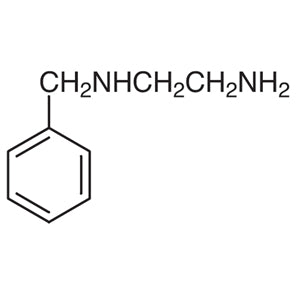
N-Benzylethylenediamine (NBEA) is a chemical compound widely used in synthetic reactions to construct complex molecular structures. As a fundamental building block in organic chemistry, it plays a crucial role in forming nitrogen and carbon bonds essential for the production of pharmaceuticals, industrial chemicals, and precursors for heterocyclic compounds. In laboratory settings, NBEA is frequently employed as a reagent in substitution, condensation, and catalytic reactions. Its chemical stability under specific conditions makes it a reliable component in controlled synthetic processes.
The unique properties of NBEA, including its weak basic nature and reactivity towards various environmental conditions, make it a preferred choice for specific chemical applications. This characteristic allows it to participate in reactions requiring pH control or tailored reactivity. Its ability to interact with acids and other reagents enhances its versatility in synthetic pathways. These properties are particularly valuable in research that demands precise chemical behavior and controlled reaction environments.
In Indonesian laboratories, NBEA is extensively used in organic chemistry research, especially in pharmaceutical and material science applications. It is commonly applied in the synthesis of bioactive compounds and the development of chemical materials with specific functional properties. Its role in advancing scientific research and innovation makes it an essential reagent for many laboratory projects.
Related TCI products
- TCI D1807 140-28-3 N,N'-Dibenzylethylenediamine
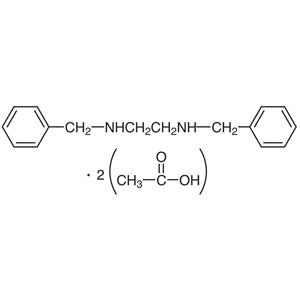
- TCI D0280 122-75-8 N,N'-Dibenzylethylenediamine Diacetate
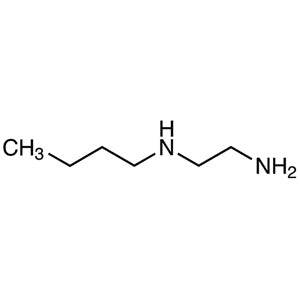
- TCI B1491 19522-69-1 N-Butylethylenediamine
- TCI E0294 110-72-5 N-Ethylethylenediamine
- TCI D2638 4062-60-6 N,N'-Di-tert-butylethylenediamine
- TCI T2515 110-18-9 N,N,N',N'-Tetramethylethylenediamine [for Electrophoresis]
- Organic synthesis for the creation of complex molecules and pharmaceutical intermediates due to its ability to form nitrogen and carbon bonds.
- Catalytic reactions where controlled reactivity and pH adjustment are required, leveraging its weak basic nature.
- Condensation reactions in the development of heterocyclic compounds, as it serves as a key building block in such processes.
- Pharmaceutical research for the synthesis of bioactive compounds, utilizing its reactivity with various reagents.
- Material science applications in the production of functional chemical materials with specific structural properties.
| Brand | TCI |
|---|---|
| CAS number | 4152-09-4 |
| Molecular formula | — |
| Purity | — |
| Category | Chemistry > Building Blocks > Non-Heterocyclic Building Blocks |
| Pack sizes | Available in various quantities as per standard laboratory supply |
| Physical form | Liquid |
| Storage | Store in a cool, dry place away from direct sunlight and moisture |
N-Benzylethylenediamine should be stored in a cool, dry place, away from direct sunlight and moisture to maintain its chemical stability. It is recommended to use airtight containers made of glass or polyethylene to prevent contamination and evaporation. Due to its weak basic nature, it may react with acidic substances, so it should be handled with care and stored separately from strong acids. Laboratory personnel should wear appropriate personal protective equipment, including gloves and safety goggles, when handling this compound. Regular monitoring of storage conditions is essential to ensure the integrity of the material and to prevent any potential chemical interactions that could compromise its effectiveness in research applications.
—
Produk Terkait
-
N,N'-Dibenzylethylenediamine TCI D1807
Regular price From Rp 1.803.900,00Regular price -
N,N'-DibenzylethylenediamineDiacetate TCI D0280
Regular price Rp 1.115.100,00Regular price -
N-Butylethylenediamine TCI B1491
Regular price Rp 2.809.800,00Regular price -
N-Ethylethylenediamine TCI E0294
Regular price From Rp 743.400,00Regular price -
N,N'-Di-tert-butylethylenediamine TCI D2638
Regular price From Rp 1.353.450,00Regular price -
N,N,N',N'-Tetramethylethylenediamine[forElectrophoresis] TCI T2515
Regular price Rp 477.750,00Regular priceRp 333.900,00Sale price Rp 477.750,00 -
N-Benzyl-N,N'-dimethylethylenediamine TCI B3246
Regular price From Rp 3.232.950,00Regular price -
N,N,N'-Triethylethylenediamine TCI T0743
Regular price From Rp 2.094.750,00Regular price



![110-18-9 N,N,N',N'-Tetramethylethylenediamine [for Electrophoresis] - AMI Scientific](http://amiscientific.com/cdn/shop/files/TCI2510T2515.jpg?v=1767142980&width=533)

