Bis(2-oxo-3-oxazolidinyl)phosphinic chloride is a synthetic reagent widely used in laboratory settings for its unique chemical properties and versatility in organic synthesis. This compound plays a crucial role in coupling reactions, where it facilitates the formation of new chemical bonds between molecules. Its complex structure enables it to act as a versatile intermediate in various synthetic pathways, making it an essential tool for chemists working on the development of heterocyclic compounds and phosphorus-containing molecules. Due to its reactivity and specificity, it is frequently employed in reactions that require precise control over bond formation and molecular interactions.
The compound's preference in laboratory applications stems from its ability to participate in a wide range of chemical transformations. Its stability under controlled conditions allows for predictable reaction outcomes, while its reactivity towards specific functional groups enables targeted modifications. Additionally, its solubility in organic solvents simplifies its handling and integration into synthetic protocols. These properties make it a reliable and efficient reagent for researchers aiming to achieve high yields and selectivity in their experiments.
In Indonesian laboratories, this reagent is commonly used in research focused on organic chemistry and pharmaceutical development. Its ability to form stable intermediates and participate in coupling reactions makes it a valuable asset in the synthesis of complex molecules. Its widespread use in academic and industrial research settings highlights its importance in advancing chemical innovation and discovery within the region.
TCI brochures (PDF)
- Condensing Agents 2025-11-18 · p. 5
- Amino Acids and Peptide Synthesis Reagents 2025-08-14 · p. 39
- Reagents for Biological Research 2025-03-11 · p. 59
Related TCI products
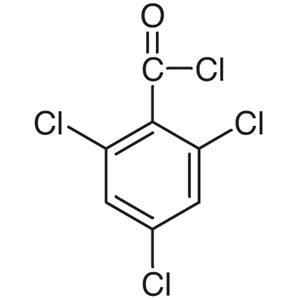
- TCI T1413 4136-95-2 2,4,6-Trichlorobenzoyl Chloride
- TCI T0459 6553-96-4 2,4,6-Triisopropylbenzenesulfonyl Chloride
- TCI H1923 3356-88-5 3-(2-Hydroxyethyl)oxazolidin-2-one
- TCI B4127 143527-70-2 (4S,5R)-3-(tert-Butoxycarbonyl)-2,2-dimethyl-4-phenyl-1,3-oxazolidine-5-carboxylic Acid
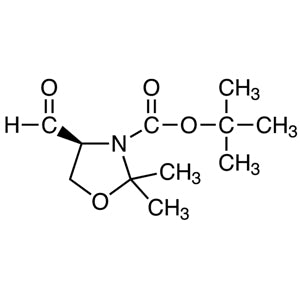
- TCI B1759 102308-32-7 (S)-(-)-3-(tert-Butoxycarbonyl)-4-formyl-2,2-dimethyl-1,3-oxazolidine
- TCI O0608 2346-26-1 Oxazolidine-2,4-dione
- Organic synthesis applications benefit from this reagent's ability to facilitate coupling reactions, enabling the formation of complex molecular structures with high efficiency.
- Pharmaceutical research utilizes this compound for the synthesis of heterocyclic compounds, which are essential components in drug development and medicinal chemistry.
- Analytical chemistry laboratories use it as a reagent for the modification and functionalization of molecules during structural analysis and compound characterization.
- Materials science research incorporates this reagent to create phosphorus-based compounds with unique physical and chemical properties for advanced material applications.
- Biochemical studies leverage its reactivity to develop new molecular probes and tools for studying biological systems and molecular interactions.
| Brand | TCI |
|---|---|
| CAS number | 68641-49-6 |
| Molecular formula | — |
| Purity | — |
| Category | Chemistry > Synthetic Reagents > Coupling [Synthetic Reagents] |
| Pack sizes | Available in various quantities as per standard laboratory reagent packaging |
| Physical form | Solid or powder, depending on the specific formulation |
| Storage | Store in a cool, dry place away from moisture and direct sunlight |
This reagent should be stored in a cool, dry environment to maintain its chemical stability and prevent degradation. It is recommended to use airtight containers to minimize exposure to moisture and air, which can affect its reactivity. Due to its potential reactivity with certain substances, it should be handled with appropriate personal protective equipment, such as gloves and safety goggles, in a well-ventilated area. Avoid contact with strong bases or organic solvents, as these can alter its chemical properties. Proper labeling and storage conditions ensure safe handling and prolong its usability in laboratory applications.
—
Produk Terkait
-
2,4,6-TrichlorobenzoylChloride TCI T1413
Regular price From Rp 2.518.950,00Regular priceRp 1.776.600,00Sale price From Rp 2.518.950,00 -
2,4,6-TriisopropylbenzenesulfonylChloride TCI T0459
Regular price From Rp 2.227.050,00Regular priceRp 1.557.150,00Sale price From Rp 2.227.050,00 -
3-(2-Hydroxyethyl)oxazolidin-2-one TCI H1923
Regular price From Rp 2.121.000,00Regular priceRp 1.498.350,00Sale price From Rp 2.121.000,00 -
(4S,5R)-3-(tert-Butoxycarbonyl)-2,2-dimethyl-4-phenyl-1,3-oxazolidine-5-carboxylicAcid TCI B4127
Regular price Rp 2.147.250,00Regular priceRp 1.517.250,00Sale price Rp 2.147.250,00 -
(S)-(-)-3-(tert-Butoxycarbonyl)-4-formyl-2,2-dimethyl-1,3-oxazolidine TCI B1759
Regular price From Rp 4.373.250,00Regular priceRp 3.073.350,00Sale price From Rp 4.373.250,00 -
Oxazolidine-2,4-dione TCI O0608
Regular price Rp 2.835.000,00Regular priceRp 1.998.150,00Sale price Rp 2.835.000,00 -
1-(p-Toluenesulfonyl)imidazole TCI T1985
Regular price From Rp 1.140.300,00Regular priceRp 812.700,00Sale price From Rp 1.140.300,00 -
4-TrifluoromethylbenzoicAnhydride TCI T1593
Regular price Rp 4.849.950,00Regular priceRp 3.407.250,00Sale price Rp 4.849.950,00