Bis(carbonyldithio)tetrathiafulvalene (BCTF), with the CAS number 64394-47-4, is a complex chemical compound widely used in scientific research across organic chemistry and materials science. As a heterocyclic building block, it plays a crucial role in the synthesis of compounds with specific electronic or optical properties. Its unique structure, featuring four sulfur atoms connected to carbon and sulfur atoms, allows it to act as both an electron donor and acceptor in chemical reactions. This versatility makes it an essential component in the development of advanced materials and functional molecules.
BCTF is valued for its chemical stability under controlled conditions, which enables researchers to work with it reliably in laboratory settings. However, it is sensitive to moisture and oxidation, requiring careful handling and storage. These properties make it a preferred choice for applications where precise control over chemical reactions is necessary. Its ability to participate in various reaction mechanisms further enhances its utility in synthetic chemistry.
In Indonesian laboratories, BCTF is commonly used in organic chemistry research, the synthesis of complex compounds, and the development of new materials. Its role in creating molecules with tailored properties makes it a valuable tool for scientists working on innovative projects. The compound’s unique structure and reactivity contribute to its importance in both academic and industrial research contexts.
TCI brochures (PDF)
- Molecular Conductors 2025-11-13 · p. 6
Related TCI products
- TCI T0980 31366-25-3 Tetrathiafulvalene
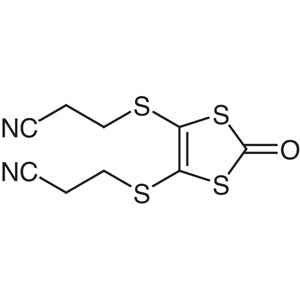
- TCI B2233 158871-28-4 4,5-Bis(2-cyanoethylthio)-1,3-dithiol-2-one
- TCI B2228 132765-35-6 4,5-Bis(2-cyanoethylthio)-1,3-dithiole-2-thione
- TCI B1778 49638-64-4 4,5-Bis(methylthio)-1,3-dithiole-2-thione
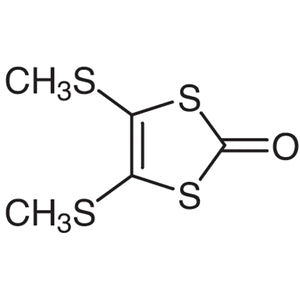
- TCI B1777 61485-46-9 4,5-Bis(methylthio)-1,3-dithiol-2-one
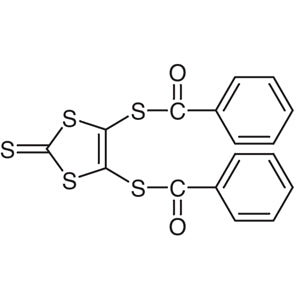
- TCI B1199 68494-08-6 4,5-Bis(benzoylthio)-1,3-dithiole-2-thione
- Organic synthesis research where BCTF is used to construct complex molecules with specific electronic properties.
- Material science applications where the compound contributes to the development of advanced functional materials.
- Chemical reaction studies that require a versatile electron donor and acceptor for various synthetic pathways.
- Research into optoelectronic materials where BCTF’s unique structure influences molecular behavior and performance.
- Development of new chemical compounds for pharmaceutical and industrial applications requiring precise molecular design.
| Brand | TCI |
|---|---|
| CAS number | 64394-47-4 |
| Molecular formula | — |
| Purity | — |
| Category | Chemistry > Building Blocks > Heterocyclic Building Blocks |
| Pack sizes | Available in various quantities as per supplier specifications |
| Physical form | Solid (exact form may vary based on supplier) |
| Storage | Requires dry, cool, and well-ventilated conditions to prevent oxidation and moisture exposure |
BCTF should be stored in a dry, cool, and well-ventilated environment to prevent exposure to moisture and oxidation. It is recommended to use airtight containers made of inert materials such as glass or polyethylene to minimize chemical interactions. Laboratory personnel should wear appropriate personal protective equipment, including gloves and safety goggles, when handling this compound. Due to its sensitivity, it should be kept away from heat sources and direct sunlight. Regular monitoring of storage conditions is essential to maintain its chemical integrity and ensure safe usage in research settings.
—
Produk Terkait
-
Tetrathiafulvalene TCI T0980
Regular price From Rp 3.578.400,00Regular priceRp 2.517.900,00Sale price From Rp 3.578.400,00 -
4,5-Bis(2-cyanoethylthio)-1,3-dithiol-2-one TCI B2233
Regular price Rp 7.339.500,00Regular priceRp 5.148.150,00Sale price Rp 7.339.500,00 -
4,5-Bis(2-cyanoethylthio)-1,3-dithiole-2-thione TCI B2228
Regular price Rp 4.479.300,00Regular priceRp 3.147.900,00Sale price Rp 4.479.300,00 -
4,5-Bis(methylthio)-1,3-dithiole-2-thione TCI B1778
Regular price Rp 3.658.200,00Regular priceRp 2.573.550,00Sale price Rp 3.658.200,00 -
4,5-Bis(methylthio)-1,3-dithiol-2-one TCI B1777
Regular price Rp 3.207.750,00Regular priceRp 2.258.550,00Sale price Rp 3.207.750,00 -
4,5-Bis(benzoylthio)-1,3-dithiole-2-thione TCI B1199
Regular price From Rp 2.782.500,00Regular priceRp 1.961.400,00Sale price From Rp 2.782.500,00 -
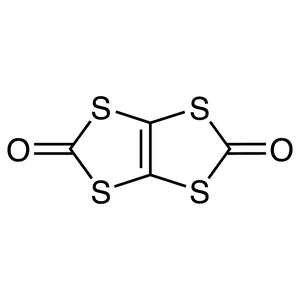
1,3,4,6-Tetrathiapentalene-2,5-dione TCI T1132
Regular price From Rp 2.809.800,00Regular priceRp 1.980.300,00Sale price From Rp 2.809.800,00 -
5-Propyl-1,3-dithiolo[4,5-d][1,3]dithiole-2-thione TCI P1635
Regular price From Rp 2.252.250,00Regular priceRp 1.590.750,00Sale price From Rp 2.252.250,00