Benzyltributylammonium Chloride (BTBA) is a chemical compound widely used as a phase transfer catalyst in synthetic chemistry. It plays a crucial role in facilitating reactions that require the transfer of ions between organic and aqueous phases. This compound is particularly valuable in organic synthesis, where it helps overcome the challenges of immiscibility between different solvents. Its ability to enhance reaction efficiency makes it an essential tool for chemists working in both research and industrial settings.
BTBA is favored for its chemical stability and resistance to degradation under typical laboratory conditions. It is soluble in organic solvents such as ethyl acetate and ethanol, but it does not dissolve in water. This solubility profile makes it ideal for reactions involving interactions between polar and non-polar phases. Additionally, BTBA exhibits thermal stability and maintains its catalytic activity over multiple uses, ensuring consistent performance in repeated experiments.
In Indonesian laboratories, BTBA is commonly used in both fundamental and applied chemical research. Its role in accelerating complex reactions and enabling the synthesis of various organic compounds makes it a preferred choice for researchers. The compound's reliability and effectiveness contribute to its widespread application in academic and industrial chemical processes.
TCI brochures (PDF)
- Quaternary Ammonium Salts 2025-11-10 · p. 4
Related TCI products
- TCI B1217 25316-59-0 Benzyltributylammonium Bromide
- TCI A0208 139-08-2 Benzyldimethyltetradecylammonium Chloride
- TCI T4175 1516-27-4 N,N,N-Trimethylprop-2-en-1-aminium Chloride
- TCI T2873 56375-79-2 Tributylmethylammonium Chloride (ca. 75% in water)
- TCI T2106 5810-42-4 Tetrapropylammonium Chloride
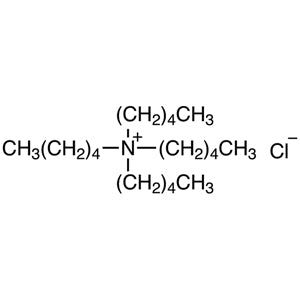
- TCI T1433 4965-17-7 Tetraamylammonium Chloride
- Organic synthesis reactions benefit from BTBA's ability to facilitate ion transfer between phases, enhancing reaction efficiency and yield.
- Phase transfer catalysis in aqueous-organic systems is supported by BTBA's solubility profile, allowing for effective catalytic activity in mixed-phase environments.
- Industrial chemical processes utilize BTBA to improve reaction rates and reduce energy consumption in large-scale synthesis operations.
- Analytical chemistry applications leverage BTBA's stability and catalytic properties for precise and reproducible experimental outcomes.
- Environmental studies incorporate BTBA to model and study chemical interactions in complex, multi-phase systems.
| Brand | TCI |
|---|---|
| CAS number | 23616-79-7 |
| Molecular formula | — |
| Purity | — |
| Category | Chemistry > Synthetic Reagents > Phase Transfer Catalysts |
| Pack sizes | Available in various quantities as per standard supplier offerings |
| Physical form | Solid powder |
| Storage | Store in a cool, dry place away from moisture and direct sunlight |
BTBA should be stored in a cool, dry environment to maintain its chemical stability. It is recommended to keep the compound in a sealed container to prevent exposure to moisture and air, which could affect its performance. Due to its organic solubility, it is important to use appropriate containers that are resistant to chemical degradation. General laboratory precautions include handling with care to avoid inhalation or skin contact, and ensuring proper ventilation when working with the compound. Storage conditions should also be monitored to ensure that temperature and humidity levels remain within acceptable ranges for optimal performance.
—
Produk Terkait
-
BenzyltributylammoniumBromide TCI B1217
Regular price From Rp 1.192.800,00Regular priceRp 849.450,00Sale price From Rp 1.192.800,00 -
BenzyldimethyltetradecylammoniumChloride TCI A0208
Regular price From Rp 662.550,00Regular priceRp 478.800,00Sale price From Rp 662.550,00 -
N,N,N-Trimethylprop-2-en-1-aminiumChloride TCI T4175
Regular price From Rp 1.538.250,00Regular priceRp 1.090.950,00Sale price From Rp 1.538.250,00 -
TributylmethylammoniumChloride(ca.75%inwater) TCI T2873
Regular price From Rp 900.900,00Regular priceRp 645.750,00Sale price From Rp 900.900,00 -
TetrapropylammoniumChloride TCI T2106
Regular price Rp 1.908.900,00Regular priceRp 1.350.300,00Sale price Rp 1.908.900,00 -
TetraamylammoniumChloride TCI T1433
Regular price From Rp 3.551.100,00Regular priceRp 2.499.000,00Sale price From Rp 3.551.100,00 -
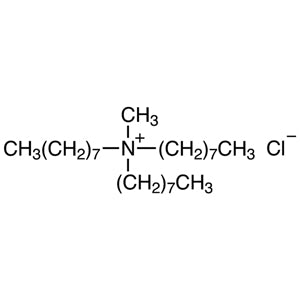
Methyltri-n-octylammoniumChloride TCI T1365
Regular price From Rp 1.483.650,00Regular priceRp 1.053.150,00Sale price From Rp 1.483.650,00 -
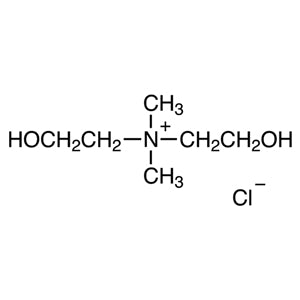
Bis(2-hydroxyethyl)dimethylammoniumChloride TCI B4384
Regular price From Rp 1.618.050,00Regular priceRp 1.146.600,00Sale price From Rp 1.618.050,00