Bis(2-hydroxyethyl)dimethylammonium Chloride is a chemical compound widely used as a phase transfer catalyst in various chemical reactions. This material plays a crucial role in facilitating reactions between immiscible phases, such as water and organic solvents, by enabling the transfer of ions or molecules across these boundaries. In laboratory settings, it is essential for accelerating complex chemical reactions that require interaction between polar and non-polar phases. Its ability to enhance reaction efficiency makes it a valuable tool in synthetic chemistry and catalytic processes.
One of the key properties that make this compound a preferred choice is its excellent solubility in water and its ability to function as an ionic liquid. These characteristics allow it to effectively participate in reactions that require ion transfer between different phases. Additionally, its high chemical stability ensures consistent performance under a variety of laboratory conditions. The compound’s versatility and reliability make it a go-to option for researchers working in organic synthesis and catalysis.
In Indonesian laboratories, Bis(2-hydroxyethyl)dimethylammonium Chloride is commonly used in chemical research, particularly in the fields of organic synthesis and catalysis. Its effectiveness in promoting phase transfer and enhancing reaction rates has made it a staple in academic and industrial research settings. It is widely utilized in both teaching and applied research, supporting the development of new chemical processes and materials.
TCI brochures (PDF)
- Quaternary Ammonium Salts 2025-11-10 · p. 3
Related TCI products
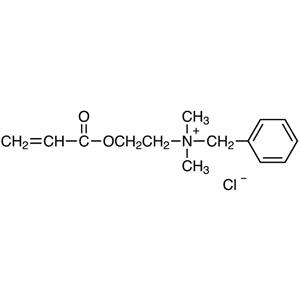
- TCI A3310 46830-22-2 N-(2-Acryloyloxyethyl)-N-benzyl-N,N-dimethylammonium Chloride (ca. 75% in water) (stabilized with MEHQ)
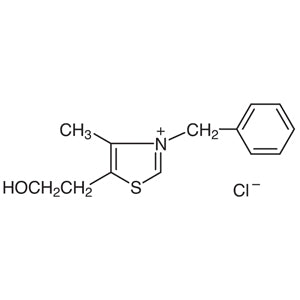
- TCI B1224 4568-71-2 3-Benzyl-5-(2-hydroxyethyl)-4-methylthiazolium Chloride
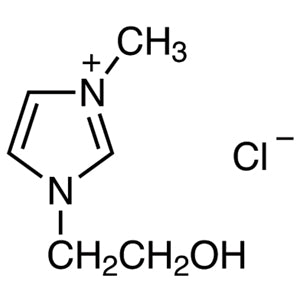
- TCI H1254 61755-34-8 1-(2-Hydroxyethyl)-3-methylimidazolium Chloride
- TCI D0142 13532-96-2 4-Diazo-N-ethyl-N-(2-hydroxyethyl)aniline Chloride Zinc Chloride
- TCI A0208 139-08-2 Benzyldimethyltetradecylammonium Chloride
- TCI T4175 1516-27-4 N,N,N-Trimethylprop-2-en-1-aminium Chloride
- Organic synthesis reactions benefit from this compound's ability to facilitate ion transfer between aqueous and organic phases, enhancing reaction efficiency and yield.
- Catalytic processes in heterogeneous systems rely on its role as a phase transfer catalyst, enabling the interaction of reactants that would otherwise be immiscible.
- Analytical chemistry applications use it to improve the solubility and reactivity of compounds in multi-phase systems, aiding in the detection and quantification of analytes.
- Environmental chemistry studies employ it to model and study reactions in complex environmental matrices, such as soil and water systems.
- Industrial process development leverages its stability and effectiveness to optimize chemical reactions in large-scale manufacturing settings.
| Brand | TCI |
|---|---|
| CAS number | 38402-02-7 |
| Molecular formula | — |
| Purity | — |
| Category | Chemistry > Synthetic Reagents > Phase Transfer Catalysts |
| Pack sizes | Available in various quantities as per standard laboratory supply |
| Physical form | Solid powder |
| Storage | Store in a cool, dry place away from moisture and direct sunlight |
This compound should be stored in a cool, dry environment to maintain its chemical stability and effectiveness. It is recommended to keep it in a sealed container to prevent exposure to moisture, which could affect its performance. Due to its ionic nature, it is best stored in glass or high-density polyethylene containers to avoid any chemical interactions with the container material. In laboratory settings, it should be handled with appropriate personal protective equipment, such as gloves and safety goggles, to ensure safe usage. Proper labeling of storage containers is essential to prevent accidental exposure and ensure safe handling during experiments.
—
Produk Terkait
-
N-(2-Acryloyloxyethyl)-N-benzyl-N,N-dimethylammoniumChloride(ca.75%inwater)(stabilizedwithMEHQ) TCI A3310
Regular price From Rp 1.008.000,00Regular priceRp 720.300,00Sale price From Rp 1.008.000,00 -
3-Benzyl-5-(2-hydroxyethyl)-4-methylthiazoliumChloride TCI B1224
Regular price Rp 2.279.550,00Regular priceRp 1.609.650,00Sale price Rp 2.279.550,00 -
1-(2-Hydroxyethyl)-3-methylimidazoliumChloride TCI H1254
Regular price From Rp 1.246.350,00Regular priceRp 887.250,00Sale price From Rp 1.246.350,00 -
4-Diazo-N-ethyl-N-(2-hydroxyethyl)anilineChlorideZincChloride TCI D0142
Regular price Rp 1.008.000,00Regular priceRp 704.550,00Sale price Rp 1.008.000,00 -
BenzyldimethyltetradecylammoniumChloride TCI A0208
Regular price From Rp 662.550,00Regular priceRp 478.800,00Sale price From Rp 662.550,00 -
N,N,N-Trimethylprop-2-en-1-aminiumChloride TCI T4175
Regular price From Rp 1.538.250,00Regular priceRp 1.090.950,00Sale price From Rp 1.538.250,00 -
TributylmethylammoniumChloride(ca.75%inwater) TCI T2873
Regular price From Rp 900.900,00Regular priceRp 645.750,00Sale price From Rp 900.900,00 -
TetrapropylammoniumChloride TCI T2106
Regular price Rp 1.908.900,00Regular priceRp 1.350.300,00Sale price Rp 1.908.900,00