Tert-Butylmalononitrile (TCI B1584), with CAS number 4210-60-0, is a chemical compound widely used in organic synthesis as a building block. This compound serves as a versatile reagent in laboratory settings, enabling the formation of complex organic molecules through various chemical reactions. Its nitrile functional group allows for nucleophilic and electrophilic reactions, making it a key component in the development of heterocyclic compounds and other complex structures. Due to its reactivity and chemical stability under controlled conditions, it is an essential tool for chemists working in research and development.
The compound's high polarity and nitrile group contribute to its effectiveness in synthetic processes. Its high boiling and melting points ensure stability during storage and handling, while its reactivity allows for efficient participation in chemical transformations. These properties make it a preferred choice for researchers aiming to achieve precise and reproducible results in organic synthesis. Its ability to undergo various reaction mechanisms also enhances its utility in different synthetic pathways.
In Indonesian laboratories, Tert-Butylmalononitrile is commonly used in organic chemistry research, particularly in academic institutions and research centers. It plays a crucial role in projects that require the synthesis of complex organic compounds. Its availability and chemical properties make it a standard reagent in many laboratory workflows, supporting both teaching and research activities.
Related TCI products
- Organic synthesis projects benefit from Tert-Butylmalononitrile due to its reactivity and ability to form complex structures through nucleophilic and electrophilic reactions.
- Heterocyclic compound development often utilizes this compound as a building block, enabling the formation of ring structures with high efficiency.
- Research in medicinal chemistry leverages its versatility in creating molecules with potential pharmaceutical applications.
- Analytical chemistry experiments use it as a reference standard for testing reaction mechanisms and purification processes.
- Teaching laboratories incorporate it into practical sessions to demonstrate synthetic techniques and reaction mechanisms.
| Brand | TCI |
|---|---|
| CAS number | 4210-60-0 |
| Molecular formula | — |
| Purity | — |
| Category | Chemistry > Building Blocks > Non-Heterocyclic Building Blocks |
| Pack sizes | Available in various quantities as per standard laboratory supply |
| Physical form | Liquid |
| Storage | Store in a cool, dry place away from direct sunlight and incompatible materials |
Tert-Butylmalononitrile should be stored in a cool, dry environment to maintain its chemical stability. It is recommended to use sealed containers to prevent exposure to moisture and air, which could affect its reactivity. Due to its polar nature, it is best stored in glass or high-density polyethylene containers to avoid chemical interactions. Laboratory personnel should handle it with care, using appropriate personal protective equipment such as gloves and goggles. It should be kept away from incompatible substances like strong oxidizers or acids to ensure safety. Proper labeling and storage conditions are essential to maintain the integrity of the compound and ensure safe handling in laboratory settings.
—
Produk Terkait
-
1-Naphthylmalononitrile TCI N0550
Regular price Rp 5.246.850,00Regular priceRp 3.684.450,00Sale price Rp 5.246.850,00 -
Benzalmalononitrile TCI B0947
Regular price From Rp 2.306.850,00Regular priceRp 1.628.550,00Sale price From Rp 2.306.850,00 -
(Ethoxymethylene)malononitrile TCI E0649
Regular price Rp 1.670.550,00Regular priceRp 1.183.350,00Sale price Rp 1.670.550,00 -
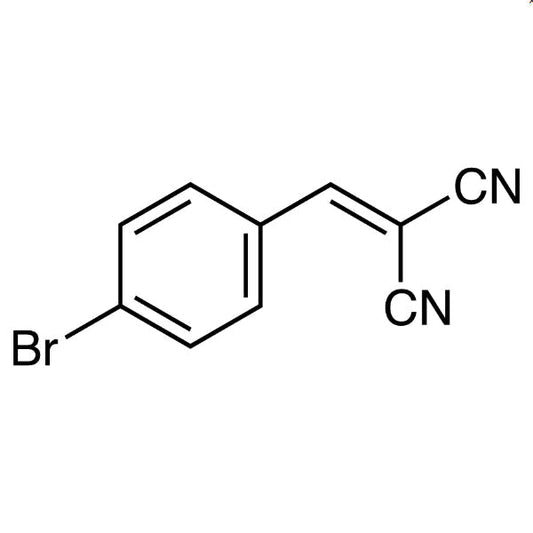
2-(4-Bromobenzylidene)malononitrile TCI B4712
Regular price Rp 4.559.100,00Regular priceRp 3.203.550,00Sale price Rp 4.559.100,00 -
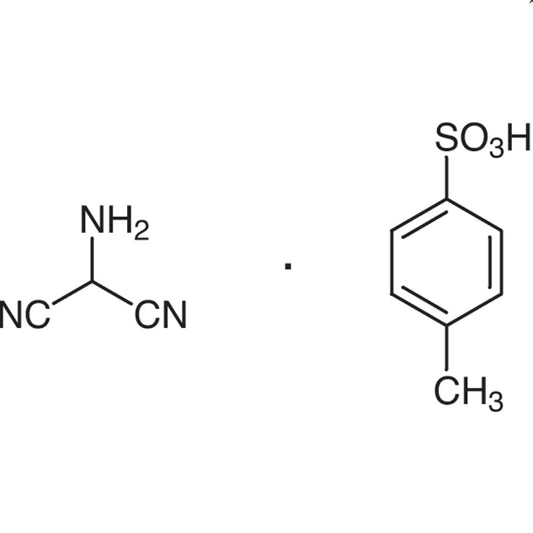
Aminomalononitrilep-Toluenesulfonate TCI A1119
Regular price From Rp 2.093.700,00Regular priceRp 1.479.450,00Sale price From Rp 2.093.700,00 -
2-(4-Methylbenzylidene)malononitrile TCI M3410
Regular price From Rp 1.988.700,00Regular priceRp 1.405.950,00Sale price From Rp 1.988.700,00 -
Isopropylidenemalononitrile TCI I0488
Regular price From Rp 2.518.950,00Regular priceRp 1.776.600,00Sale price From Rp 2.518.950,00 -
2-Cyclohexylidenemalononitrile TCI C3826
Regular price From Rp 1.167.600,00Regular priceRp 831.600,00Sale price From Rp 1.167.600,00