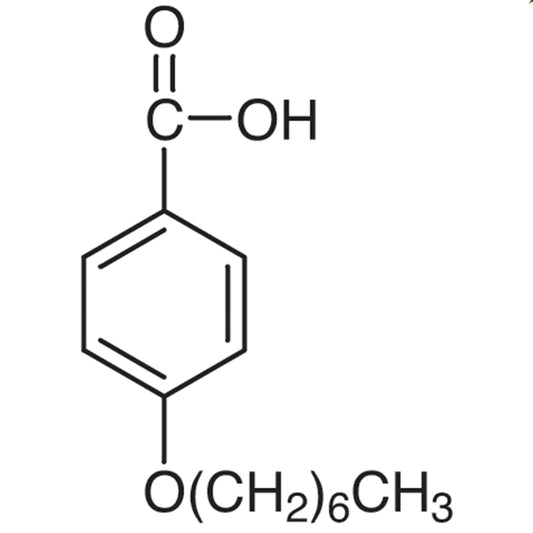
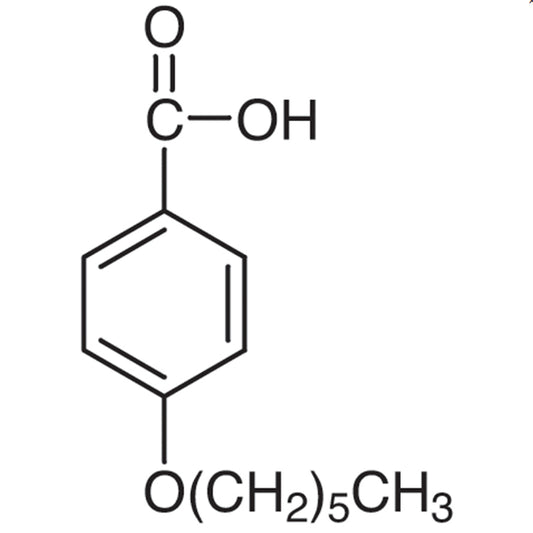
4-(3-Butenyloxy)benzoic Acid is a chemical compound widely used in material science research, particularly in the development of liquid crystal materials. This compound plays a crucial role in laboratory settings where researchers are exploring the unique properties of substances that exist in a state between solid and liquid. Its molecular structure allows for the creation of complex materials with tailored physical and chemical characteristics. In Indonesia, this compound is a key component in the advancement of material science, supporting cutting-edge research in various scientific fields.
The compound’s molecular structure features a carboxylic acid group and a butenyl ether chain, which contribute to its high reactivity and stability. These properties make it a preferred choice for synthetic reactions that require controlled chemical behavior. Its solubility in organic solvents further enhances its utility in laboratory processes, enabling efficient synthesis and processing of advanced materials. This combination of reactivity and solubility makes it a versatile tool for researchers working on innovative material development.
In Indonesian laboratories, 4-(3-Butenyloxy)benzoic Acid is commonly used in the study of liquid crystal building blocks. It serves as a foundational material for the synthesis of compounds used in display technologies, electronic materials, and other advanced applications. Researchers in academic and industrial settings rely on this compound to develop new materials that meet the demands of modern technology and scientific innovation.
Related TCI products
- TCI B5318 83626-35-1 4-(trans-4-Butylcyclohexyl)benzoic Acid
- TCI A3322 83883-26-5 4-[[6-(Acryloyloxy)hexyl]oxy]benzoic Acid
- TCI A2593 65355-30-8 4-(trans-4-Amylcyclohexyl)benzoic Acid
- TCI H1629 83883-25-4 4-(6-Hydroxyhexyloxy)benzoic Acid
- TCI H0642 500-76-5 4-(4-Hydroxyphenoxy)benzoic Acid
- TCI H0248 15872-42-1 4-(Heptyloxy)benzoic Acid
- Liquid Crystal Material Synthesis: This compound is essential for creating liquid crystal materials due to its molecular structure that supports phase transitions and unique optical properties.
- Electronic Material Development: It is used in the formulation of electronic materials where controlled molecular interactions are required for device functionality.
- Display Technology Research: Its role in synthesizing compounds used in display technologies makes it valuable for developing high-performance screens and optical devices.
- Advanced Material Innovation: Researchers use it to explore new material properties for applications in nanotechnology and smart materials.
- Academic and Industrial Research: It supports both academic studies and industrial projects focused on material science and chemical engineering.
| Brand | TCI |
|---|---|
| CAS number | 115595-27-2 |
| Molecular formula | — |
| Purity | — |
| Category | Materials Science > Material Building Blocks > Liquid Crystal (LC) Building Blocks |
| Pack sizes | Available in standard laboratory quantities |
| Physical form | Liquid or solid, depending on formulation |
| Storage | Store in a cool, dry place away from direct sunlight |
This compound should be stored in a cool, dry environment to maintain its chemical integrity. It is recommended to use airtight containers to prevent exposure to moisture and air, which can affect its stability. Due to its reactivity, it should be handled in a well-ventilated area, and appropriate personal protective equipment should be worn when working with it. In laboratory settings, it is important to follow standard chemical safety protocols to ensure safe handling and minimize potential risks. Proper storage and handling are essential to preserve the compound’s properties and ensure its effectiveness in research applications.
—
Produk Terkait
-
4-(trans-4-Butylcyclohexyl)benzoicAcid TCI B5318
Regular price Rp 1.298.850,00Regular priceRp 924.000,00Sale price Rp 1.298.850,00 -
4-[[6-(Acryloyloxy)hexyl]oxy]benzoicAcid TCI A3322
Regular price From Rp 928.200,00Regular priceRp 664.650,00Sale price From Rp 928.200,00 -
4-(trans-4-Amylcyclohexyl)benzoicAcid TCI A2593
Regular price From Rp 1.087.800,00Regular priceRp 775.950,00Sale price From Rp 1.087.800,00 -
4-(6-Hydroxyhexyloxy)benzoicAcid TCI H1629
Regular price From Rp 1.590.750,00Regular priceRp 1.127.700,00Sale price From Rp 1.590.750,00 -
4-(4-Hydroxyphenoxy)benzoicAcid TCI H0642
Regular price From Rp 3.763.200,00Regular priceRp 2.647.050,00Sale price From Rp 3.763.200,00 -
4-(Heptyloxy)benzoicAcid TCI H0248
Regular price From Rp 2.068.500,00Regular priceRp 1.461.600,00Sale price From Rp 2.068.500,00 -
4-(Hexyloxy)benzoicAcid TCI H0247
Regular price From Rp 662.550,00Regular priceRp 478.800,00Sale price From Rp 662.550,00 -
4-(trans-4-Ethylcyclohexyl)benzoicAcid TCI E1253
Regular price Rp 1.378.650,00Regular priceRp 979.650,00Sale price Rp 1.378.650,00