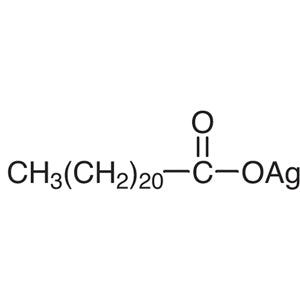
Methyl Behenate is a chemical compound widely used in laboratory experiments, particularly in the fields of biochemistry and lipid research. As an ester derived from behenic acid and methanol, it plays a crucial role in the study of cellular membranes and lipid bilayers. Its non-polar nature makes it an essential tool for understanding the structural and functional properties of lipids. This compound is frequently employed in synthetic membrane model creation, enabling researchers to simulate biological processes under controlled conditions. Its stability and resistance to degradation ensure reliable results in long-term experiments.
One of the key attributes that make Methyl Behenate a preferred choice is its chemical stability and non-polar characteristics. These properties allow it to be easily dissolved in organic solvents such as ether and chloroform, facilitating separation and analysis in various experimental procedures. Its relatively high melting and boiling points ensure that it remains chemically stable under normal storage conditions, reducing the risk of unwanted decomposition. This makes it suitable for use in a wide range of laboratory applications where consistency and accuracy are essential.
In Indonesian laboratories, Methyl Behenate is commonly used in biochemical, pharmaceutical, and environmental research. It supports studies on lipid structures, membrane dynamics, and the development of synthetic models for biological systems. Its versatility and reliability make it a valuable resource for researchers aiming to advance their understanding of lipid-related processes in both academic and industrial settings.
TCI brochures (PDF)
- Lipids 2025-12-17 · p. 9
Related TCI products
- Lipid Bilayer Modeling: Methyl Behenate is ideal for creating synthetic membrane models to study the behavior of lipid structures under various experimental conditions.
- Membrane Permeability Studies: Its non-polar nature makes it suitable for investigating how different compounds interact with and pass through cell membranes.
- Biochemical Research: It is frequently used in biochemical experiments to analyze the structural properties of lipids and their role in cellular functions.
- Environmental Toxicology: Methyl Behenate can be used to simulate lipid-based pollutants and study their impact on biological systems.
- Pharmaceutical Formulation: It aids in the development of lipid-based drug delivery systems by providing a stable and consistent material for formulation testing.
| Brand | TCI |
|---|---|
| CAS number | 929-77-1 |
| Molecular formula | — |
| Purity | — |
| Category | Life Science > Biochemicals and Reagents > Lipids |
| Pack sizes | Available in various quantities as per standard laboratory supply |
| Physical form | Solid |
| Storage | Store in a cool, dry place away from direct sunlight |
Methyl Behenate should be stored in a cool, dry environment to maintain its chemical stability. It is recommended to keep it in a sealed container to prevent exposure to moisture and air, which could potentially affect its integrity. Due to its non-polar nature, it is advisable to use containers made of materials that are resistant to organic solvents. In laboratory settings, it should be handled with appropriate personal protective equipment to ensure safety. Regular monitoring of storage conditions is essential to maintain the compound’s effectiveness and ensure its suitability for experimental use.
—
Product Categories
Produk Terkait
-
MethylBehenate TCI B1241
Regular price Rp 1.749.300,00Regular priceRp 1.239.000,00Sale price Rp 1.749.300,00 -
SilverBehenate TCI B0398
Regular price From Rp 2.782.500,00Regular priceRp 1.945.650,00Sale price From Rp 2.782.500,00