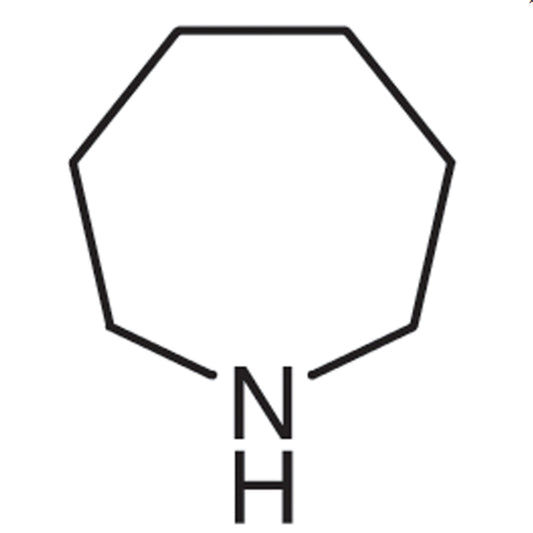
Bis(hexamethylene)triamine (BHTA), also known as TCI B1814, is a versatile chemical compound widely used in laboratory settings for its reactivity and structural versatility. As a building block in organic synthesis, BHTA plays a crucial role in the development of polymers, pharmaceuticals, and industrial chemicals. Its unique molecular structure, consisting of three amine groups connected by hexamethylene chains, allows it to participate in a variety of chemical reactions. This makes it an essential tool for chemists working on complex molecule synthesis and modification.
The high reactivity of BHTA, particularly towards electrophilic compounds, makes it a preferred choice for crosslinking and molecular modification reactions. Its three amine groups enable it to undergo substitution, coupling, and bond formation reactions efficiently. This reactivity, combined with its stability under certain conditions, ensures that BHTA remains a reliable and effective reagent in laboratory applications. Its ability to form stable intermediates and participate in multiple reaction pathways further enhances its utility in synthetic chemistry.
In Indonesian laboratories, BHTA is commonly used in chemical research, especially in organic synthesis, polymer chemistry, and analytical chemistry. It serves as a foundational material for developing new compounds and materials. Its widespread use in academic and industrial research settings highlights its importance in advancing chemical innovation and experimentation in the region.
TCI brochures (PDF)
- Polyamines 2025-10-21 · p. 2
Related TCI products
- TCI H0324 822-06-0 Hexamethylene Diisocyanate
- TCI T0600 25513-64-8 Trimethylhexamethylenediamine (2,2,4- and 2,4,4- mixture)
- TCI H0092 111-49-9 Hexamethyleneimine
- TCI H1278 828-26-2 2,2,4,4,6,6-Hexamethyl-1,3,5-trithiane
- TCI T4350 39423-51-3 Trimethylolpropane Poly(oxypropylene)triamine (Mw = ca 440)
- TCI T3240 82504-70-9 N,N',N''-Tri(m-tolyl)-1,3,5-triazine-2,4,6-triamine
- Organic synthesis is a key application where BHTA is used to create complex molecules by facilitating substitution and coupling reactions.
- Polymer chemistry benefits from BHTA's ability to act as a crosslinking agent, enhancing the structural integrity of synthetic polymers.
- Pharmaceutical research utilizes BHTA for the development of new drug compounds due to its reactivity and structural adaptability.
- Industrial chemical production relies on BHTA as a building block for manufacturing various chemical products.
- Analytical chemistry uses BHTA in the preparation of reagents and standards for accurate chemical analysis and testing.
| Brand | TCI |
|---|---|
| CAS number | 143-23-7 |
| Molecular formula | — |
| Purity | — |
| Category | Chemistry > Building Blocks > Non-Heterocyclic Building Blocks |
| Pack sizes | — |
| Physical form | — |
| Storage | Store in a cool, dry place away from moisture and direct sunlight |
BHTA should be stored in a cool, dry environment to maintain its chemical stability. It is advisable to keep it in airtight containers to prevent moisture absorption, which could affect its reactivity. Proper ventilation is essential when handling this compound to minimize exposure to vapors. Due to its reactivity, it should be handled with care, using appropriate personal protective equipment such as gloves and safety goggles. Storage away from incompatible materials is recommended to ensure safety in the laboratory. Regular monitoring of storage conditions helps maintain the integrity of the compound for optimal performance in chemical applications.
—
Produk Terkait
-
HexamethyleneDiisocyanate TCI H0324
Regular price From Rp 477.750,00Regular priceRp 333.900,00Sale price From Rp 477.750,00 -
Trimethylhexamethylenediamine(2,2,4-and2,4,4-mixture) TCI T0600
Regular price From Rp 795.900,00Regular priceRp 556.500,00Sale price From Rp 795.900,00 -
Hexamethyleneimine TCI H0092
Regular price From Rp 557.550,00Regular priceRp 405.300,00Sale price From Rp 557.550,00 -
2,2,4,4,6,6-Hexamethyl-1,3,5-trithiane TCI H1278
Regular price Rp 1.590.750,00Regular priceRp 1.127.700,00Sale price Rp 1.590.750,00 -
TrimethylolpropanePoly(oxypropylene)triamine(Mw=ca440) TCI T4350
Regular price From Rp 1.510.950,00Regular priceRp 1.072.050,00Sale price From Rp 1.510.950,00 -
N,N',N''-Tri(m-tolyl)-1,3,5-triazine-2,4,6-triamine TCI T3240
Regular price From Rp 2.518.950,00Regular priceRp 1.776.600,00Sale price From Rp 2.518.950,00 -
HexamethyleneOxide TCI H0446
Regular price Rp 6.545.700,00Regular priceRp 4.592.700,00Sale price Rp 6.545.700,00 -
TetramethyleneGlycolMonovinylEther(stabilizedwithKOH) TCI T1796
Regular price From Rp 848.400,00Regular priceRp 609.000,00Sale price From Rp 848.400,00