2,5-Bis(methoxycarbonyl)-3,4-diphenylcyclopentadienone is a chemical compound widely used in organic laboratory settings for its versatile reactivity and structural complexity. This compound serves as a building block in the synthesis of more complex molecules, making it essential for researchers and students engaged in organic chemistry and drug synthesis. Its unique molecular structure enables participation in various reaction types, including substitution and coupling reactions, which are fundamental to the development of new chemical compounds.
The compound’s stable molecular framework and controlled reactivity make it a preferred choice for specialized chemical reactions. Its ability to participate in reactions such as Diels-Alder and substitution reactions highlights its importance in synthetic pathways. The predictable behavior under different reaction conditions ensures reliable results, which is crucial for both academic and industrial research. This stability and reactivity contribute to its popularity among chemists working in diverse fields.
In Indonesian laboratories, this compound is commonly used by researchers and students in the fields of organic chemistry and pharmaceutical synthesis. Its availability in the local market supports ongoing research and educational activities. Its role in building complex molecules makes it a valuable resource for both teaching and practical experimentation in chemical research settings.
Advantages (TCI brochure)
- Highly reactive with various dienophiles
- Can be converted to multi-substituted acenes by Diels-Alder cycloaddition with arynes or alkynes and subsequent decarbonylative aromatization
TCI brochures (PDF)
- Cyclopentadienone-type Building Blocks for Multi-substituted Acenes 2025-08-05 · p. 1
Related TCI products
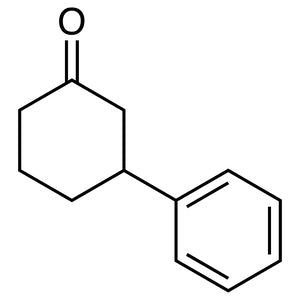
- TCI P3085 20795-53-3 3-Phenylcyclohexan-1-one
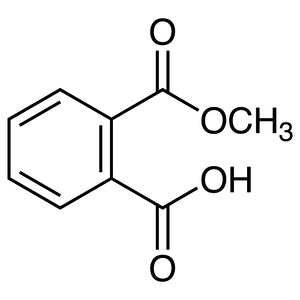
- TCI M3783 4376-18-5 2-(Methoxycarbonyl)benzoic Acid
- TCI M3703 141046-52-8 4-(Methoxycarbonyl)bicyclo[2.1.1]hexane-1-carboxylic Acid
- TCI M3701 110371-28-3 5-(Methoxycarbonyl)bicyclo[3.1.1]heptane-1-carboxylic Acid
- TCI M3466 24539-28-4 4-(Methoxycarbonyl)cubane-1-carboxylic Acid
- TCI M3149 83249-10-9 3-(Methoxycarbonyl)bicyclo[111]pentane-1-carboxylic Acid
- Organic synthesis of complex molecules due to its reactivity and structural versatility.
- Drug development processes where precise chemical building blocks are required.
- Educational experiments in undergraduate and graduate chemistry courses.
- Research applications in pharmaceutical and medicinal chemistry fields.
- Coupling and substitution reactions in synthetic organic chemistry protocols.
From the TCI brochure
- Conversion to multi-substituted acenes via Diels-Alder cycloaddition with arynes or alkynes and decarbonylative aromatization
| Brand | TCI |
|---|---|
| CAS number | 16691-79-5 |
| Molecular formula | — |
| Purity | — |
| Category | Chemistry > Building Blocks > Non-Heterocyclic Building Blocks |
| Pack sizes | Available in various quantities as per standard laboratory supply formats. |
| Physical form | Solid, typically in crystalline or powder form. |
| Storage | Store in a cool, dry place away from direct light and moisture. |
This compound should be stored in a cool, dry environment to maintain its stability and prevent degradation. It is recommended to use airtight containers to protect it from moisture and air exposure. Proper labeling of storage containers is essential for safety and traceability. Due to its chemical nature, it should be handled with appropriate personal protective equipment, such as gloves and safety goggles. Avoid direct contact with skin and eyes, and ensure adequate ventilation in the workspace. Regular inspection of storage conditions ensures the compound remains in optimal condition for use in laboratory applications.
—
Produk Terkait
-
3-Phenylcyclohexan-1-one TCI P3085
Regular price Rp 6.333.600,00Regular priceRp 4.428.900,00Sale price Rp 6.333.600,00 -
2-(Methoxycarbonyl)benzoicAcid TCI M3783
Regular price From Rp 1.273.650,00Regular priceRp 890.400,00Sale price From Rp 1.273.650,00 -
4-(Methoxycarbonyl)bicyclo[2.1.1]hexane-1-carboxylicAcid TCI M3703
Regular price Rp 5.352.900,00Regular priceRp 3.743.250,00Sale price Rp 5.352.900,00 -
5-(Methoxycarbonyl)bicyclo[3.1.1]heptane-1-carboxylicAcid TCI M3701
Regular price Rp 5.247.900,00Regular priceRp 3.669.750,00Sale price Rp 5.247.900,00 -
4-(Methoxycarbonyl)cubane-1-carboxylicAcid TCI M3466
Regular price Rp 3.817.800,00Regular priceRp 2.669.100,00Sale price Rp 3.817.800,00 -
3-(Methoxycarbonyl)bicyclo[111]pentane-1-carboxylicAcid TCI M3149
Regular price From Rp 955.500,00Regular priceRp 667.800,00Sale price From Rp 955.500,00 -
4-(Methoxycarbonyl)bicyclo[2.2.2]octan-1-carboxylicAcid TCI M2855
Regular price Rp 2.411.850,00Regular priceRp 1.686.300,00Sale price Rp 2.411.850,00 -
EthyleneGlycolBis[4-(ethoxycarbonyl)phenyl]Ether TCI E0414
Regular price Rp 5.697.300,00Regular priceRp 3.999.450,00Sale price Rp 5.697.300,00