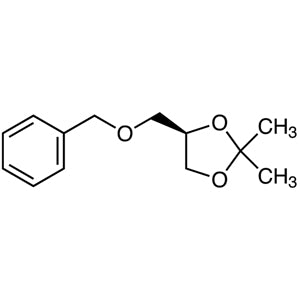
TCI B2137 16495-03-7 (S)-4-Benzyloxymethyl-2,2-dimethyl-1,3-dioxolane is a chiral building block widely used in asymmetric synthesis to construct complex molecular structures. This compound plays a crucial role in organic chemistry laboratories, where it serves as a key reagent for creating chiral molecules with specific stereochemistry. Its unique structure combines a 1,3-dioxolane ring with a benzyloxymethyl group, offering both stability and reactivity in chemical reactions. This makes it an essential tool for researchers aiming to develop compounds with precise stereochemical configurations.
The compound's chiral nature and structural features make it a preferred choice for synthetic chemists. Its ability to participate in enantioselective reactions allows for the synthesis of optically active compounds, which are vital in pharmaceutical and biochemical research. The presence of the benzyloxymethyl group enhances its reactivity in various functional group transformations, while the 1,3-dioxolane ring provides a stable platform for further modifications. These properties contribute to its reliability and effectiveness in complex synthetic pathways.
In Indonesian laboratories, this compound is commonly used in organic chemistry research, particularly in projects requiring the synthesis of bioactive compounds. Its role in drug development and the creation of pharmacologically active substances makes it a valuable resource for academic and industrial research. The compound's chiral characteristics are especially important in the development of new therapeutic agents, where stereochemistry can significantly impact biological activity.
TCI brochures (PDF)
- Chiral Building Blocks 2025-04-14 · p. 15
Related TCI products
- TCI B2136 14347-83-2 (R)-4-Benzyloxymethyl-2,2-dimethyl-1,3-dioxolane
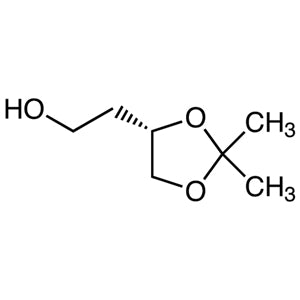
- TCI H1189 32233-43-5 (S)-4-(2-Hydroxyethyl)-2,2-dimethyl-1,3-dioxolane
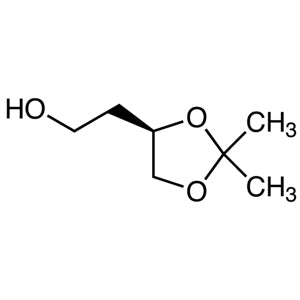
- TCI H1188 70005-89-9 (R)-4-(2-Hydroxyethyl)-2,2-dimethyl-1,3-dioxolane
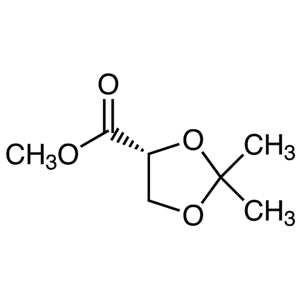
- TCI D2562 52373-72-5 Methyl (R)-(+)-2,2-Dimethyl-1,3-dioxolane-4-carboxylate
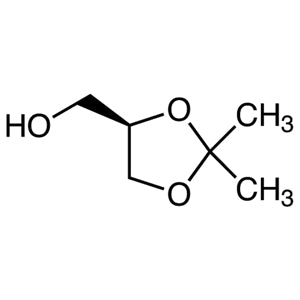
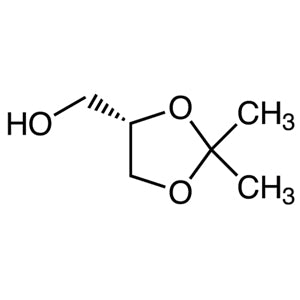
- TCI D1705 14347-78-5 (R)-(-)-2,2-Dimethyl-1,3-dioxolane-4-methanol
- TCI D1691 22323-82-6 (S)-(+)-2,2-Dimethyl-1,3-dioxolane-4-methanol
- Asymmetric Synthesis: This compound is ideal for enantioselective reactions due to its chiral structure, enabling the synthesis of optically active compounds with high stereocontrol.
- Organic Chemistry Research: It is widely used in the development of complex molecules, especially those with biological activity, due to its reactivity and structural versatility.
- Pharmaceutical Development: Its role in creating pharmacologically active substances makes it a key reagent in drug discovery and synthesis projects.
- Chiral Compound Synthesis: The compound's chiral center allows for the selective formation of specific enantiomers, which is critical in the production of therapeutics with precise stereochemistry.
- Bioactive Molecule Production: It is frequently employed in the synthesis of compounds with biological activity, supporting research in medicinal chemistry and pharmacology.
| Brand | TCI |
|---|---|
| CAS number | 16495-03-7 |
| Molecular formula | — |
| Purity | — |
| Category | Chemistry > Asymmetric Synthesis > Chiral Building Blocks |
| Pack sizes | — |
| Physical form | — |
| Storage | Store in a cool, dry place away from light and moisture |
This compound should be stored in a cool, dry environment, away from direct light and moisture to maintain its chemical integrity. It is recommended to use airtight containers to prevent exposure to air and potential degradation. Due to its chiral nature, it is important to handle the compound with care to avoid contamination or loss of stereochemical purity. In laboratory settings, it should be stored separately from incompatible substances to ensure safety. Proper labeling and documentation are essential to maintain traceability and prevent mix-ups. Regular monitoring of storage conditions is advised to ensure optimal preservation of the compound's properties.
—
Produk Terkait
-
(R)-4-Benzyloxymethyl-2,2-dimethyl-1,3-dioxolane TCI B2136
Regular price Rp 1.272.600,00Regular priceRp 905.100,00Sale price Rp 1.272.600,00 -
(S)-4-(2-Hydroxyethyl)-2,2-dimethyl-1,3-dioxolane TCI H1189
Regular price Rp 5.274.150,00Regular priceRp 3.703.350,00Sale price Rp 5.274.150,00 -
(R)-4-(2-Hydroxyethyl)-2,2-dimethyl-1,3-dioxolane TCI H1188
Regular price Rp 4.716.600,00Regular priceRp 3.313.800,00Sale price Rp 4.716.600,00 -
Methyl(R)-(+)-2,2-Dimethyl-1,3-dioxolane-4-carboxylate TCI D2562
Regular price Rp 3.260.250,00Regular priceRp 2.295.300,00Sale price Rp 3.260.250,00 -
(R)-(-)-2,2-Dimethyl-1,3-dioxolane-4-methanol TCI D1705
Regular price From Rp 717.150,00Regular priceRp 516.600,00Sale price From Rp 717.150,00 -
(S)-(+)-2,2-Dimethyl-1,3-dioxolane-4-methanol TCI D1691
Regular price From Rp 822.150,00Regular priceRp 590.100,00Sale price From Rp 822.150,00 -
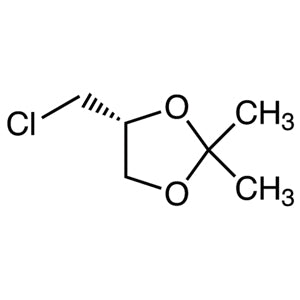
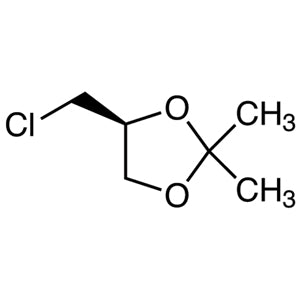
(R)-4-Chloromethyl-2,2-dimethyl-1,3-dioxolane TCI C2265
Regular price From Rp 1.113.000,00Regular priceRp 793.800,00Sale price From Rp 1.113.000,00 -
(S)-4-Chloromethyl-2,2-dimethyl-1,3-dioxolane TCI C1796
Regular price From Rp 637.350,00Regular priceRp 460.950,00Sale price From Rp 637.350,00