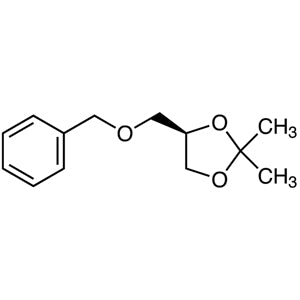
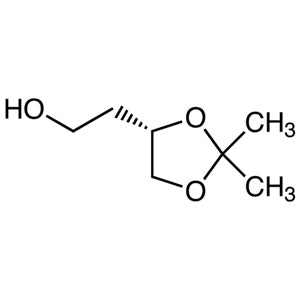
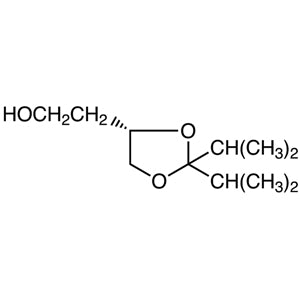
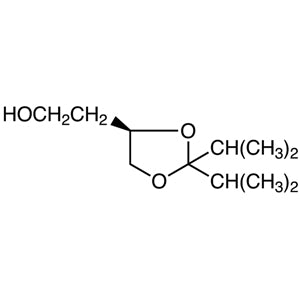
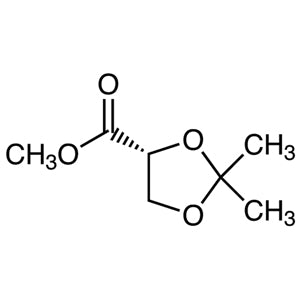
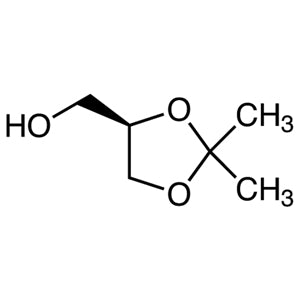
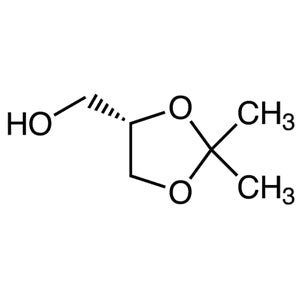
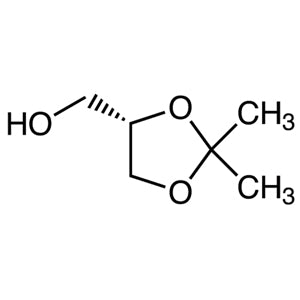
(R)-4-(2-Hydroxyethyl)-2,2-dimethyl-1,3-dioxolane is a chiral building block widely used in asymmetric synthesis to construct complex molecular structures. This compound plays a critical role in organic chemistry and pharmacology by enabling the creation of molecules with specific stereochemistry. Its chiral nature allows for the formation of enantiomers, which can significantly influence the biological activity of the final product. In laboratory settings, this compound is essential for researchers aiming to develop bioactive compounds, including pharmaceuticals and therapeutic agents. Its unique chemical structure makes it a versatile tool in synthetic chemistry, supporting the design of molecules with precise stereochemical configurations.
The compound's key properties include its ability to form stable chiral intermediates and its reactivity toward various functional groups. These characteristics make it a preferred choice for chemists working on asymmetric synthesis projects. Its hydroxyethyl group provides additional reactivity, allowing for further functionalization in synthetic pathways. The compound's stability under controlled conditions also enhances its utility in both academic and industrial research environments. These attributes ensure that it remains a valuable component in the synthesis of bioactive molecules.
In Indonesian laboratories, this compound is commonly used in applied research and educational settings. It supports the development of synthetic methodologies and is integral to studies in pharmacology and biochemistry. Researchers and students alike rely on this compound to gain hands-on experience with chiral synthesis techniques. Its use in both teaching and research underscores its importance in advancing chemical knowledge and innovation in the region.
- Asymmetric synthesis is a key application where this compound is used to create enantiomerically pure compounds, essential for pharmaceutical development.
- Organic chemistry research benefits from its chiral structure, enabling the synthesis of complex molecules with specific stereochemistry.
- Pharmacological studies utilize this compound to develop bioactive molecules, as its stereochemistry can influence drug efficacy and selectivity.
- Educational institutions use it to teach advanced synthetic techniques, providing students with practical experience in chiral synthesis.
- Biochemical research incorporates this compound to explore its role in molecular interactions and biological activity.
| Brand | TCI |
|---|---|
| CAS number | 70005-89-9 |
| Molecular formula | — |
| Purity | — |
| Category | Chemistry > Asymmetric Synthesis > Chiral Building Blocks |
| Pack sizes | Available in various quantities as per supplier specifications |
| Physical form | Liquid |
| Storage | Store in a cool, dry place away from light |
This compound should be stored in a cool, dry environment, away from direct sunlight and sources of heat. It is recommended to use airtight containers to prevent moisture absorption and contamination. Due to its chemical nature, it should be handled with appropriate personal protective equipment, including gloves and safety goggles. Storage conditions should maintain a stable temperature to preserve its chemical integrity. Regular monitoring of storage conditions is advised to ensure the compound remains in optimal condition for use in laboratory applications. Proper labeling of containers is essential to ensure safe handling and prevent accidental exposure.
—
Produk Terkait
-
(S)-4-Benzyloxymethyl-2,2-dimethyl-1,3-dioxolane TCI B2137
Regular price Rp 6.281.100,00Regular price -
(R)-4-Benzyloxymethyl-2,2-dimethyl-1,3-dioxolane TCI B2136
Regular price Rp 1.220.100,00Regular price -
(S)-4-(2-Hydroxyethyl)-2,2-dimethyl-1,3-dioxolane TCI H1189
Regular price Rp 5.221.650,00Regular price -
(S)-4-(2-Hydroxyethyl)-2,2-diisopropyl-1,3-dioxolane TCI D4077
Regular price Rp 2.227.050,00Regular price -
(R)-4-(2-Hydroxyethyl)-2,2-diisopropyl-1,3-dioxolane TCI D4076
Regular price Rp 3.155.250,00Regular price -
Methyl(R)-(+)-2,2-Dimethyl-1,3-dioxolane-4-carboxylate TCI D2562
Regular price Rp 3.207.750,00Regular price -
(R)-(-)-2,2-Dimethyl-1,3-dioxolane-4-methanol TCI D1705
Regular price From Rp 664.650,00Regular price -
(S)-(+)-2,2-Dimethyl-1,3-dioxolane-4-methanol TCI D1691
Regular price From Rp 769.650,00Regular price