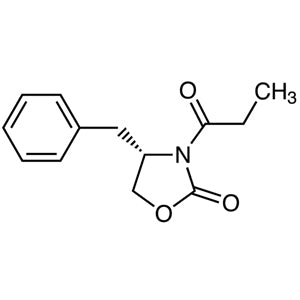
(R)-(-)-4-Benzyl-3-propionyl-2-oxazolidinone is a chiral compound widely used in asymmetric synthesis to produce molecules with specific stereochemistry. This material functions as a chiral auxiliary, playing a crucial role in guiding the formation of enantiomerically pure products. In laboratory settings, it is essential for achieving high enantiomeric excess, which is vital in pharmaceutical and organic chemistry research. Its application is particularly relevant in the development of bioactive compounds, where stereochemistry directly influences biological activity.
The compound’s unique molecular structure allows it to form stable complexes with substrates, enhancing reaction selectivity. Its stability under various reaction conditions makes it a reliable choice for synthetic chemists. Additionally, its ability to participate in multiple reaction pathways increases its versatility in laboratory applications. The compound’s chiral nature ensures that it can be used to produce enantiomerically pure products, which are critical in drug development and other advanced chemical processes.
In Indonesian laboratories, this compound is commonly used in organic chemistry research, especially in asymmetric synthesis and the development of biologically active compounds. It is a key reagent in academic and industrial research settings, supporting the creation of compounds with specific stereochemical properties. Its use is prevalent in both academic institutions and research centers focused on pharmaceutical and chemical innovation.
Advantages (TCI brochure)
- Used in the Evans aldol step of the Novartis discodelmoride synthesis at 30 kg scale
- Gives intermediate 1 in high diastereoselectivity and enantioselectivity
TCI brochures (PDF)
- Chiral Auxiliaries and Optical Resolving Agents 2025-06-17 · p. 3
- Asymmetric Synthesis 2026-03-18 · p. 4
Related TCI products
- TCI B2166 101711-78-8 (S)-(+)-4-Benzyl-3-propionyl-2-oxazolidinone
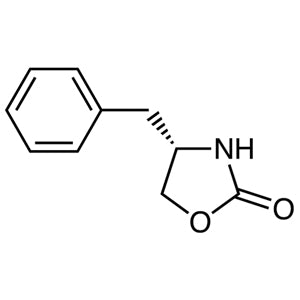
- TCI B1754 90719-32-7 (S)-4-Benzyl-2-oxazolidinone
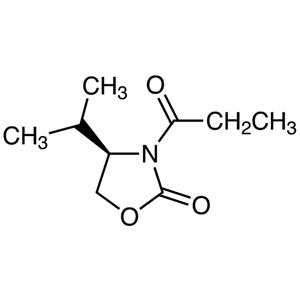
- TCI I0594 89028-40-0 (R)-(-)-4-Isopropyl-3-propionyl-2-oxazolidinone
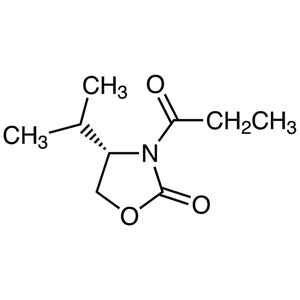
- TCI I0573 77877-19-1 (S)-(+)-4-Isopropyl-3-propionyl-2-oxazolidinone
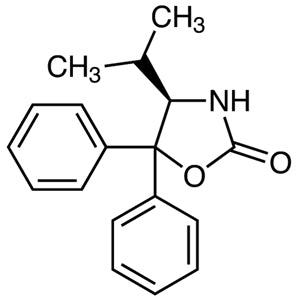
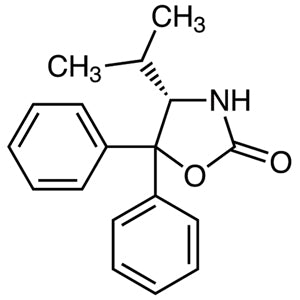
- TCI I0761 191090-32-1 (4R)-(+)-4-Isopropyl-5,5-diphenyl-2-oxazolidinone
- TCI I0762 184346-45-0 (4S)-(-)-4-Isopropyl-5,5-diphenyl-2-oxazolidinone
- Asymmetric synthesis is a key application where this compound is used to control stereochemistry and produce enantiomerically pure compounds.
- Pharmaceutical research benefits from its ability to generate chiral intermediates essential for drug development and bioactive molecule synthesis.
- Organic chemistry experiments rely on its chiral structure to guide reaction pathways and enhance selectivity in complex syntheses.
- Industrial chemical processes utilize it to create compounds with specific stereochemical configurations required for high-performance materials.
- Academic research in Indonesia frequently employs this compound for teaching and experimental purposes in chiral synthesis and stereochemistry studies.
From the TCI brochure
- Evans aldol reaction
- Large-scale synthesis of discodelmoride
- Bu2BOTf, iPr2NEt [D1599], CH2Cl2 (skala 30 kg)
| Brand | TCI |
|---|---|
| CAS number | 131685-53-5 |
| Molecular formula | — |
| Purity | — |
| Category | Chemistry > Asymmetric Synthesis > Chiral Auxiliaries |
| Pack sizes | Available in various quantities as per supplier specifications |
| Physical form | Solid, crystalline |
| Storage | Store in a cool, dry place away from light and moisture |
This compound should be stored in a cool, dry environment, away from direct light and moisture to maintain its stability and effectiveness. It is recommended to use airtight containers to prevent exposure to air and humidity, which could affect its chemical integrity. Laboratory personnel should handle the compound with care, using appropriate personal protective equipment such as gloves and safety goggles. Due to its chiral nature, it is important to ensure that the compound remains uncontaminated to preserve its stereochemical properties. Regular monitoring of storage conditions is advised to ensure optimal performance in chemical reactions and research applications.
—
Product Categories
Produk Terkait
-
(S)-(+)-4-Benzyl-3-propionyl-2-oxazolidinone TCI B2166
Regular price From Rp 875.700,00Regular priceRp 627.900,00Sale price From Rp 875.700,00 -
(S)-4-Benzyl-2-oxazolidinone TCI B1754
Regular price From Rp 530.250,00Regular priceRp 386.400,00Sale price From Rp 530.250,00 -
(R)-(-)-4-Isopropyl-3-propionyl-2-oxazolidinone TCI I0594
Regular price From Rp 2.199.750,00Regular priceRp 1.554.000,00Sale price From Rp 2.199.750,00 -
(S)-(+)-4-Isopropyl-3-propionyl-2-oxazolidinone TCI I0573
Regular price From Rp 1.220.100,00Regular priceRp 868.350,00Sale price From Rp 1.220.100,00 -
(4R)-(+)-4-Isopropyl-5,5-diphenyl-2-oxazolidinone TCI I0761
Regular price From Rp 3.312.750,00Regular priceRp 2.332.050,00Sale price From Rp 3.312.750,00 -
(4S)-(-)-4-Isopropyl-5,5-diphenyl-2-oxazolidinone TCI I0762
Regular price From Rp 3.603.600,00Regular priceRp 2.535.750,00Sale price From Rp 3.603.600,00 -
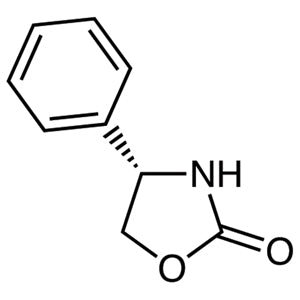
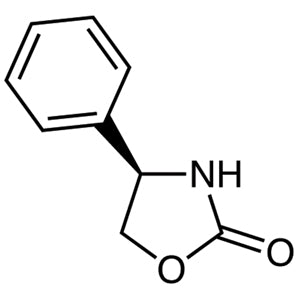
(S)-(+)-4-Phenyl-2-oxazolidinone TCI P1308
Regular price Rp 1.246.350,00Regular priceRp 887.250,00Sale price Rp 1.246.350,00 -
(R)-(-)-4-Phenyl-2-oxazolidinone TCI P1307
Regular price From Rp 1.298.850,00Regular priceRp 924.000,00Sale price From Rp 1.298.850,00