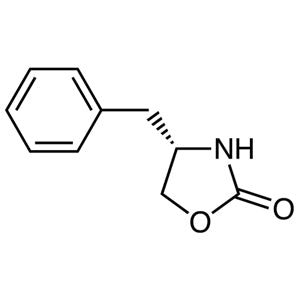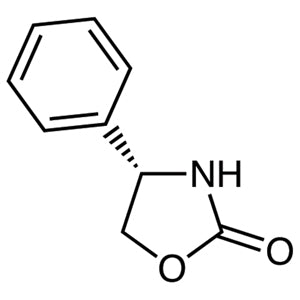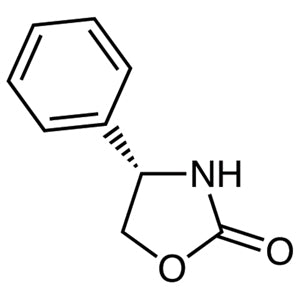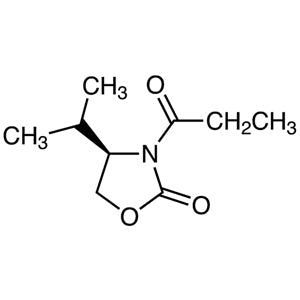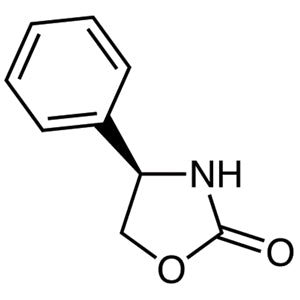
(R)-(-)-4-Phenyl-2-oxazolidinone is a chiral compound widely used in asymmetric synthesis to produce molecules with specific stereochemical configurations. This material plays a crucial role in organic chemistry by enabling precise control over the spatial arrangement of atoms during chemical reactions. Its application is essential in the development of compounds with defined stereochemistry, which is vital for pharmaceutical and biochemical research. As a chiral auxiliary, it facilitates the formation of enantiomerically pure products, which are often required in drug development and other advanced chemical processes.
The compound's key properties include optical activity and structural stability, making it a preferred choice for synthetic chemists. Its ability to form stable complexes with reactants under controlled conditions enhances the efficiency of stereoselective reactions. Additionally, its high reactivity and compatibility with various reaction conditions allow for its use in a wide range of synthetic strategies. These characteristics make it an indispensable tool in laboratories focused on complex molecule synthesis and chiral compound production.
In Indonesian laboratories, (R)-(-)-4-Phenyl-2-oxazolidinone is commonly used in organic chemistry research, particularly in pharmacology and the synthesis of bioactive compounds. Researchers in academic and industrial settings rely on this compound to develop new therapeutic agents and to study the stereochemical effects of various chemical processes. Its role in advancing scientific understanding and innovation in the field of chemistry is significant.
- Asymmetric synthesis in pharmaceutical research due to its ability to control stereochemistry and produce enantiomerically pure compounds.
- Chiral auxiliary in the synthesis of bioactive molecules, enabling the creation of compounds with specific biological activities.
- Organic chemistry experiments requiring precise stereochemical control for the development of new chemical structures.
- Research in pharmacology where the stereochemistry of compounds directly influences their biological efficacy and safety.
- Advanced synthetic processes in academic and industrial laboratories focused on complex molecule design and drug discovery.
| Brand | TCI |
|---|---|
| CAS number | 90319-52-1 |
| Molecular formula | — |
| Purity | — |
| Category | Chemistry > Asymmetric Synthesis > Chiral Auxiliaries |
| Pack sizes | Available in various quantities as per standard laboratory supply |
| Physical form | Solid |
| Storage | Store in a cool, dry place away from light and moisture |
(R)-(-)-4-Phenyl-2-oxazolidinone should be stored in a cool, dry environment to maintain its stability and effectiveness. It is recommended to keep the compound in a sealed container to prevent exposure to moisture and air, which can affect its chemical integrity. Suitable storage conditions include a controlled temperature range of 15-25°C to ensure optimal preservation. Laboratory personnel should handle the compound with care, using appropriate personal protective equipment such as gloves and safety goggles. Proper labeling of containers is essential to ensure safe handling and prevent accidental contamination. Regular inspection of storage conditions is advised to maintain the quality and usability of the material in research settings.
—
Produk Terkait
-
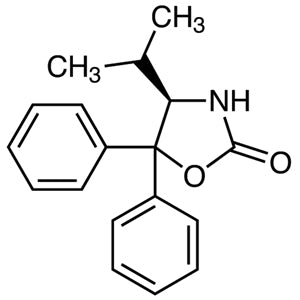
(4R)-(+)-4-Isopropyl-5,5-diphenyl-2-oxazolidinone TCI I0761
Regular price From Rp 3.260.250,00Regular price -
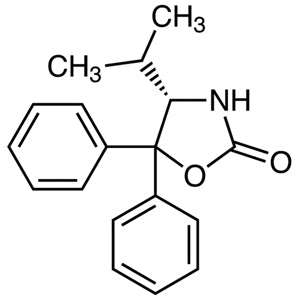
(4S)-(-)-4-Isopropyl-5,5-diphenyl-2-oxazolidinone TCI I0762
Regular price From Rp 3.551.100,00Regular price -
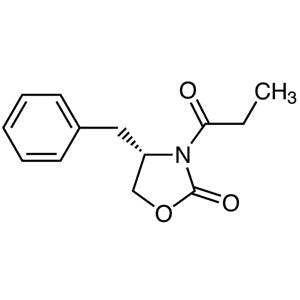
(S)-(+)-4-Benzyl-3-propionyl-2-oxazolidinone TCI B2166
Regular price From Rp 823.200,00Regular price -
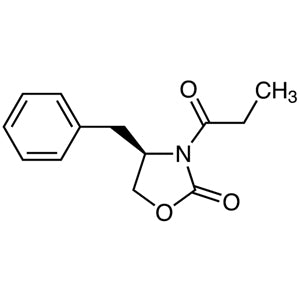
(R)-(-)-4-Benzyl-3-propionyl-2-oxazolidinone TCI B2165
Regular price From Rp 1.353.450,00Regular price -
(S)-4-Benzyl-2-oxazolidinone TCI B1754
Regular price From Rp 477.750,00Regular price -
(S)-(+)-4-Phenyl-2-oxazolidinone TCI P1308
Regular price Rp 1.193.850,00Regular price -
(R)-(-)-4-Isopropyl-3-propionyl-2-oxazolidinone TCI I0594
Regular price From Rp 2.147.250,00Regular price -
(S)-(+)-4-Isopropyl-3-propionyl-2-oxazolidinone TCI I0573
Regular price From Rp 1.167.600,00Regular price