TCI B2218, with the CAS number 118949-61-4, is a chiral compound known as (S,S)-2,6-Bis(4-isopropyl-2-oxazolin-2-yl)pyridine. It is widely used in asymmetric synthesis to produce compounds with specific stereochemistry. This material functions as a chiral catalyst or reagent, enabling precise control over the stereochemical outcome of chemical reactions. Its role in the laboratory is critical for achieving high enantiomeric purity in organic synthesis, making it an essential tool for researchers working in the field of chiral chemistry.
The compound's unique molecular structure allows it to act as a chiral ligand, facilitating selective reactions such as asymmetric hydrogenation and Michael additions. Its ability to enhance reaction efficiency while maintaining stereochemical control makes it a preferred choice for chemists aiming for high-quality, reproducible results. The compound’s solubility in organic solvents and solid form also contribute to its practicality in laboratory settings, offering ease of handling and storage.
In Indonesian laboratories, this compound is commonly used in organic chemistry research, particularly in the development of chiral compounds for pharmaceutical and material science applications. Its effectiveness in controlling stereochemistry makes it a valuable resource for scientists working on drug development, synthetic chemistry, and other areas requiring precise molecular control.
TCI brochures (PDF)
- Chiral Ligands 2024-12-13 · p. 3
- Asymmetric Synthesis 2026-03-18 · p. 4
- Ligands 2025-12-01 · p. 4
Related TCI products
- TCI B2220 174500-20-0 (S,S)-2,6-Bis(4-phenyl-2-oxazolin-2-yl)pyridine
- TCI B2219 128249-70-7 (R,R)-2,6-Bis(4-phenyl-2-oxazolin-2-yl)pyridine
- TCI B2217 131864-67-0 (R,R)-2,6-Bis(4-isopropyl-2-oxazolin-2-yl)pyridine
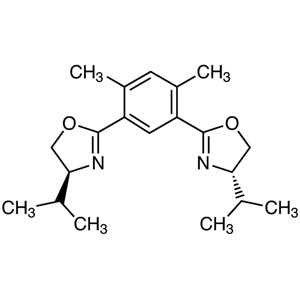
- TCI B4196 929896-22-0 (S,S)-4,6-Bis(4-isopropyl-2-oxazolin-2-yl)-m-xylene
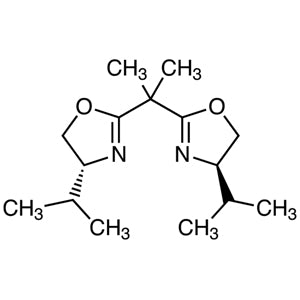
- TCI I1089 150529-94-5 (R,R)-2,2'-Isopropylidenebis(4-isopropyl-2-oxazoline)
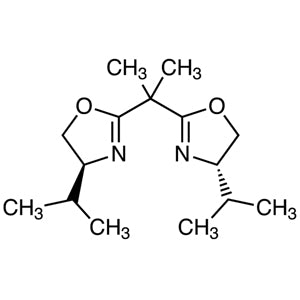
- TCI I1051 131833-92-6 (S,S)-2,2'-Isopropylidenebis(4-isopropyl-2-oxazoline)
- Asymmetric hydrogenation reactions benefit from this compound’s ability to selectively control the stereochemistry of the product, enhancing the efficiency of chiral compound synthesis.
- In Michael addition reactions, the chiral nature of the compound ensures the formation of stereospecific products, which is crucial for pharmaceutical applications.
- Organic synthesis projects requiring chiral catalysts often use this material due to its high selectivity and effectiveness in producing enantiomerically pure compounds.
- Research in pharmaceutical chemistry relies on this compound to develop new drugs with specific stereochemical properties, improving their efficacy and safety.
- Material science studies involving chiral compounds utilize this reagent to create advanced materials with unique optical or physical properties.
| Brand | TCI |
|---|---|
| CAS number | 118949-61-4 |
| Molecular formula | — |
| Purity | — |
| Category | Chemistry > Asymmetric Synthesis > Chiral Catalysts, Chiral Ligands, Chiral Reagents |
| Pack sizes | — |
| Physical form | Solid |
| Storage | Store in a cool, dry place away from light and moisture |
This compound should be stored in a cool, dry environment, away from direct light and moisture to maintain its chemical integrity. It is recommended to use airtight containers to prevent exposure to humidity and air, which could affect its performance. Since it is a solid, it can be stored in a standard chemical cabinet, but it should be kept in a location that is inaccessible to unauthorized personnel. Handling should be done with appropriate personal protective equipment, such as gloves and safety goggles, to ensure laboratory safety. The compound is not classified as hazardous under standard conditions, but standard laboratory safety protocols should be followed when working with it.
—
Product Categories
- Asymmetric SynthesisChiral Catalysts, Chiral Ligands, Chiral ReagentsPrivileged Ligands and Complexes [Asymmetric Synthesis]
- Catalysis and Inorganic ChemistryNitrogen-Donor Ligands [Catalysis]Oxazole Ligands, Oxazoline Ligands, Thiazole Ligands
- Catalysis and Inorganic ChemistryNitrogen-Donor Ligands [Catalysis]Pyridine Ligands
Produk Terkait
-
(S,S)-2,6-Bis(4-phenyl-2-oxazolin-2-yl)pyridine TCI B2220
Regular price From Rp 3.683.400,00Regular priceRp 2.591.400,00Sale price From Rp 3.683.400,00 -
(R,R)-2,6-Bis(4-phenyl-2-oxazolin-2-yl)pyridine TCI B2219
Regular price From Rp 1.881.600,00Regular priceRp 1.331.400,00Sale price From Rp 1.881.600,00 -
(R,R)-2,6-Bis(4-isopropyl-2-oxazolin-2-yl)pyridine TCI B2217
Regular price From Rp 2.147.250,00Regular priceRp 1.517.250,00Sale price From Rp 2.147.250,00 -
(S,S)-4,6-Bis(4-isopropyl-2-oxazolin-2-yl)-m-xylene TCI B4196
Regular price Rp 4.133.850,00Regular priceRp 2.906.400,00Sale price Rp 4.133.850,00 -
(R,R)-2,2'-Isopropylidenebis(4-isopropyl-2-oxazoline) TCI I1089
Regular price From Rp 1.908.900,00Regular priceRp 1.350.300,00Sale price From Rp 1.908.900,00 -
(S,S)-2,2'-Isopropylidenebis(4-isopropyl-2-oxazoline) TCI I1051
Regular price From Rp 2.384.550,00Regular priceRp 1.683.150,00Sale price From Rp 2.384.550,00 -
Bis(acetato)aqua[(S,S)-4,6-bis(4-isopropyl-2-oxazolin-2-yl)-m-xylene]rhodium TCI B4195
Regular price Rp 6.465.900,00Regular priceRp 4.537.050,00Sale price Rp 6.465.900,00 -
2,6-Bis[(2S,5S)-4,4-diphenyl-1-aza-3-oxabicyclo[3.3.0]octan-2-yl]pyridine TCI B4228
Regular price Rp 3.048.150,00Regular priceRp 2.147.250,00Sale price Rp 3.048.150,00