(R)-(-)-1,1'-Binaphthyl-2,2'-diyl Bis(trifluoromethanesulfonate) is a chiral compound widely used in asymmetric synthesis as a catalyst or ligand. It plays a crucial role in laboratories where precise control over stereochemistry is required. This compound is particularly valuable in organic chemistry research, where the formation of specific enantiomers is essential. Its unique structure allows it to selectively interact with reactants, making it an indispensable tool for achieving high enantiomeric purity in chemical reactions.
The compound’s key properties include its high reactivity and polar nature due to the presence of trifluoromethanesulfonate groups. These groups enhance its ability to participate in various chemical transformations while maintaining stereochemical control. Additionally, its chiral framework enables it to distinguish between enantiomers, making it highly effective in asymmetric catalysis. The compound’s stability under controlled conditions further supports its reliability in laboratory settings.
In Indonesian laboratories, this compound is commonly used in research focused on organic chemistry, pharmaceutical development, and materials science. Its application is particularly relevant in academic and industrial research where the synthesis of chiral compounds is necessary. Due to its specificity and efficiency, it is a preferred choice for scientists aiming to achieve precise chemical outcomes in their experiments.
TCI brochures (PDF)
- Asymmetric Synthesis 2026-03-18 · p. 3
Related TCI products
- TCI B2231 128544-05-8 (S)-(+)-1,1'-Binaphthyl-2,2'-diyl Bis(trifluoromethanesulfonate)
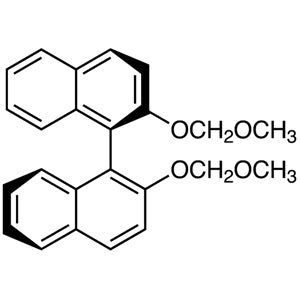
- TCI B3202 173831-50-0 (R)-2,2'-Bis(methoxymethoxy)-1,1'-binaphthyl
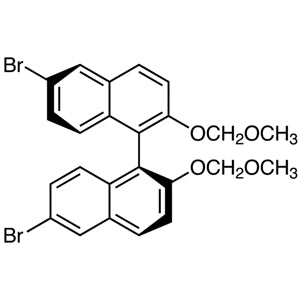
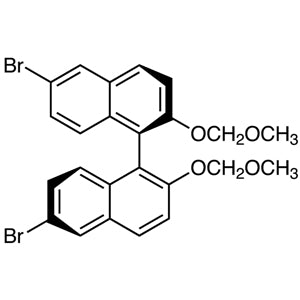
- TCI D4883 211560-97-3 (S)-6,6'-Dibromo-2,2'-bis(methoxymethoxy)-1,1'-binaphthyl
- TCI D4882 179866-74-1 (R)-6,6'-Dibromo-2,2'-bis(methoxymethoxy)-1,1'-binaphthyl
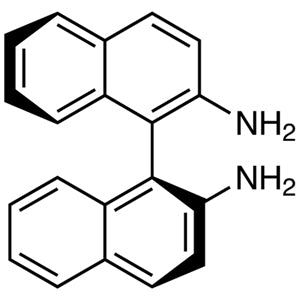
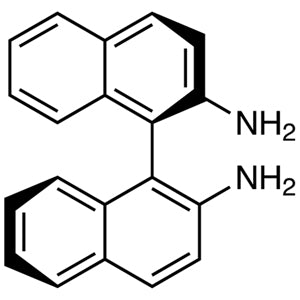
- TCI D3208 18531-95-8 (S)-(-)-1,1'-Binaphthyl-2,2'-diamine
- TCI D3207 18741-85-0 (R)-(+)-1,1'-Binaphthyl-2,2'-diamine
- Asymmetric synthesis is a key application where this compound is used to control stereochemistry in complex reactions, ensuring the production of desired enantiomers with high selectivity.
- Organic chemistry research benefits from this compound's ability to act as a chiral ligand, enabling the development of new synthetic methods and drug molecules with specific spatial configurations.
- Pharmaceutical development relies on this compound to facilitate the synthesis of chiral drugs, which are essential for therapeutic efficacy and reduced side effects.
- Materials science applications utilize this compound to create chiral polymers and nanomaterials with unique optical and physical properties.
- Analytical chemistry uses this compound as a chiral resolving agent to separate enantiomers, aiding in the characterization of complex chemical mixtures.
| Brand | TCI |
|---|---|
| CAS number | 126613-06-7 |
| Molecular formula | — |
| Purity | — |
| Category | Chemistry > Asymmetric Synthesis > Chiral Catalysts, Chiral Ligands, Chiral Reagents |
| Pack sizes | Available in various quantities as per supplier specifications |
| Physical form | Solid or powder, depending on the specific product formulation |
| Storage | Requires dry, cool, and dark conditions to maintain stability |
This compound should be stored in a dry, cool, and dark environment to prevent degradation due to moisture and light exposure. It is recommended to use airtight containers made of glass or inert materials to minimize exposure to air and contaminants. Due to its sensitivity to humidity, it is essential to maintain a controlled storage environment with low moisture levels. Proper labeling and handling procedures should be followed to ensure safety in the laboratory. Regular monitoring of storage conditions is advised to maintain the compound’s integrity and effectiveness for research applications.
—
Produk Terkait
-
(S)-(+)-1,1'-Binaphthyl-2,2'-diylBis(trifluoromethanesulfonate) TCI B2231
Regular price Rp 1.565.550,00Regular priceRp 1.094.100,00Sale price Rp 1.565.550,00 -
(R)-2,2'-Bis(methoxymethoxy)-1,1'-binaphthyl TCI B3202
Regular price From Rp 1.829.100,00Regular priceRp 1.278.900,00Sale price From Rp 1.829.100,00 -
(S)-6,6'-Dibromo-2,2'-bis(methoxymethoxy)-1,1'-binaphthyl TCI D4883
Regular price From Rp 2.625.000,00Regular priceRp 1.835.400,00Sale price From Rp 2.625.000,00 -
(R)-6,6'-Dibromo-2,2'-bis(methoxymethoxy)-1,1'-binaphthyl TCI D4882
Regular price From Rp 3.551.100,00Regular priceRp 2.483.250,00Sale price From Rp 3.551.100,00 -
(S)-(-)-1,1'-Binaphthyl-2,2'-diamine TCI D3208
Regular price Rp 1.776.600,00Regular priceRp 1.257.900,00Sale price Rp 1.776.600,00 -
(R)-(+)-1,1'-Binaphthyl-2,2'-diamine TCI D3207
Regular price Rp 1.590.750,00Regular priceRp 1.127.700,00Sale price Rp 1.590.750,00 -
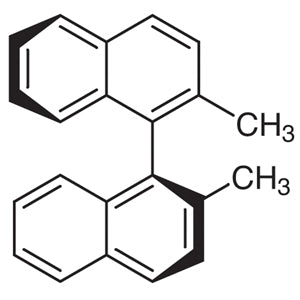
(S)-2,2'-Dimethyl-1,1'-binaphthyl TCI D2838
Regular price From Rp 6.863.850,00Regular priceRp 4.799.550,00Sale price From Rp 6.863.850,00 -
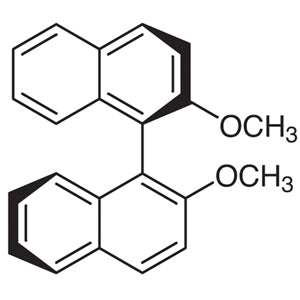
(R)-2,2'-Dimethoxy-1,1'-binaphthyl TCI D2747
Regular price Rp 3.127.950,00Regular priceRp 2.187.150,00Sale price Rp 3.127.950,00