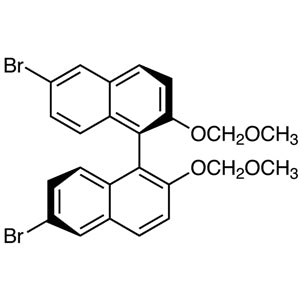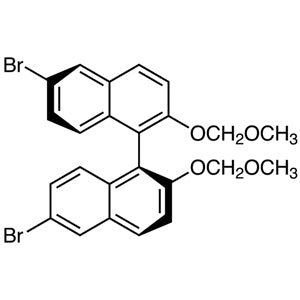
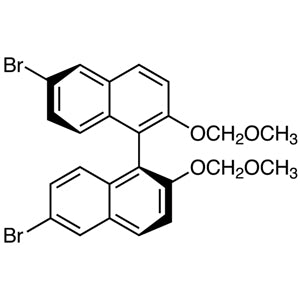
The TCI D4883 211560-97-3 (S)-6,6'-Dibromo-2,2'-bis(methoxymethoxy)-1,1'-binaphthyl is a specialized chemical compound used in asymmetric synthesis to produce compounds with specific optical properties. This compound serves as a reagent or catalyst in chemical reactions that require precise control over stereochemistry. Its unique structure enables it to interact selectively with substrates, making it a valuable tool in synthetic chemistry. In laboratory settings, it is widely used to create compounds with high biological activity, such as pharmaceuticals and pharmacologically active substances.
The compound's optical properties and structural complexity make it a preferred choice for researchers aiming to achieve enantiomeric purity. Its stability and ability to yield desired enantiomers contribute to its popularity in advanced chemical research. The compound's chiral nature allows it to influence reaction pathways in a controlled manner, which is essential for producing compounds with specific stereochemical configurations. These features make it a key component in the development of new therapeutic agents and other bioactive molecules.
In Indonesian laboratories, this compound is commonly used in pharmaceutical, organic chemistry, and biochemical research. Local researchers rely on it for the development of new compounds with potential medical applications. Its availability and quality ensure its integration into various scientific studies conducted by research institutions across Indonesia. The compound's role in creating bioactive molecules underscores its importance in both academic and industrial research contexts.
TCI brochures (PDF)
- Asymmetric Synthesis 2026-03-18 · p. 3
Related TCI products
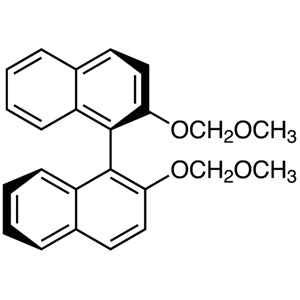
- TCI B3202 173831-50-0 (R)-2,2'-Bis(methoxymethoxy)-1,1'-binaphthyl
- TCI D4882 179866-74-1 (R)-6,6'-Dibromo-2,2'-bis(methoxymethoxy)-1,1'-binaphthyl
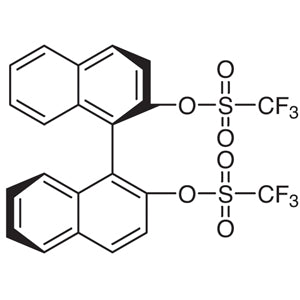
- TCI B2231 128544-05-8 (S)-(+)-1,1'-Binaphthyl-2,2'-diyl Bis(trifluoromethanesulfonate)
- TCI B2230 126613-06-7 (R)-(-)-1,1'-Binaphthyl-2,2'-diyl Bis(trifluoromethanesulfonate)
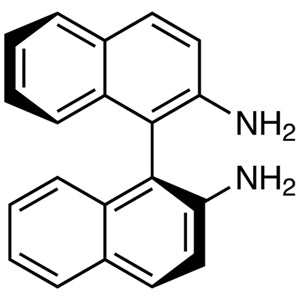
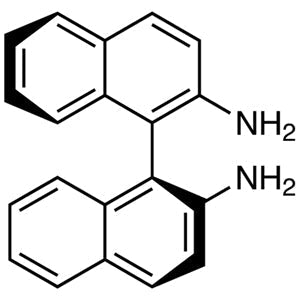
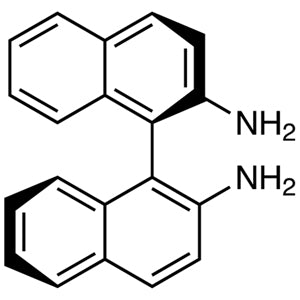
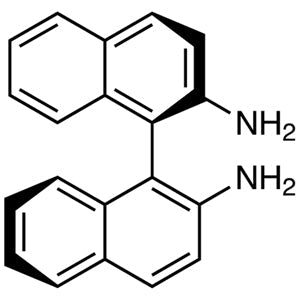
- TCI D3208 18531-95-8 (S)-(-)-1,1'-Binaphthyl-2,2'-diamine
- TCI D3207 18741-85-0 (R)-(+)-1,1'-Binaphthyl-2,2'-diamine
- Asymmetric synthesis is a key application where this compound is used to produce chiral compounds with specific optical properties, enabling the development of pharmaceuticals and bioactive molecules.
- Pharmaceutical research benefits from this compound's ability to control stereochemistry, allowing the synthesis of drugs with high enantiomeric purity and enhanced biological activity.
- Organic chemistry studies often incorporate this compound to explore new reaction pathways and develop novel synthetic methods for complex molecules.
- Biochemical research utilizes this compound to investigate its interactions with biological systems, aiding in the discovery of new therapeutic agents and drug candidates.
- Academic and industrial research in Indonesia frequently employs this compound for the synthesis of compounds with potential medical applications, supporting innovation in the pharmaceutical sector.
| Brand | TCI |
|---|---|
| CAS number | 211560-97-3 |
| Molecular formula | — |
| Purity | — |
| Category | Chemistry > Asymmetric Synthesis > Chiral Catalysts, Chiral Ligands, Chiral Reagents |
| Pack sizes | — |
| Physical form | — |
| Storage | Store in a cool, dry place away from light and moisture |
This compound should be stored in a cool, dry environment, away from direct light and moisture to maintain its stability and effectiveness. It is recommended to use airtight containers to prevent exposure to air and humidity, which could affect its chemical integrity. Laboratory personnel should handle the compound with care, using appropriate personal protective equipment such as gloves and safety goggles to minimize exposure. Due to its chiral nature, it is important to ensure that the compound remains uncontaminated and is used in controlled conditions to maintain its optical properties. Proper storage and handling protocols are essential to ensure the compound's performance in synthetic reactions and its utility in research applications.
—
Produk Terkait
-
(R)-2,2'-Bis(methoxymethoxy)-1,1'-binaphthyl TCI B3202
Regular price From Rp 1.829.100,00Regular price -
(R)-6,6'-Dibromo-2,2'-bis(methoxymethoxy)-1,1'-binaphthyl TCI D4882
Regular price From Rp 3.551.100,00Regular price -
(S)-(+)-1,1'-Binaphthyl-2,2'-diylBis(trifluoromethanesulfonate) TCI B2231
Regular price Rp 1.565.550,00Regular price -
(R)-(-)-1,1'-Binaphthyl-2,2'-diylBis(trifluoromethanesulfonate) TCI B2230
Regular price Rp 1.829.100,00Regular price -
(S)-(-)-1,1'-Binaphthyl-2,2'-diamine TCI D3208
Regular price Rp 1.724.100,00Regular price -
(R)-(+)-1,1'-Binaphthyl-2,2'-diamine TCI D3207
Regular price Rp 1.538.250,00Regular price -
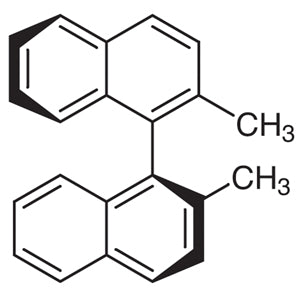
(S)-2,2'-Dimethyl-1,1'-binaphthyl TCI D2838
Regular price From Rp 6.863.850,00Regular price -
(R)-2,2'-Dimethoxy-1,1'-binaphthyl TCI D2747
Regular price Rp 3.127.950,00Regular price