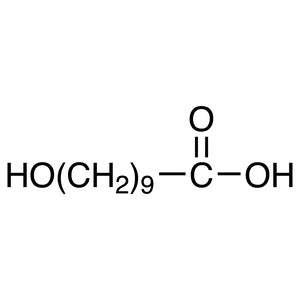
10-Bromodecanoic Acid is a chemical compound widely used as a building block in the synthesis of complex organic molecules. Its versatility makes it a valuable resource in various laboratory settings, particularly in organic chemistry research. This compound plays a crucial role in the development of new compounds across multiple scientific disciplines, including pharmacology, materials science, and chemical engineering. Due to its structural complexity, it is often utilized in studies focused on compounds with specific biological activities.
The chemical properties of 10-Bromodecanoic Acid make it a preferred choice for laboratory applications. It exhibits good solubility in organic solvents such as ethyl acetate and dimethyl sulfoxide, which enhances its utility in a wide range of chemical reactions. Its stability and reactivity under different reaction conditions also contribute to its effectiveness. These characteristics allow it to participate in essential reactions like nucleophilic substitution, which is fundamental in organic synthesis.
In Indonesian laboratories, 10-Bromodecanoic Acid is commonly used by researchers working on the development of new materials and pharmaceutical compounds. Its availability and chemical properties make it a reliable component in both academic and industrial research settings. The compound's role in various synthetic pathways ensures its continued relevance in the scientific community.
- Organic synthesis: 10-Bromodecanoic Acid is ideal for synthesizing complex organic molecules due to its reactivity and compatibility with various reaction conditions.
- Pharmaceutical research: It is frequently used in the development of new drugs as a building block for compounds with potential therapeutic applications.
- Material science: The compound is employed in the creation of advanced materials, leveraging its chemical properties for functional applications.
- Nucleophilic substitution reactions: Its ability to participate in such reactions makes it a key reagent in the synthesis of a wide range of organic compounds.
- Biologically active compound studies: It is used in research focused on compounds with specific biological activities, contributing to drug discovery and development.
| Brand | TCI |
|---|---|
| CAS number | 50530-12-6 |
| Molecular formula | — |
| Purity | — |
| Category | Chemistry > Building Blocks > Non-Heterocyclic Building Blocks |
| Pack sizes | — |
| Physical form | — |
| Storage | Store in a cool, dry place away from direct sunlight |
10-Bromodecanoic Acid should be stored in a cool, dry place, away from direct sunlight and sources of heat. It is recommended to keep the compound in a sealed container to prevent exposure to moisture and air. Due to its chemical nature, it should be handled with appropriate personal protective equipment, such as gloves and safety goggles. Avoid contact with skin and eyes, and ensure proper ventilation when working with the compound. In laboratory settings, it is important to follow standard safety protocols to minimize risks associated with its use and storage. Proper labeling of containers is essential to ensure safe handling and prevent accidental exposure.
—
Produk Terkait
-
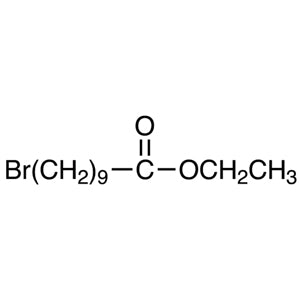
Ethyl10-Bromodecanoate TCI B2265
Regular price Rp 7.339.500,00Regular priceRp 5.148.150,00Sale price Rp 7.339.500,00 -
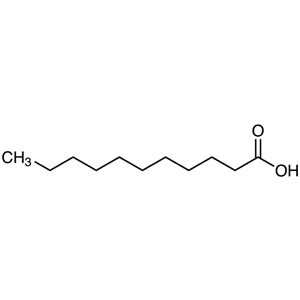
UndecanoicAcid TCI U0004
Regular price From Rp 1.008.000,00Regular priceRp 720.300,00Sale price From Rp 1.008.000,00 -
12-HydroxydodecanoicAcid TCI H1092
Regular price From Rp 2.121.000,00Regular priceRp 1.498.350,00Sale price From Rp 2.121.000,00 -
1-Bromodecane TCI B0583
Regular price From Rp 664.650,00Regular priceRp 464.100,00Sale price From Rp 664.650,00 -
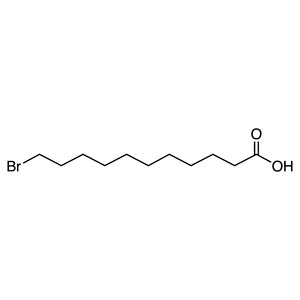
11-BromoundecanoicAcid TCI B0389
Regular price From Rp 928.200,00Regular priceRp 664.650,00Sale price From Rp 928.200,00 -
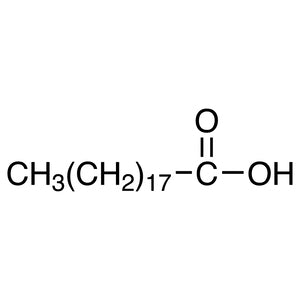
NonadecanoicAcid TCI N0283
Regular price From Rp 3.207.750,00Regular priceRp 2.258.550,00Sale price From Rp 3.207.750,00 -
2-MethylhexadecanoicAcid TCI M1026
Regular price Rp 2.969.400,00Regular priceRp 2.091.600,00Sale price Rp 2.969.400,00 -
10-HydroxydecanoicAcid TCI H1090
Regular price From Rp 1.618.050,00Regular priceRp 1.146.600,00Sale price From Rp 1.618.050,00