(1,2)-Bis(2,4,6-trimethylphenyl)ethylenediamine is a nitrogen-donor ligand widely used in catalytic reactions and organic synthesis. This compound plays a crucial role in the formation of transition metal complexes, enhancing the efficiency of chemical reactions. As a ligand, it binds to metal ions, facilitating catalytic processes that accelerate chemical transformations without being consumed in the reaction. Its unique molecular structure enables it to interact with a variety of metals, making it a versatile tool in chemical research.
The compound’s stability under standard laboratory conditions and its ability to form stable complexes with metals like nickel, cobalt, and palladium make it a preferred choice for researchers. Its molecular structure includes two active amine groups, which contribute to its reactivity and compatibility with different catalytic systems. These properties ensure consistent performance in various experimental setups, supporting both academic and industrial applications.
In Indonesian laboratories, this compound is commonly used in organic chemistry and catalytic research. It is a key component in the development of new technologies, particularly in the fields of catalysis and the synthesis of complex compounds. Its availability in the local market makes it a relevant and practical choice for institutions and research facilities in Indonesia.
TCI brochures (PDF)
- Chiral Ligands 2024-12-13 · p. 2
- Ligands 2025-12-01 · p. 3
Related TCI products
- TCI B2316 425615-42-5 (1R,2R)-1,2-Bis(2,4,6-trimethylphenyl)ethylenediamine
- TCI B5914 1301706-47-7 (1R,2R)-1,2-Bis(2,4,6-trimethylphenyl)ethylenediamine Dihydrochloride
- TCI B6240 1448897-87-7 (1R,2R)-1,2-Bis(4-methylphenyl)ethylenediamine Dihydrochloride
- TCI B2318 1820706-16-8 (+/-)-1,2-Bis(2,4,6-trimethylphenyl)ethylenediamine Dihydrochloride
- TCI T1729 56396-12-4 5,10,15,20-Tetrakis(2,4,6-trimethylphenyl)porphyrin
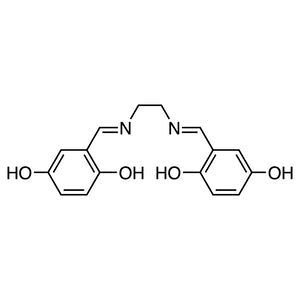
- TCI B3015 124061-43-4 N,N'-Bis(5-hydroxysalicylidene)ethylenediamine
- Organic synthesis applications benefit from this ligand’s ability to form stable metal complexes, enhancing reaction efficiency and selectivity in catalytic processes.
- Transition metal catalysis relies on its capacity to bind with metals like nickel and palladium, supporting the development of efficient catalysts for industrial and academic research.
- Ligand-based research is enhanced by its molecular structure, allowing for the study of coordination chemistry and metal-ligand interactions in various experimental setups.
- Catalytic process optimization utilizes its stability and reactivity to improve reaction rates and reduce by-product formation in complex chemical systems.
- Synthesis of complex compounds is supported by its ability to interact with multiple metals, enabling the creation of diverse chemical structures in laboratory settings.
| Brand | TCI |
|---|---|
| CAS number | 186769-18-6 |
| Molecular formula | — |
| Purity | — |
| Category | Chemistry > Catalysis and Inorganic Chemistry > Nitrogen-Donor Ligands [Catalysis] |
| Pack sizes | Available in various quantities as per standard laboratory requirements |
| Physical form | Solid |
| Storage | Store in a cool, dry place away from direct sunlight and moisture |
This compound should be stored in a cool, dry environment to maintain its chemical stability. It is recommended to keep it in a sealed container to prevent exposure to moisture and air. Due to its chemical nature, it should be handled with appropriate personal protective equipment, including gloves and safety goggles. Storage should be in a well-ventilated area to minimize any potential hazards. Avoid contact with incompatible substances to ensure safe handling. Regular inspection of storage conditions is advised to maintain the integrity of the compound during its shelf life.
—
Produk Terkait
-
(1R,2R)-1,2-Bis(2,4,6-trimethylphenyl)ethylenediamine TCI B2316
Regular price From Rp 3.365.250,00Regular priceRp 2.368.800,00Sale price From Rp 3.365.250,00 -
(1R,2R)-1,2-Bis(2,4,6-trimethylphenyl)ethylenediamineDihydrochloride TCI B5914
Regular price Rp 2.252.250,00Regular priceRp 1.590.750,00Sale price Rp 2.252.250,00 -
(1R,2R)-1,2-Bis(4-methylphenyl)ethylenediamineDihydrochloride TCI B6240
Regular price Rp 2.227.050,00Regular priceRp 1.572.900,00Sale price Rp 2.227.050,00 -
(+/-)-1,2-Bis(2,4,6-trimethylphenyl)ethylenediamineDihydrochloride TCI B2318
Regular price From Rp 5.405.400,00Regular priceRp 3.795.750,00Sale price From Rp 5.405.400,00 -
5,10,15,20-Tetrakis(2,4,6-trimethylphenyl)porphyrin TCI T1729
Regular price From Rp 4.849.950,00Regular priceRp 3.407.250,00Sale price From Rp 4.849.950,00 -
N,N'-Bis(5-hydroxysalicylidene)ethylenediamine TCI B3015
Regular price From Rp 4.081.350,00Regular priceRp 2.869.650,00Sale price From Rp 4.081.350,00 -
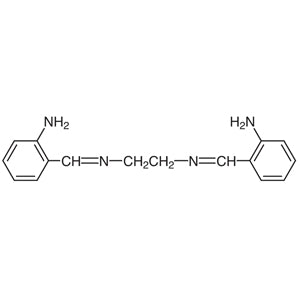
N,N'-Bis(2-aminobenzal)ethylenediamine TCI A0261
Regular price Rp 3.021.900,00Regular priceRp 2.128.350,00Sale price Rp 3.021.900,00