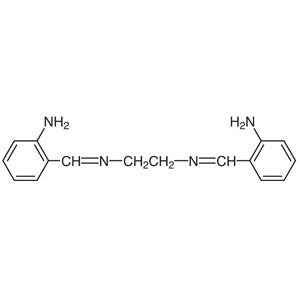
TCI A0261, N,N'-Bis(2-aminobenzal)ethylenediamine, is a Schiff base compound formed by the condensation of ethylenediamine with two molecules of 2-aminobenzaldehyde. The molecule contains several nitrogen atoms that can donate electron pairs to metal ions, which allows it to act as a chelating ligand. In the TCI catalogue it is listed among the nitrogen-donor ligands used in catalysis and inorganic chemistry. In the laboratory it is used to build coordination complexes with a range of transition metals.
The strength of this type of ligand lies in its chelating structure. The ethylene bridge between the two imine groups forms a framework that can wrap around a single metal ion, while the aromatic amine group at each end adds further donor sites and room for later modification. The resulting complexes can be studied for their spectroscopic, magnetic, and catalytic behavior. Because the imine bond is reversible under certain conditions, the compound is also of interest to researchers working on dynamic covalent chemistry and supramolecular assembly.
For laboratories in Indonesia, the 1 g pack of this TCI product suits inorganic and coordination chemistry research groups that carry out complex synthesis on a small scale. It is also practical for university teaching laboratories, where limited quantities of a specialty ligand are enough to explore ligand design, metal binding, and the characterization of new coordination compounds.
TCI brochures (PDF)
- Ligands 2025-12-01 · p. 10
Related TCI products
- TCI A0260 28107-09-7 4-Aminobenzaldehyde Polymer
- TCI D4850 54376-65-7 4-Diethylaminobenzaldoxime (mixture of isomers)
- TCI D1495 100-10-7 4-Dimethylaminobenzaldehyde
- TCI D0463 120-21-8 4-Diethylaminobenzaldehyde
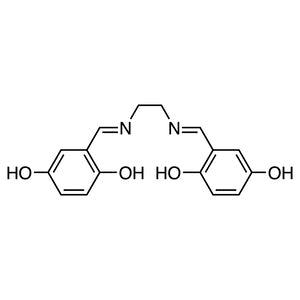
- TCI B3015 124061-43-4 N,N'-Bis(5-hydroxysalicylidene)ethylenediamine
- TCI B2317 186769-18-6 (1S,2S)-1,2-Bis(2,4,6-trimethylphenyl)ethylenediamine
- Coordination complex synthesis: the nitrogen donor atoms let this ligand bind transition metal ions, so researchers can prepare new chelate complexes and study how the metal environment is organized.
- Catalysis research: as a nitrogen-donor ligand listed under catalysis, it can be combined with metal centers to form complexes whose catalytic behavior is then tested in the laboratory.
- Spectroscopic and magnetic studies: the metal complexes formed from this Schiff base can be characterized by spectroscopic and magnetic methods, giving insight into their electronic structure and properties.
- Dynamic covalent chemistry: because the imine bonds are reversible under certain conditions, the compound is a useful model for researchers studying bond exchange and responsive molecular systems.
- Supramolecular assembly: the chelating framework and the aromatic amine end groups offer sites for further modification, supporting work on building larger organized molecular structures from the ligand and metal ions.
| Brand | TCI |
|---|---|
| CAS number | 4408-47-3 |
| Molecular formula | — |
| Purity | — |
| Category | Chemistry > Catalysis and Inorganic Chemistry > Nitrogen-Donor Ligands [Catalysis] |
| Pack sizes | 1 g |
| Physical form | — |
| Storage | keep tightly closed in a cool, dry place, following the supplier's label instructions |
- Product code: A0261
Store the container tightly closed in a cool, dry place away from moisture, heat, and direct light, and follow any storage instruction printed on the supplier's label. Keep it in its original container, or in a clean, dry glass vial with a secure closure if it must be transferred. Because Schiff base imine bonds can be sensitive to water, avoid unnecessary exposure to humid air and reseal the container promptly after use. Handle the material in a well-ventilated area or fume hood, wear gloves, safety glasses, and a laboratory coat, and avoid inhaling dust or contacting skin and eyes. Consult the safety data sheet before use, and dispose of waste according to laboratory and local regulations.
—
Produk Terkait
-
4-AminobenzaldehydePolymer TCI A0260
Regular price Rp 1.565.550,00Regular price -
4-Diethylaminobenzaldoxime(mixtureofisomers) TCI D4850
Regular price From Rp 610.050,00Regular price -
4-Dimethylaminobenzaldehyde TCI D1495
Regular price From Rp 610.050,00Regular price -
4-Diethylaminobenzaldehyde TCI D0463
Regular price From Rp 689.850,00Regular price -
N,N'-Bis(5-hydroxysalicylidene)ethylenediamine TCI B3015
Regular price From Rp 4.028.850,00Regular price -
(1S,2S)-1,2-Bis(2,4,6-trimethylphenyl)ethylenediamine TCI B2317
Regular price From Rp 2.147.250,00Regular price -
(1R,2R)-1,2-Bis(2,4,6-trimethylphenyl)ethylenediamine TCI B2316
Regular price From Rp 3.312.750,00Regular price -
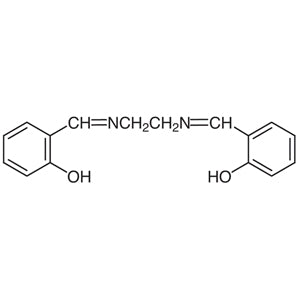
N,N'-Bis(salicylidene)ethylenediamine TCI H0199
Regular price From Rp 1.298.850,00Regular price