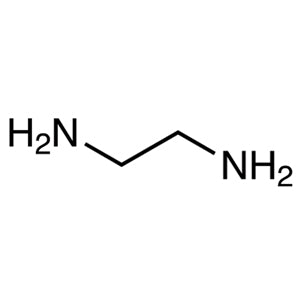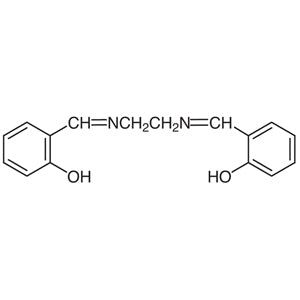
TCI H0199 N,N'-Bis(salicylidene)ethylenediamine, known among chemists more commonly as the salen ligand, is a Schiff base compound formed from the condensation of two molecules of salicylaldehyde with one molecule of ethylenediamine. The molecule carries four donor atoms — two imine nitrogens and two phenolate oxygens — arranged in such a way that they are able to clamp a single central metal ion very effectively. In the laboratory, this compound serves as a reference material in coordination chemistry and inorganic chemistry because of its ability to form metal complexes that are stable and straightforward to characterise.
The advantage that leads researchers to select this ligand is its tetradentate chelating character, which is both robust and flexible at the same time. The ethylene bridge grants geometric freedom, so the ligand can accommodate itself to transition metal ions of various sizes, while the phenolate groups contribute negative charge that stabilises the metal centre. The complexes that form are generally strongly coloured and give clear spectroscopic signals, so the process of their formation is easy to follow using either a UV-Vis spectrophotometer or an infrared instrument. The parent compound itself is a yellow solid that is stable under ordinary storage conditions.
In Indonesian laboratories, this material is typically encountered in university and institutional research settings where coordination chemistry, inorganic synthesis, and ligand design are studied. It is a familiar choice for practical classes that demonstrate Schiff base formation and metal complexation, and for research groups preparing metal-salen complexes for further investigation. Its predictable behaviour and easily observed complex formation make it well suited to teaching work as well as to exploratory synthetic chemistry.
TCI brochures (PDF)
- Ligands 2025-12-01 · p. 10
Related TCI products
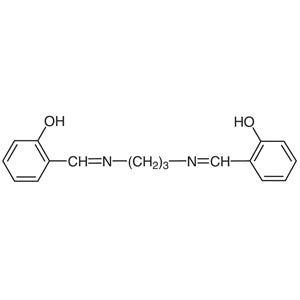
- TCI D1422 120-70-7 N,N'-Bis(salicylidene)-1,3-propanediamine
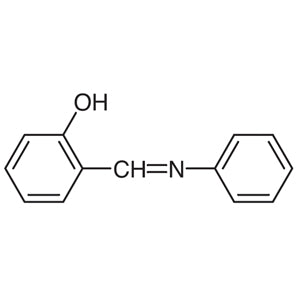
- TCI S0267 779-84-0 N-Salicylideneaniline
- TCI D2572 3946-91-6 N,N'-Bis(salicylidene)-1,2-phenylenediamine
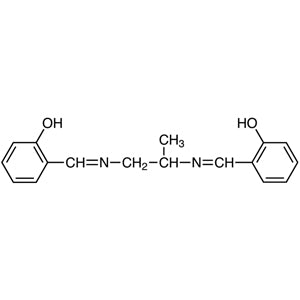
- TCI D1307 94-91-7 N,N'-Bis(salicylidene)-1,2-propanediamine
- TCI B4647 135616-36-3 (S,S)-(+)-N,N'-Bis(3,5-di-tert-butylsalicylidene)-1,2-cyclohexanediamine
- TCI B4418 135616-40-9 (R,R)-(-)-N,N'-Bis(3,5-di-tert-butylsalicylidene)-1,2-cyclohexanediamine
- Coordination chemistry research — the four donor atoms bind a central metal ion firmly, giving stable complexes suitable for systematic study of metal-ligand bonding behaviour.
- Inorganic synthesis of metal-salen complexes — the ligand reacts readily with transition metal salts, and the flexible ethylene bridge accommodates a range of different metal ion sizes.
- Schiff base chemistry teaching and demonstration — as a classic condensation product of salicylaldehyde and ethylenediamine, it illustrates imine formation clearly in practical instruction.
- UV-Vis spectrophotometric study of complex formation — the strongly coloured complexes it produces give clear absorption signals that allow the reaction to be monitored directly.
- Infrared spectroscopic characterisation work — the imine and phenolate functional groups give distinct signals, so complex formation and ligand coordination are easy to confirm instrumentally.
| Brand | TCI |
|---|---|
| CAS number | 94-93-9 |
| Molecular formula | — |
| Purity | — |
| Category | Chemistry > Building Blocks > Non-Heterocyclic Building Blocks |
| Pack sizes | available in standard laboratory pack sizes — please confirm the option required when ordering |
| Physical form | yellow solid |
| Storage | stable under ordinary storage conditions; keep containers tightly closed |
Store the material in its original tightly closed container in a cool, dry place away from direct sunlight and sources of heat. Glass or chemically compatible plastic containers are suitable, and the container should be resealed promptly after each use to limit exposure to atmospheric moisture. Handle the solid in a well-ventilated area or within a fume hood when weighing or transferring quantities, and wear standard personal protective equipment including laboratory coat, safety goggles, and appropriate gloves. Avoid generating dust during handling, keep the material separated from incompatible chemicals, and always consult the manufacturer's safety data sheet before beginning work.
—
Produk Terkait
-
N,N'-Bis(salicylidene)-1,3-propanediamine TCI D1422
Regular price Rp 1.273.650,00Regular price -
N-Salicylideneaniline TCI S0267
Regular price From Rp 875.700,00Regular price -
N,N'-Bis(salicylidene)-1,2-phenylenediamine TCI D2572
Regular price From Rp 1.193.850,00Regular price -
N,N'-Bis(salicylidene)-1,2-propanediamine TCI D1307
Regular price From Rp 848.400,00Regular price -
(S,S)-(+)-N,N'-Bis(3,5-di-tert-butylsalicylidene)-1,2-cyclohexanediamine TCI B4647
Regular price From Rp 4.877.250,00Regular price -
(R,R)-(-)-N,N'-Bis(3,5-di-tert-butylsalicylidene)-1,2-cyclohexanediamine TCI B4418
Regular price From Rp 2.782.500,00Regular price -
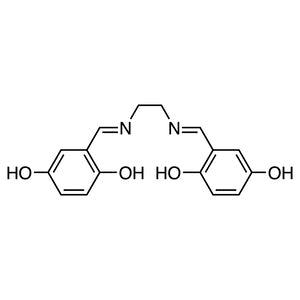
N,N'-Bis(5-hydroxysalicylidene)ethylenediamine TCI B3015
Regular price From Rp 4.028.850,00Regular price -
EthylenediamineAnhydrous TCI E0077
Regular price From Rp 505.050,00Regular price