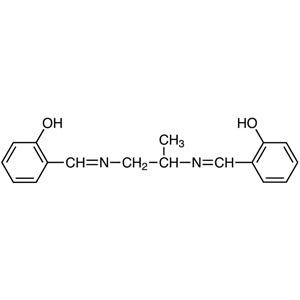
N,N’-Bis(salicylidene)-1,2-propanediamine (CAS 94-91-7) is a nitrogen-donor ligand widely used in catalytic reactions and metal complex formation within laboratory settings. This compound plays a crucial role in organic and inorganic synthesis by acting as a versatile ligand that can coordinate with transition metals. Its structural complexity, featuring two salicylidene groups attached to the nitrogen atoms of 1,2-propanediamine, makes it highly effective in activating substrates and facilitating chemical transformations. This compound is a key component in various research applications due to its reactivity and ability to form stable metal complexes.
The compound’s ability to form stable complexes with transition metals through both nitrogen and oxygen atoms is a major factor in its popularity. Its symmetric molecular structure enhances its reactivity and coordination efficiency, making it ideal for catalytic processes. Additionally, its solubility in organic solvents allows for easy incorporation into synthetic protocols. These properties make it a preferred choice for chemists seeking reliable and efficient ligands for catalytic applications.
In Indonesian laboratories, N,N’-Bis(salicylidene)-1,2-propanediamine is commonly used in research focused on catalysis, coordination chemistry, and organic synthesis. It is particularly favored in academic and industrial settings where metal-based catalytic systems are required. Its stability and reactivity make it a valuable tool for researchers working on complex chemical reactions and material synthesis.
TCI brochures (PDF)
- Ligands 2025-12-01 · p. 10
Related TCI products
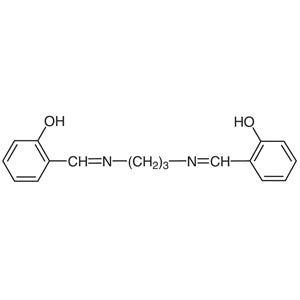
- TCI D1422 120-70-7 N,N'-Bis(salicylidene)-1,3-propanediamine
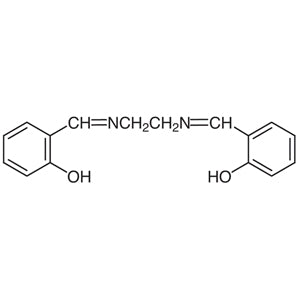
- TCI H0199 94-93-9 N,N'-Bis(salicylidene)ethylenediamine
- TCI D2572 3946-91-6 N,N'-Bis(salicylidene)-1,2-phenylenediamine
- TCI B4647 135616-36-3 (S,S)-(+)-N,N'-Bis(3,5-di-tert-butylsalicylidene)-1,2-cyclohexanediamine
- TCI B4418 135616-40-9 (R,R)-(-)-N,N'-Bis(3,5-di-tert-butylsalicylidene)-1,2-cyclohexanediamine
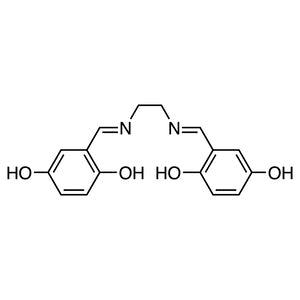
- TCI B3015 124061-43-4 N,N'-Bis(5-hydroxysalicylidene)ethylenediamine
- Catalytic Reactions: This ligand is ideal for catalytic systems where metal activation is required, enabling efficient and selective chemical transformations.
- Coordination Chemistry Studies: Its ability to form stable metal complexes makes it a key reagent in studying coordination compounds and their properties.
- Organic Synthesis: The compound is widely used in the synthesis of various organic compounds, especially in reactions involving transition metal catalysts.
- Metal Complex Formation: It serves as a versatile ligand for creating metal complexes, which are essential in both academic and industrial chemical processes.
- Analytical Chemistry: Its reactivity and coordination properties make it useful in analytical techniques that involve metal detection and complexation.
| Brand | TCI |
|---|---|
| CAS number | 94-91-7 |
| Molecular formula | — |
| Purity | — |
| Category | Chemistry > Catalysis and Inorganic Chemistry > Nitrogen-Donor Ligands [Catalysis] |
| Pack sizes | Available in standard laboratory quantities |
| Physical form | Solid powder |
| Storage | Store in a cool, dry place away from light and moisture |
This compound should be stored in a cool, dry environment, away from direct light and moisture to maintain its stability and reactivity. It is recommended to use airtight containers to prevent exposure to air and humidity. Due to its chemical nature, it should be handled with appropriate personal protective equipment, such as gloves and safety goggles. It is important to ensure proper ventilation in the workspace to minimize inhalation risks. Avoid contact with incompatible substances to prevent unwanted reactions. Regular monitoring of storage conditions ensures the compound remains in optimal condition for laboratory use.
—
Produk Terkait
-
N,N'-Bis(salicylidene)-1,3-propanediamine TCI D1422
Regular price Rp 1.273.650,00Regular price -
N,N'-Bis(salicylidene)ethylenediamine TCI H0199
Regular price From Rp 1.298.850,00Regular price -
N,N'-Bis(salicylidene)-1,2-phenylenediamine TCI D2572
Regular price From Rp 1.193.850,00Regular price -
(S,S)-(+)-N,N'-Bis(3,5-di-tert-butylsalicylidene)-1,2-cyclohexanediamine TCI B4647
Regular price From Rp 4.877.250,00Regular price -
(R,R)-(-)-N,N'-Bis(3,5-di-tert-butylsalicylidene)-1,2-cyclohexanediamine TCI B4418
Regular price From Rp 2.782.500,00Regular price -
N,N'-Bis(5-hydroxysalicylidene)ethylenediamine TCI B3015
Regular price From Rp 4.028.850,00Regular price -
N-Benzyl-1,3-propanediamine TCI B4937
Regular price Rp 3.287.550,00Regular price -
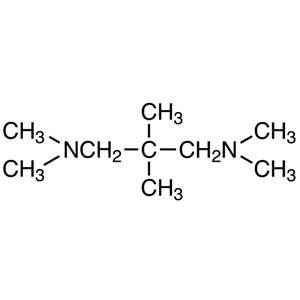
N,N,N',N'-Tetramethyl-2,2-dimethyl-1,3-propanediamine TCI T1008
Regular price Rp 9.248.400,00Regular price