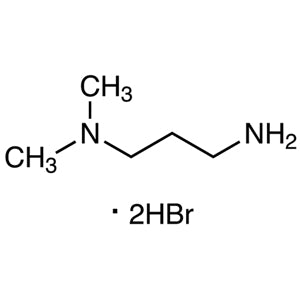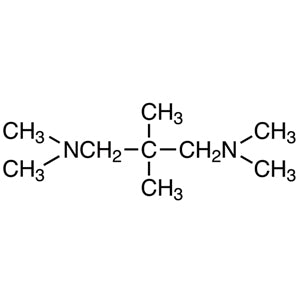
N,N,N',N'-Tetramethyl-2,2-dimethyl-1,3-propanediamine is a chemical compound widely used as a building block in the synthesis of complex molecules. This compound plays a crucial role in organic chemistry laboratories, where it serves as a versatile intermediate for constructing molecular frameworks. Its ability to participate in various chemical reactions makes it a valuable tool for researchers aiming to develop new compounds with specific functional groups. Due to its structural stability and predictable reactivity, it is often selected for applications requiring precise control over reaction outcomes.
The compound’s key properties include its non-heterocyclic nature, which ensures structural stability during chemical transformations. This characteristic is particularly beneficial in reactions where maintaining molecular integrity is essential. Additionally, its high purity and consistent quality make it a reliable choice for laboratory use. The compound’s reactivity can be finely tuned depending on the reaction conditions, allowing for greater flexibility in synthetic strategies. These attributes contribute to its popularity among chemists working in both academic and industrial settings.
In Indonesian laboratories, this compound is frequently used in organic chemistry research, especially in universities and research institutions. Its availability and reliability make it a preferred choice for experiments involving the synthesis of pharmaceuticals, agrochemicals, and other specialty chemicals. The compound’s role in building complex molecular structures supports a wide range of scientific investigations, making it an essential component of many laboratory workflows.
Related TCI products
- TCI D5619 2561497-43-4 N,N-Dimethyl-1,3-propanediamine Dihydroiodide
- TCI D5618 2710685-13-3 N,N-Dimethyl-1,3-propanediamine Dihydrobromide
- TCI D5617 52198-63-7 N,N-Dimethyl-1,3-propanediamine Dihydrochloride
- TCI D3811 111-33-1 N,N'-Dimethyl-1,3-propanediamine
- TCI D1733 53369-71-4 N,N,2,2-Tetramethyl-1,3-propanediamine
- TCI D0790 109-55-7 N,N-Dimethyl-1,3-propanediamine
- Organic synthesis: This compound is ideal for constructing complex molecular frameworks due to its stable structure and predictable reactivity.
- Pharmaceutical research: It is used in the development of new drugs as a building block for introducing specific functional groups.
- Agrochemical development: Its versatility makes it suitable for the synthesis of pesticides and herbicides requiring precise molecular design.
- Industrial chemistry: It supports the production of specialty chemicals by providing a reliable and consistent starting material.
- Academic research: It is commonly used in teaching and research settings to demonstrate synthetic methodologies and molecular design principles.
| Brand | TCI |
|---|---|
| CAS number | 53369-79-2 |
| Molecular formula | — |
| Purity | — |
| Category | Chemistry > Building Blocks > Non-Heterocyclic Building Blocks |
| Pack sizes | Available in various quantities to meet laboratory needs |
| Physical form | Liquid |
| Storage | Store in a cool, dry place away from direct sunlight |
This compound should be stored in a cool, dry place, away from direct sunlight and sources of heat. It is recommended to use airtight containers to prevent moisture absorption and contamination. Due to its chemical nature, it should be handled in a well-ventilated area, and appropriate personal protective equipment such as gloves and safety goggles should be worn. Avoid contact with skin and eyes, and ensure proper disposal in accordance with local regulations. Regular monitoring of storage conditions is advised to maintain the compound’s stability and effectiveness for laboratory use.
—
Produk Terkait
-
N,N-Dimethyl-1,3-propanediamineDihydroiodide TCI D5619
Regular price From Rp 1.035.300,00Regular price -
N,N-Dimethyl-1,3-propanediamineDihydrobromide TCI D5618
Regular price From Rp 743.400,00Regular price -
N,N-Dimethyl-1,3-propanediamineDihydrochloride TCI D5617
Regular price From Rp 743.400,00Regular price -
N,N'-Dimethyl-1,3-propanediamine TCI D3811
Regular price From Rp 1.618.050,00Regular price -
N,N,2,2-Tetramethyl-1,3-propanediamine TCI D1733
Regular price From Rp 769.650,00Regular price -
N,N-Dimethyl-1,3-propanediamine TCI D0790
Regular price From Rp 477.750,00Regular price -
N-Benzyl-1,3-propanediamine TCI B4937
Regular price Rp 3.287.550,00Regular price -
N,N'-Bis(2-aminoethyl)-1,3-propanediamine TCI B1445
Regular price Rp 1.378.650,00Regular priceRp 963.900,00Sale price Rp 1.378.650,00