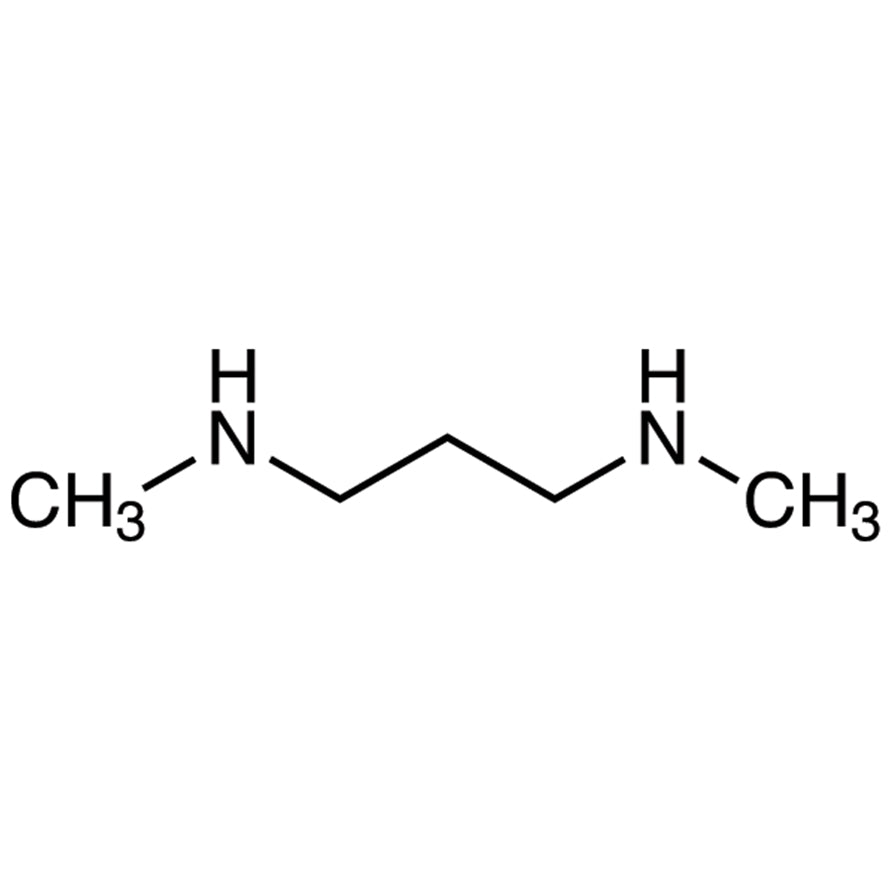
TCI D3811 with CAS number 111-33-1 is N,N'-Dimethyl-1,3-propanediamine, a simple aliphatic diamine in which a three-carbon chain links two methylated secondary amine groups. The compound belongs to the family of versatile building blocks widely used in organic synthesis laboratories. Its role is to supply two reactive nitrogen points within a single molecule, allowing it to act as a linker joining two molecular fragments, as a starting material for constructing nitrogen-containing heterocyclic rings, or as an electron-donating ligand that binds transition metals.
The property that makes this diamine a frequent choice is structural simplicity combined with dependable reactivity. Both secondary amines are nucleophilic enough to react with alkyl halides, anhydrides, acid chlorides, and carbonyl compounds, while the methyl groups on nitrogen prevent unwanted onward reactions such as the difficult-to-control formation of doubly substituted tertiary amines. The propylene chain length provides exactly the right spacing for the two nitrogen atoms to clamp a single metal atom, forming a stable six-membered chelate ring. The compound is also basic and dissolves well in water and in common organic solvents.
In Indonesian laboratories, this building block is typically used in academic and industrial research settings where organic synthesis and coordination chemistry are routine activities. It suits university research groups preparing heterocyclic scaffolds, formulation laboratories evaluating amine-functional intermediates, and analytical or R&D units that require a reliable bifunctional amine for method development. Because it is supplied as a standard TCI catalogue item, it fits both routine teaching-laboratory work and longer research programmes that need consistent reagent behaviour between batches.
TCI brochures (PDF)
- Polyamines 2025-10-21 · p. 3
Related TCI products
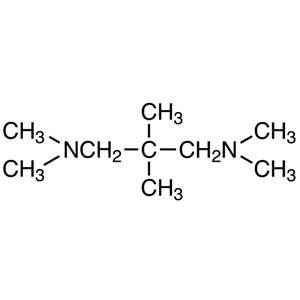
- TCI T1008 53369-79-2 N,N,N',N'-Tetramethyl-2,2-dimethyl-1,3-propanediamine
- TCI D5619 2561497-43-4 N,N-Dimethyl-1,3-propanediamine Dihydroiodide
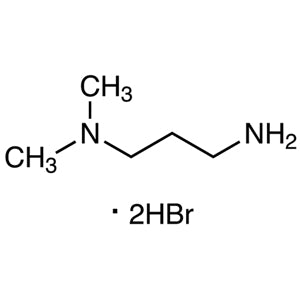
- TCI D5618 2710685-13-3 N,N-Dimethyl-1,3-propanediamine Dihydrobromide
- TCI D5617 52198-63-7 N,N-Dimethyl-1,3-propanediamine Dihydrochloride
- TCI D0790 109-55-7 N,N-Dimethyl-1,3-propanediamine
- TCI B4937 13910-48-0 N-Benzyl-1,3-propanediamine
- Heterocycle construction: the two secondary amines allow ring closure with dielectrophiles, making this diamine a direct entry point to nitrogen-containing heterocyclic scaffolds in synthesis programmes.
- Molecular linker chemistry: with a reactive nitrogen at each end of a short propylene chain, it joins two molecular fragments into a single bridged structure with controlled spacing.
- Transition metal ligand preparation: the propylene spacing lets both nitrogen atoms coordinate one metal centre, forming a stable six-membered chelate ring for coordination chemistry studies.
- Amide and sulfonamide formation: the nucleophilic secondary amines react readily with acid chlorides and anhydrides, giving predictable mono- or bis-functionalised products without over-alkylation.
- Alkylation and reductive amination work: reaction with alkyl halides or carbonyl compounds proceeds reliably, while N-methyl substitution limits uncontrolled further substitution at nitrogen.
| Brand | TCI (Tokyo Chemical Industry) |
|---|---|
| CAS number | 111-33-1 |
| Molecular formula | — |
| Purity | — |
| Category | Chemistry > Building Blocks > Non-Heterocyclic Building Blocks |
| Pack sizes | available in standard TCI catalogue pack sizes; please confirm the required size when ordering |
| Physical form | — |
| Storage | keep in a tightly closed original container in a cool, dry, well-ventilated area away from incompatible materials |
- Chemical name: N,N'-Dimethyl-1,3-propanediamine
Store the container tightly closed in a cool, dry, well-ventilated place, kept separate from acids, oxidising agents, and other incompatible chemicals. Because the material is a basic amine, keep it in its original supplier container or in a chemically compatible sealed vessel, and avoid transferring it into unsuitable metal containers. Handle in a fume hood using safety glasses, chemically resistant gloves, and a laboratory coat, since amines can irritate skin, eyes, and the respiratory tract. Close the container immediately after dispensing to limit exposure to air and moisture. Always consult the manufacturer's Safety Data Sheet before use and follow local laboratory waste disposal procedures.
—
Produk Terkait
-
N,N,N',N'-Tetramethyl-2,2-dimethyl-1,3-propanediamine TCI T1008
Regular price Rp 9.248.400,00Regular price -
N,N-Dimethyl-1,3-propanediamineDihydroiodide TCI D5619
Regular price From Rp 1.035.300,00Regular price -
N,N-Dimethyl-1,3-propanediamineDihydrobromide TCI D5618
Regular price From Rp 743.400,00Regular price -
N,N-Dimethyl-1,3-propanediamineDihydrochloride TCI D5617
Regular price From Rp 743.400,00Regular price -
N,N-Dimethyl-1,3-propanediamine TCI D0790
Regular price From Rp 477.750,00Regular price -
N-Benzyl-1,3-propanediamine TCI B4937
Regular price Rp 3.287.550,00Regular price -
N,N'-Bis(2-aminoethyl)-1,3-propanediamine TCI B1445
Regular price Rp 1.378.650,00Regular price -
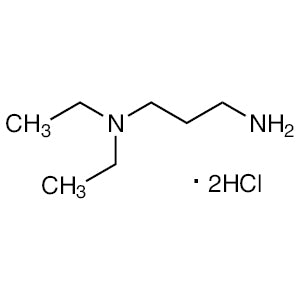
N,N-Diethyl-1,3-propanediamineDihydrochloride TCI D5861
Regular price Rp 1.724.100,00Regular price