2-(4-tert-Butylphenyl)-5-(4-biphenylyl)-1,3,4-oxadiazole is an organic compound widely used in material research for optoelectronic applications, particularly in the development of OLED (Organic Light-Emitting Diode) devices. This compound plays a crucial role in laboratory settings where the synthesis and testing of advanced materials are required. Its unique properties make it an essential component in the creation of high-performance and durable optoelectronic materials. It is commonly used in the fabrication of OLEDs, where it serves as a light-emitting layer or as a dopant in complex structures.
The compound is favored for its exceptional conductivity and light-emission characteristics. It exhibits a stable molecular structure and the ability to absorb and emit light within specific spectral ranges, making it ideal for applications requiring precise optical performance. Its thermal stability ensures that it can function effectively under extreme operational conditions, which is vital for long-term device reliability. These properties make it a preferred choice in both academic and industrial research environments.
In Indonesian laboratories, this compound is extensively used in OLED research and development, particularly by educational and research institutions focused on material science and advanced technology. It is a key material in projects exploring the practical applications of organic light in various technological fields. Its consistent performance and reliability make it a staple in the pursuit of innovative optoelectronic solutions.
Advantages (TCI brochure)
- Oxadiazole derivative with electron transport property
TCI brochures (PDF)
- Chemical Compounds Purified by Sublimation 2025-05-07 · p. 4
- Organic Light-Emitting Diode (OLED) Materials 2026-08-18 · p. 2
Related TCI products
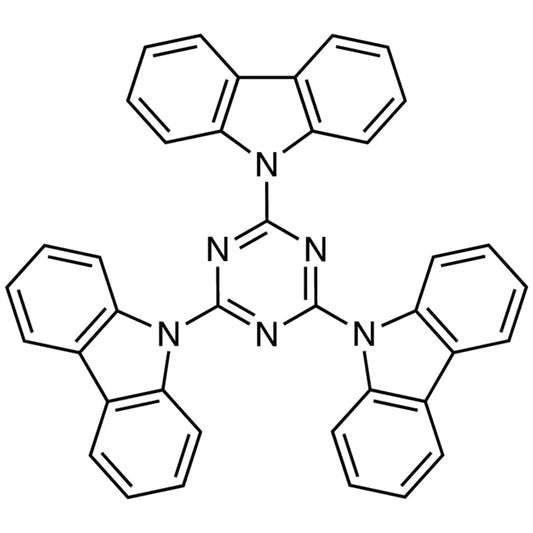
- TCI T2700 134984-37-5 2,4,6-Tri(9H-carbazol-9-yl)-1,3,5-triazine (purified by sublimation)
- TCI T2238 2085-33-8 Tris(8-quinolinolato)aluminum (purified by sublimation)
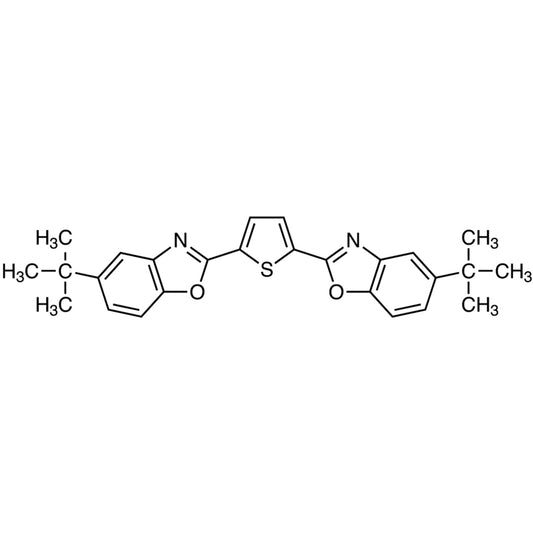
- TCI B4221 7128-64-5 2,5-Bis(5-tert-butyl-2-benzoxazolyl)thiophene (purified by sublimation)
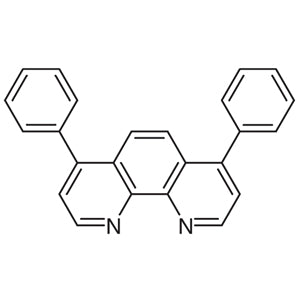
- TCI B2695 1662-01-7 Bathophenanthroline (purified by sublimation)
- TCI B2694 4733-39-5 Bathocuproine (purified by sublimation)
- TCI B1767 15082-28-7 2-(4-tert-Butylphenyl)-5-(4-biphenylyl)-1,3,4-oxadiazole
- OLED device fabrication as a light-emitting layer due to its unique optical and electrical properties.
- Material testing for optoelectronic applications requiring high efficiency and durability.
- Research in organic light-emitting diodes for advanced display technologies and lighting solutions.
- Development of complex OLED structures where precise light emission and conductivity are essential.
- Exploration of organic light applications in various technological fields, including flexible electronics and biomedical devices.
From the TCI brochure
- Electron transport material
| Brand | TCI |
|---|---|
| CAS number | 15082-28-7 |
| Molecular formula | — |
| Purity | — |
| Category | Materials Science > Electronic Materials > Organic Light-Emitting Diode (OLED) Materials |
| Pack sizes | — |
| Physical form | — |
| Storage | Store in a cool, dry place away from direct sunlight and moisture |
This compound should be stored in a cool, dry environment, away from direct sunlight and moisture to maintain its stability and effectiveness. It is recommended to use airtight containers to prevent exposure to air and humidity. Due to its chemical nature, it is important to handle it with care, using appropriate personal protective equipment such as gloves and safety goggles. Proper ventilation should be ensured when working with the material to minimize inhalation risks. The compound should not be stored near incompatible substances to avoid any potential chemical reactions. Regular monitoring of storage conditions is advised to ensure the material remains in optimal condition for laboratory use.
—
Produk Terkait
-
2,4,6-Tri(9H-carbazol-9-yl)-1,3,5-triazine(purifiedbysublimation) TCI T2700
Regular price Rp 4.240.950,00Regular priceRp 2.980.950,00Sale price Rp 4.240.950,00 -
Tris(8-quinolinolato)aluminum(purifiedbysublimation) TCI T2238
Regular price Rp 5.460.000,00Regular priceRp 3.833.550,00Sale price Rp 5.460.000,00 -
2,5-Bis(5-tert-butyl-2-benzoxazolyl)thiophene(purifiedbysublimation) TCI B4221
Regular price From Rp 2.730.000,00Regular priceRp 1.924.650,00Sale price From Rp 2.730.000,00 -
Bathophenanthroline(purifiedbysublimation) TCI B2695
Regular price Rp 5.485.200,00Regular priceRp 3.851.400,00Sale price Rp 5.485.200,00 -
Bathocuproine(purifiedbysublimation) TCI B2694
Regular price From Rp 5.830.650,00Regular priceRp 4.092.900,00Sale price From Rp 5.830.650,00 -
2-(4-tert-Butylphenyl)-5-(4-biphenylyl)-1,3,4-oxadiazole TCI B1767
Regular price Rp 1.696.800,00Regular priceRp 1.202.250,00Sale price Rp 1.696.800,00 -
2,5-Di(1-naphthyl)-1,3,4-oxadiazole TCI D2757
Regular price Rp 3.180.450,00Regular priceRp 2.239.650,00Sale price Rp 3.180.450,00 -
1,3-Bis[5-(4-tert-butylphenyl)-2-[1,3,4]oxadiazolyl]benzene TCI B4252
Regular price From Rp 848.400,00Regular priceRp 609.000,00Sale price From Rp 848.400,00