2,5-Bis(5-tert-butyl-2-benzoxazolyl)thiophene is a specialized organic compound used in advanced material research, particularly in the development of Organic Light-Emitting Diodes (OLEDs). This material serves as a key component in the light-emitting layer of OLED devices, where it facilitates the generation of light through electronic interactions. Its role in the laboratory is critical for creating high-performance optoelectronic devices, such as displays and sensors. Due to its molecular structure, it enables precise control over optical and electronic properties, making it a valuable tool in materials science.
This compound is preferred for its exceptional thermal and chemical stability, which is attributed to the presence of tert-butyl groups on the benzoxazole ring. These groups enhance the compound’s resistance to degradation, ensuring reliable performance in demanding experimental conditions. Additionally, its high purity, achieved through sublimation, guarantees consistent results in laboratory experiments. The compound’s ability to maintain structural integrity under various conditions makes it suitable for use in high-precision research applications.
In Indonesian laboratories, this material is commonly utilized in research focused on OLED development and optoelectronic device fabrication. Many research institutions and universities in Indonesia incorporate this compound into their projects aimed at advancing electronic materials. Its application supports the growth of technology-driven research in the region, contributing to the development of next-generation display technologies and sensor systems.
TCI brochures (PDF)
- Chemical Compounds Purified by Sublimation 2025-05-07 · p. 4
- Organic Light-Emitting Diode (OLED) Materials 2026-08-18 · p. 6
- Thiophenes 2026-06-29 · p. 7
Related TCI products
- TCI T2238 2085-33-8 Tris(8-quinolinolato)aluminum (purified by sublimation)
- TCI B2696 15082-28-7 2-(4-tert-Butylphenyl)-5-(4-biphenylyl)-1,3,4-oxadiazole (purified by sublimation)
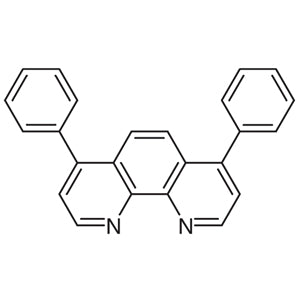
- TCI B2695 1662-01-7 Bathophenanthroline (purified by sublimation)
- TCI B2694 4733-39-5 Bathocuproine (purified by sublimation)
- TCI B1554 7128-64-5 2,5-Bis(5-tert-butyl-2-benzoxazolyl)thiophene
- TCI T3266 15546-43-7 N,N,N',N'-Tetraphenylbenzidine (purified by sublimation)
- OLED Material Development: This compound is ideal for creating high-efficiency light-emitting layers in OLEDs due to its precise optical and electronic properties.
- Optoelectronic Device Fabrication: It is used in the production of advanced sensors and displays, offering stability and performance in electronic applications.
- Material Research in Universities: Indonesian academic institutions use it in studies focused on organic semiconductors and light-emitting materials.
- Advanced Electronic Component Testing: Its chemical and thermal stability make it suitable for testing in high-precision electronic research environments.
- Industrial R&D in Technology Hubs: It supports innovation in Indonesia’s growing tech sector by providing reliable material for prototype development.
| Brand | TCI |
|---|---|
| CAS number | 7128-64-5 |
| Molecular formula | — |
| Purity | — |
| Category | Materials Science > Electronic Materials > Organic Light-Emitting Diode (OLED) Materials |
| Pack sizes | Available in various quantities as per standard laboratory supply |
| Physical form | Solid |
| Storage | Store in a cool, dry place away from light and moisture |
This compound should be stored in a cool, dry environment, away from direct sunlight and moisture to maintain its stability and purity. It is recommended to use airtight containers made of glass or high-density polyethylene to prevent contamination and degradation. Due to its chemical stability, it does not require refrigeration but should be protected from prolonged exposure to air. In laboratory settings, it is important to handle the material with appropriate safety measures, such as using gloves and ensuring proper ventilation. The compound is non-hazardous under normal conditions but should be treated with care to avoid any potential risks associated with its chemical nature. Proper storage ensures that the material remains effective for use in research applications.
—
Produk Terkait
-
Tris(8-quinolinolato)aluminum(purifiedbysublimation) TCI T2238
Regular price Rp 5.460.000,00Regular priceRp 3.833.550,00Sale price Rp 5.460.000,00 -
2-(4-tert-Butylphenyl)-5-(4-biphenylyl)-1,3,4-oxadiazole(purifiedbysublimation) TCI B2696
Regular price From Rp 1.723.050,00Regular priceRp 1.220.100,00Sale price From Rp 1.723.050,00 -
Bathophenanthroline(purifiedbysublimation) TCI B2695
Regular price Rp 5.485.200,00Regular priceRp 3.851.400,00Sale price Rp 5.485.200,00 -
Bathocuproine(purifiedbysublimation) TCI B2694
Regular price From Rp 5.830.650,00Regular priceRp 4.092.900,00Sale price From Rp 5.830.650,00 -
2,5-Bis(5-tert-butyl-2-benzoxazolyl)thiophene TCI B1554
Regular price From Rp 822.150,00Regular priceRp 590.100,00Sale price From Rp 822.150,00 -
N,N,N',N'-Tetraphenylbenzidine(purifiedbysublimation) TCI T3266
Regular price From Rp 2.173.500,00Regular priceRp 1.535.100,00Sale price From Rp 2.173.500,00 -
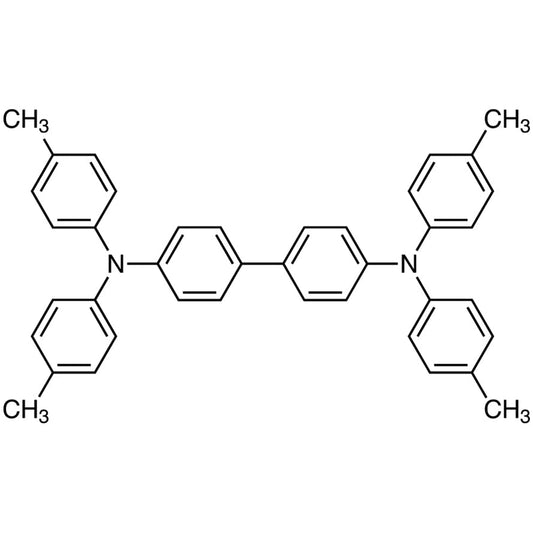
N,N,N',N'-Tetrakis(p-tolyl)benzidine(purifiedbysublimation) TCI T3265
Regular price Rp 2.147.250,00Regular priceRp 1.517.250,00Sale price Rp 2.147.250,00