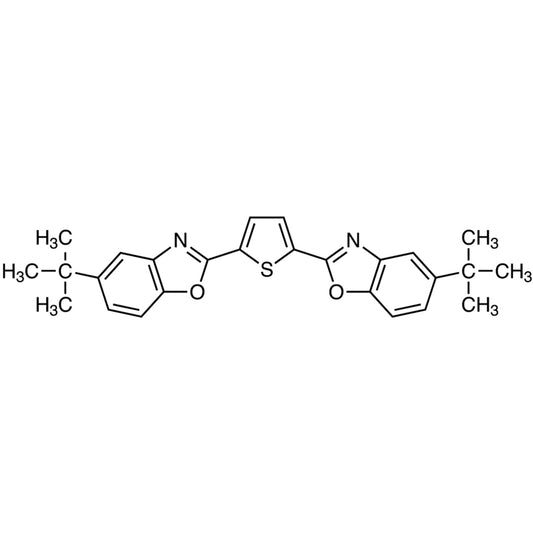
2,5-Bis(5-tert-butyl-2-benzoxazolyl)thiophene is an organic compound widely utilized in electronic material research, particularly in the development of OLED (Organic Light-Emitting Diode) materials. This compound plays a crucial role in the fabrication of active layers within OLED devices, where it contributes to the efficient emission of light. Its unique molecular structure enables it to serve as a key component in the design of high-performance light-emitting materials. In the laboratory, it is essential for creating stable and efficient light-emitting layers that are fundamental to the operation of OLED technology.
The compound's chemical stability and molecular structure, which includes benzoxazole and thiophene groups, make it a preferred choice for OLED applications. These structural features provide thermal stability and allow the material to emit light at specific wavelengths, enhancing its performance in optoelectronic devices. The compound's ability to maintain its properties under various conditions ensures its reliability in both research and development settings. Its compatibility with other organic materials also makes it versatile for use in different types of OLED configurations.
In Indonesian laboratories, this compound is commonly used in research and development projects focused on OLED technology. It supports innovation in optoelectronic materials, contributing to the growth of local scientific capabilities in the field of material science. Its application is widespread across academic institutions and research organizations, where it plays a vital role in advancing the understanding and development of advanced electronic materials.
TCI brochures (PDF)
- Organic Light-Emitting Diode (OLED) Materials 2026-08-18 · p. 6
- Thiophenes 2026-06-29 · p. 7
Related TCI products
- TCI B4221 7128-64-5 2,5-Bis(5-tert-butyl-2-benzoxazolyl)thiophene (purified by sublimation)
- TCI B4250 1041-00-5 1,2-Bis(5-methyl-2-benzoxazolyl)ethylene
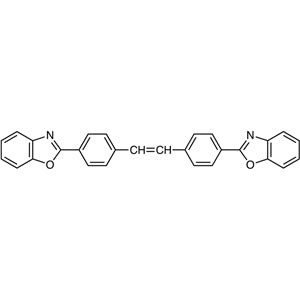
- TCI B2729 1533-45-5 4,4'-Bis(2-benzoxazolyl)stilbene
- TCI B2728 5089-22-5 1,4-Bis(2-benzoxazolyl)naphthalene
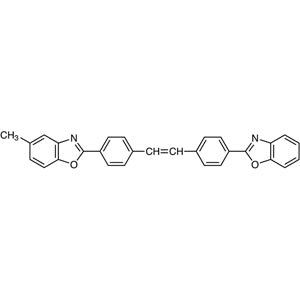
- TCI B1565 5242-49-9 4-(2-Benzoxazolyl)-4'-(5-methyl-2-benzoxazolyl)stilbene
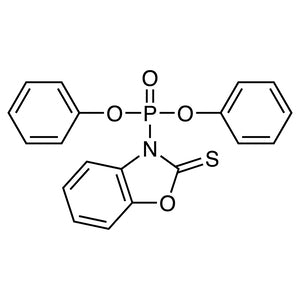
- TCI D2038 111160-56-6 Diphenyl (2,3-Dihydro-2-thioxo-3-benzoxazolyl)phosphonate
- OLED Material Development: This compound is ideal for creating efficient and stable light-emitting layers in OLED devices, enhancing the performance of organic light-emitting diodes.
- Optoelectronic Research: It is used in studies focused on the properties of organic materials, contributing to the understanding of light emission and conductivity in electronic systems.
- Thin Film Fabrication: The compound is suitable for producing thin films used in OLEDs, ensuring uniformity and optimal light emission characteristics.
- Material Stability Testing: Its chemical stability makes it a valuable tool for evaluating the long-term performance of organic materials under different environmental conditions.
- Light Emission Spectroscopy: It is employed in experiments that analyze the spectral properties of light-emitting materials, aiding in the design of more efficient OLED devices.
| Brand | TCI |
|---|---|
| CAS number | 7128-64-5 |
| Molecular formula | — |
| Purity | — |
| Category | Materials Science > Electronic Materials > Organic Light-Emitting Diode (OLED) Materials |
| Pack sizes | Available in various quantities as per standard laboratory supply options |
| Physical form | Solid, typically in crystalline or powder form |
| Storage | Store in a cool, dry place away from direct light and moisture |
This compound should be stored in a cool, dry environment, away from direct sunlight and moisture. It is recommended to use airtight containers to prevent exposure to air and humidity, which could affect its chemical stability. Proper labeling of storage containers is essential to ensure safe handling. In laboratory settings, it should be handled with care, using appropriate personal protective equipment such as gloves and safety goggles. It is important to keep the compound in a secure location, away from incompatible materials. Regular monitoring of storage conditions ensures the material remains in optimal condition for research and development applications.
—
Produk Terkait
-
2,5-Bis(5-tert-butyl-2-benzoxazolyl)thiophene(purifiedbysublimation) TCI B4221
Regular price From Rp 2.730.000,00Regular priceRp 1.924.650,00Sale price From Rp 2.730.000,00 -
1,2-Bis(5-methyl-2-benzoxazolyl)ethylene TCI B4250
Regular price Rp 3.392.550,00Regular priceRp 2.387.700,00Sale price Rp 3.392.550,00 -
4,4'-Bis(2-benzoxazolyl)stilbene TCI B2729
Regular price Rp 637.350,00Regular priceRp 460.950,00Sale price Rp 637.350,00 -
1,4-Bis(2-benzoxazolyl)naphthalene TCI B2728
Regular price From Rp 1.776.600,00Regular priceRp 1.257.900,00Sale price From Rp 1.776.600,00 -
4-(2-Benzoxazolyl)-4'-(5-methyl-2-benzoxazolyl)stilbene TCI B1565
Regular price Rp 1.776.600,00Regular priceRp 1.257.900,00Sale price Rp 1.776.600,00 -
Diphenyl(2,3-Dihydro-2-thioxo-3-benzoxazolyl)phosphonate TCI D2038
Regular price Rp 2.757.300,00Regular priceRp 1.943.550,00Sale price Rp 2.757.300,00 -
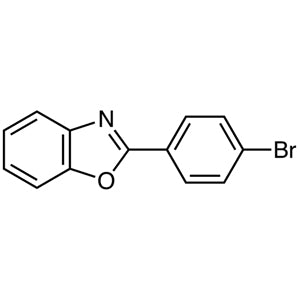
2-(4-Bromophenyl)benzoxazole TCI B5017
Regular price From Rp 717.150,00Regular priceRp 516.600,00Sale price From Rp 717.150,00 -
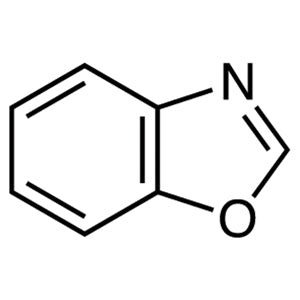
Benzoxazole TCI B0095
Regular price Rp 1.881.600,00Regular priceRp 1.331.400,00Sale price Rp 1.881.600,00