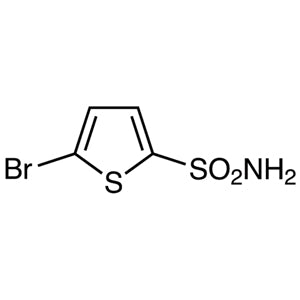
5-Bromo-2-thiophenesulfonamide is a chemical compound widely used in organic synthesis reactions. It is a heterocyclic building block, featuring a thiophene ring linked to a sulfonamide group and a bromo substituent. This compound plays a critical role in laboratory settings by serving as a versatile reagent for various chemical transformations. Its unique structure allows it to participate in substitution reactions, bond formation, and molecular modification processes. Due to its reactivity and structural complexity, it is a valuable tool for researchers working in synthetic chemistry.
The compound’s polar nature and solubility in organic solvents such as ethyl acetate and acetone make it highly suitable for a range of experimental applications. Its ability to dissolve in common laboratory solvents enhances its usability in both preparative and analytical procedures. Additionally, its solid form facilitates easy handling and storage, making it a practical choice for routine laboratory use. These properties contribute to its popularity among scientists and researchers in various fields.
In Indonesian laboratories, 5-Bromo-2-thiophenesulfonamide is commonly used in pharmacological and organic chemistry research. It is a key component in the synthesis of complex molecules with potential biological activity. Researchers and educational institutions frequently rely on this compound for experiments aimed at developing new drugs and understanding molecular interactions. Its availability and functional versatility make it an essential reagent in both academic and industrial research settings.
TCI brochures (PDF)
- Thiophenes 2026-06-29 · p. 5
Related TCI products
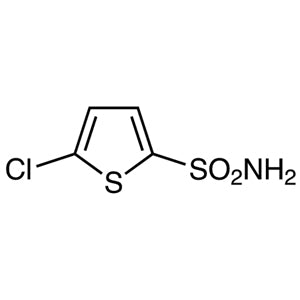
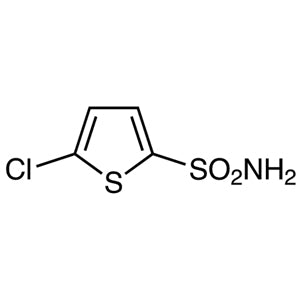
- TCI C2441 53595-66-7 5-Chloro-2-thiophenesulfonamide
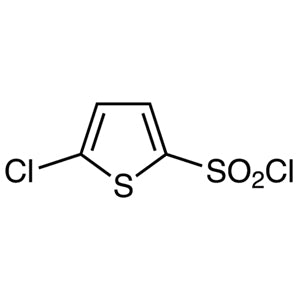
- TCI C2343 2766-74-7 5-Chloro-2-thiophenesulfonyl Chloride
- TCI T2851 6339-87-3 2-Thiophenesulfonamide
- TCI B4330 100342-30-1 N-tert-Butyl-2-thiophenesulfonamide
- TCI T2122 16629-19-9 2-Thiophenesulfonyl Chloride
- TCI B5482 81971-39-3 5-Bromo-1-methylpyridin-2(1H)-one
- Organic synthesis applications benefit from its reactivity and structural versatility, enabling the creation of complex molecules.
- Pharmacological research utilizes it for the development of compounds with potential therapeutic properties.
- Heterocyclic compound synthesis relies on its thiophene ring structure for building molecular frameworks.
- Analytical chemistry experiments use its solubility properties for chromatographic and spectroscopic analysis.
- Molecular modification studies employ it as a reactive intermediate in functional group transformations.
| Brand | TCI |
|---|---|
| CAS number | 53595-65-6 |
| Molecular formula | — |
| Purity | — |
| Category | Chemistry > Building Blocks > Heterocyclic Building Blocks |
| Pack sizes | Available in various quantities as per supplier specifications |
| Physical form | Solid |
| Storage | Store in a cool, dry place away from direct sunlight |
This compound should be stored in a cool, dry environment to maintain its chemical integrity. It is recommended to keep it in a sealed container to prevent moisture absorption and contamination. Due to its polar nature, it is advisable to use appropriate glass or plastic containers that are resistant to chemical degradation. Laboratory personnel should handle it with care, using standard safety protocols to minimize exposure. Proper ventilation is essential when working with this compound to ensure a safe working environment. Regular monitoring of storage conditions is necessary to preserve its effectiveness and usability in experimental procedures.
—
Produk Terkait
-
5-Chloro-2-thiophenesulfonamide TCI C2441
Regular price Rp 822.150,00Regular priceRp 590.100,00Sale price Rp 822.150,00 -
5-Chloro-2-thiophenesulfonylChloride TCI C2343
Regular price Rp 1.829.100,00Regular priceRp 1.294.650,00Sale price Rp 1.829.100,00 -
2-Thiophenesulfonamide TCI T2851
Regular price Rp 875.700,00Regular priceRp 627.900,00Sale price Rp 875.700,00 -
N-tert-Butyl-2-thiophenesulfonamide TCI B4330
Regular price Rp 530.250,00Regular priceRp 386.400,00Sale price Rp 530.250,00 -
2-ThiophenesulfonylChloride TCI T2122
Regular price Rp 2.862.300,00Regular priceRp 2.017.050,00Sale price Rp 2.862.300,00 -
5-Bromo-1-methylpyridin-2(1H)-one TCI B5482
Regular price Rp 2.384.550,00Regular priceRp 1.683.150,00Sale price Rp 2.384.550,00 -
2-Bromo-5-(2-ethylhexyl)thiophene TCI B5475
Regular price Rp 3.180.450,00Regular priceRp 2.239.650,00Sale price Rp 3.180.450,00 -
9-Benzyl-3-bromo-9H-carbazole TCI B5461
Regular price Rp 1.563.450,00Regular priceRp 1.108.800,00Sale price Rp 1.563.450,00