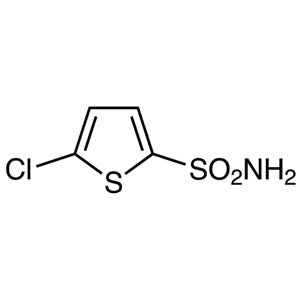
5-Chloro-2-thiophenesulfonamide is a chemical compound widely used in organic synthesis reactions. It belongs to the class of heterocyclic building blocks, making it a versatile reagent in laboratory settings. This compound plays a crucial role in the development of complex molecules with specific structural features. Its unique chemical structure allows for high reactivity under various reaction conditions, making it a valuable tool for chemists. The compound is commonly employed as a starting material in the synthesis of bioactive compounds and pharmaceuticals.
The compound is known for its stability under controlled conditions, yet it exhibits strong reactivity towards amines, alcohols, and acids. These chemical properties make it an ideal candidate for a wide range of synthetic transformations. Its ability to participate in substitution reactions, especially at the 2-position of the thiophene ring, enhances its utility in the creation of biologically active molecules. The compound’s reactivity and structural versatility contribute to its popularity among researchers.
In Indonesian laboratories, 5-Chloro-2-thiophenesulfonamide is extensively used in organic chemistry research, particularly in pharmacology and the synthesis of bioactive compounds. It is a preferred choice for institutions and universities engaged in drug development and medicinal chemistry. The compound’s availability in solid form and ease of handling further support its widespread use in both academic and industrial research settings.
TCI brochures (PDF)
- Thiophenes 2026-06-29 · p. 5
Related TCI products
- TCI B2793 53595-65-6 5-Bromo-2-thiophenesulfonamide
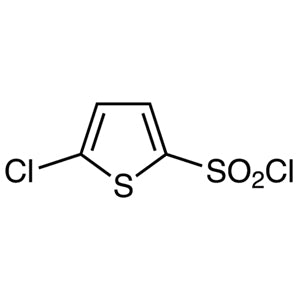
- TCI C2343 2766-74-7 5-Chloro-2-thiophenesulfonyl Chloride
- TCI T2851 6339-87-3 2-Thiophenesulfonamide
- TCI B4330 100342-30-1 N-tert-Butyl-2-thiophenesulfonamide
- TCI T2122 16629-19-9 2-Thiophenesulfonyl Chloride
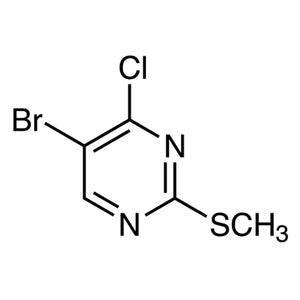
- TCI B4406 63810-78-6 5-Bromo-4-chloro-2-(methylthio)pyrimidine
- Synthesis of heterocyclic compounds for drug development due to its reactivity and structural versatility.
- Organic chemistry research in Indonesian laboratories for creating bioactive molecules with therapeutic potential.
- Pharmaceutical development projects requiring functionalized thiophene derivatives for medicinal applications.
- Bioactive compound synthesis where substitution reactions at the thiophene ring are essential for molecular modification.
- Academic research in universities focused on medicinal chemistry and pharmaceutical innovation.
| Brand | TCI |
|---|---|
| CAS number | 53595-66-7 |
| Molecular formula | — |
| Purity | — |
| Category | Chemistry > Building Blocks > Heterocyclic Building Blocks |
| Pack sizes | Available in standard laboratory quantities |
| Physical form | Solid |
| Storage | Store in a cool, dry place away from moisture and direct sunlight |
5-Chloro-2-thiophenesulfonamide should be stored in a cool, dry environment to maintain its chemical stability. It is recommended to keep the compound in a sealed container to prevent exposure to moisture and air. Due to its reactivity, it should be handled in a well-ventilated area, preferably under a fume hood. The compound is best stored in airtight containers made of glass or polyethylene to avoid chemical interactions. General laboratory precautions include wearing appropriate personal protective equipment, such as gloves and safety goggles, when handling the material. Proper disposal should follow standard chemical waste protocols to ensure safety and environmental compliance.
—
Produk Terkait
-
5-Bromo-2-thiophenesulfonamide TCI B2793
Regular price From Rp 769.650,00Regular price -
5-Chloro-2-thiophenesulfonylChloride TCI C2343
Regular price From Rp 1.776.600,00Regular price -
2-Thiophenesulfonamide TCI T2851
Regular price From Rp 823.200,00Regular price -
N-tert-Butyl-2-thiophenesulfonamide TCI B4330
Regular price From Rp 477.750,00Regular price -
2-ThiophenesulfonylChloride TCI T2122
Regular price From Rp 2.809.800,00Regular price -
5-Bromo-4-chloro-2-(methylthio)pyrimidine TCI B4406
Regular price From Rp 955.500,00Regular price -
2-Butyl-5-chloro-1H-imidazole-4-carboxaldehyde TCI B2914
Regular price Rp 1.115.100,00Regular price -
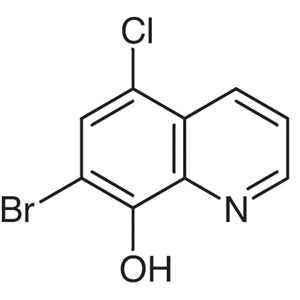
7-Bromo-5-chloro-8-hydroxyquinoline TCI B1190
Regular price From Rp 1.353.450,00Regular price