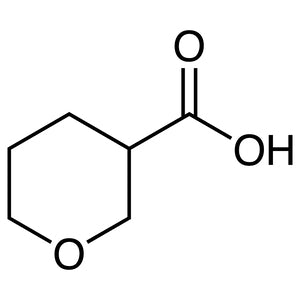
2-(2-Bromoethoxy)tetrahydro-2H-pyran is a chemical compound widely used in organic reactions for the synthesis of heterocyclic compounds. It serves as a crucial building block in laboratory settings, enabling the creation of complex molecular structures with cyclic frameworks, particularly those containing a pyran ring. This compound plays a significant role in the development of compounds with specific biological or chemical activities, making it an essential tool for researchers in various fields of chemistry. Its presence in synthetic pathways contributes to the advancement of pharmaceutical and material sciences.
The compound is chemically stable yet reactive enough to participate in a range of chemical reactions. Its stabilization with potassium carbonate (K2CO3) enhances its safety during storage and handling, reducing the risk of degradation. This makes it a preferred choice for laboratories that require reliable and consistent reagents for their experiments. The stability ensures that it maintains its chemical integrity under various reaction conditions, allowing for reproducible results in synthetic processes.
In Indonesian laboratories, 2-(2-Bromoethoxy)tetrahydro-2H-pyran is commonly used in organic chemistry research, especially in the study of heterocyclic synthesis. Due to its availability and quality, it is a favored option for both researchers and students engaged in advanced chemical experiments. Its versatility and reliability make it a valuable resource in the pursuit of scientific discovery and innovation.
Related TCI products
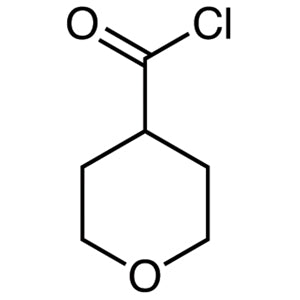
- TCI T3890 40191-32-0 Tetrahydro-2H-pyran-4-carbonyl Chloride
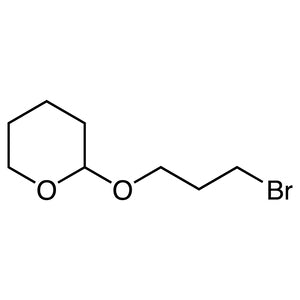
- TCI B3187 33821-94-2 2-(3-Bromopropoxy)tetrahydro-2H-pyran (stabilized with K2CO3)
- TCI C2072 42330-88-1 2-(3-Chloropropoxy)tetrahydro-2H-pyran
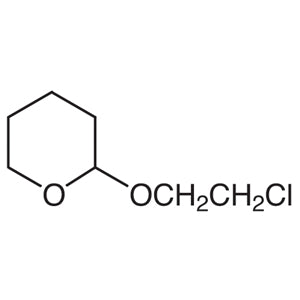
- TCI C1678 5631-96-9 2-(2-Chloroethoxy)tetrahydro-2H-pyran
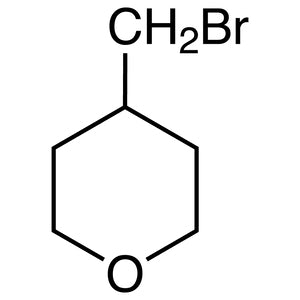
- TCI B6596 125552-89-8 4-(Bromomethyl)tetrahydro-2H-pyran
- TCI C2273 1768-64-5 4-Chlorotetrahydro-2H-pyran
- Heterocyclic Compound Synthesis: This compound is ideal for creating complex cyclic structures, particularly pyran-based molecules, due to its reactivity and stability.
- Organic Chemistry Research: It is widely used in experimental studies to develop new compounds with specific chemical or biological properties.
- Pharmaceutical Development: Its role in synthesizing compounds with potential therapeutic applications makes it valuable in drug discovery processes.
- Academic Research: It supports advanced chemical experiments in educational institutions, aiding in the training of future scientists.
- Industrial Chemical Processes: Its use in manufacturing processes helps in the production of specialized chemical products with controlled properties.
| Brand | TCI |
|---|---|
| CAS number | 17739-45-6 |
| Molecular formula | — |
| Purity | — |
| Category | Chemistry > Building Blocks > Heterocyclic Building Blocks |
| Pack sizes | Available in standard laboratory quantities |
| Physical form | Liquid |
| Storage | Store in a cool, dry place away from moisture and direct sunlight |
This compound should be stored in a cool, dry environment to maintain its stability and prevent degradation. It is recommended to use airtight containers to protect it from moisture and contaminants. Due to its stabilization with potassium carbonate, it is less reactive than its unstabilized form, but standard laboratory safety precautions should still be observed. Avoid exposure to heat and direct sunlight to ensure long-term preservation. Always handle with care, using appropriate personal protective equipment such as gloves and safety goggles to minimize risk. Proper labeling and storage conditions are essential to ensure safe handling and usage in laboratory settings.
—
Produk Terkait
-
Tetrahydro-2H-pyran-4-carbonylChloride TCI T3890
Regular price From Rp 1.431.150,00Regular priceRp 1.016.400,00Sale price From Rp 1.431.150,00 -
2-(3-Bromopropoxy)tetrahydro-2H-pyran(stabilizedwithK2CO3) TCI B3187
Regular price From Rp 1.988.700,00Regular priceRp 1.405.950,00Sale price From Rp 1.988.700,00 -
2-(3-Chloropropoxy)tetrahydro-2H-pyran TCI C2072
Regular price Rp 4.054.050,00Regular priceRp 2.850.750,00Sale price Rp 4.054.050,00 -
2-(2-Chloroethoxy)tetrahydro-2H-pyran TCI C1678
Regular price Rp 3.870.300,00Regular priceRp 2.721.600,00Sale price Rp 3.870.300,00 -
4-(Bromomethyl)tetrahydro-2H-pyran TCI B6596
Regular price From Rp 3.074.400,00Regular priceRp 2.165.100,00Sale price From Rp 3.074.400,00 -
4-Chlorotetrahydro-2H-pyran TCI C2273
Regular price From Rp 2.464.350,00Regular priceRp 1.738.800,00Sale price From Rp 2.464.350,00 -
4-Bromotetrahydro-2H-pyran TCI B5600
Regular price From Rp 1.113.000,00Regular priceRp 793.800,00Sale price From Rp 1.113.000,00 -
Tetrahydro-2H-pyran-3-carboxylicAcid TCI T4166
Regular price From Rp 1.458.450,00Regular priceRp 1.035.300,00Sale price From Rp 1.458.450,00