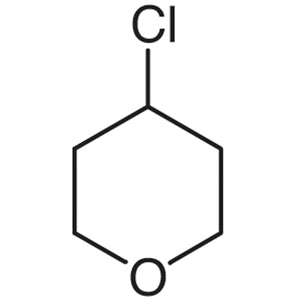
4-Chlorotetrahydro-2H-pyran is a chemical compound widely used in organic synthesis reactions within laboratory settings. It belongs to the class of heterocyclic compounds, which are essential in the development of complex molecular structures. This compound serves as a building block for various chemical transformations, particularly in pharmaceutical and organic chemistry research. Its versatility makes it a valuable resource for scientists aiming to modify molecular frameworks through substitution and ring-opening reactions.
The compound's stability and reactivity under different chemical conditions make it a preferred choice for laboratory applications. Its ability to interact with a variety of reagents allows for the synthesis of diverse chemical entities. The compound's solubility in organic solvents further enhances its utility, as it facilitates efficient separation and isolation processes. These properties contribute to its widespread use in both academic and industrial research environments.
In Indonesian laboratories, 4-Chlorotetrahydro-2H-pyran is commonly utilized in organic chemistry research, especially in the development of pharmaceutical compounds and industrial chemicals. It is a key component in experiments that require the synthesis of complex molecules. Many research institutions and universities in Indonesia rely on this compound for its reliability and effectiveness in chemical synthesis processes.
- Organic synthesis is a primary application where 4-Chlorotetrahydro-2H-pyran is used to create complex molecular structures through substitution and ring-opening reactions.
- Pharmaceutical research benefits from this compound as it is used in the development of new drug molecules and bioactive compounds.
- Industrial chemical production utilizes this material for the synthesis of various organic compounds used in manufacturing processes.
- Analytical chemistry experiments often incorporate this compound to study reaction mechanisms and chemical behavior under different conditions.
- Academic research in chemistry laboratories uses it as a fundamental building block for teaching and experimental purposes.
| Brand | TCI |
|---|---|
| CAS number | 1768-64-5 |
| Molecular formula | — |
| Purity | — |
| Category | Chemistry > Building Blocks > Heterocyclic Building Blocks |
| Pack sizes | Available in standard laboratory quantities |
| Physical form | Liquid |
| Storage | Store in a cool, dry place away from direct sunlight |
This compound should be stored in a cool, dry place, away from direct sunlight and sources of heat. It is recommended to use airtight containers to prevent exposure to moisture and air. Due to its chemical nature, it should be handled with appropriate personal protective equipment, such as gloves and safety goggles. It is important to ensure proper ventilation in the laboratory to minimize inhalation risks. The compound should not be stored near incompatible materials, such as strong oxidizers or acids. Regular inspection of storage containers is advised to maintain the integrity of the compound and ensure safe handling practices.
—
Produk Terkait
-
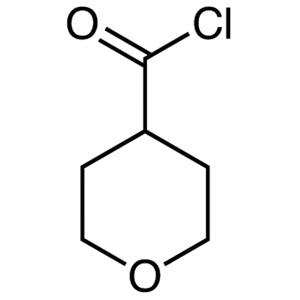
Tetrahydro-2H-pyran-4-carbonylChloride TCI T3890
Regular price From Rp 1.378.650,00Regular price -
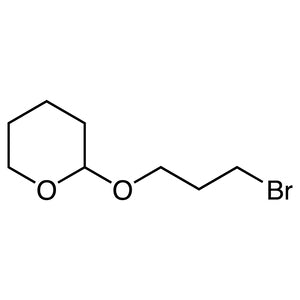
2-(3-Bromopropoxy)tetrahydro-2H-pyran(stabilizedwithK2CO3) TCI B3187
Regular price From Rp 1.936.200,00Regular price -
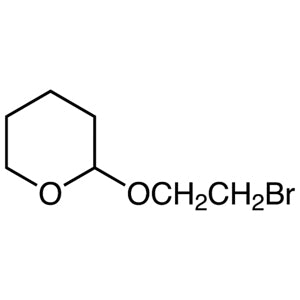
2-(2-Bromoethoxy)tetrahydro-2H-pyran(stabilizedwithK2CO3) TCI B2850
Regular price From Rp 1.749.300,00Regular price -
2-(3-Chloropropoxy)tetrahydro-2H-pyran TCI C2072
Regular price Rp 4.001.550,00Regular price -
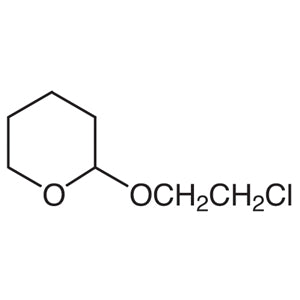
2-(2-Chloroethoxy)tetrahydro-2H-pyran TCI C1678
Regular price Rp 3.817.800,00Regular price -
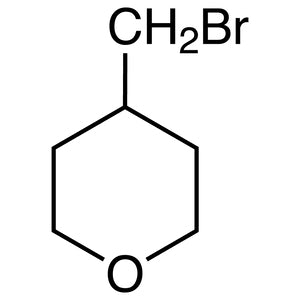
4-(Bromomethyl)tetrahydro-2H-pyran TCI B6596
Regular price From Rp 3.021.900,00Regular price -
4-Bromotetrahydro-2H-pyran TCI B5600
Regular price From Rp 1.060.500,00Regular price -
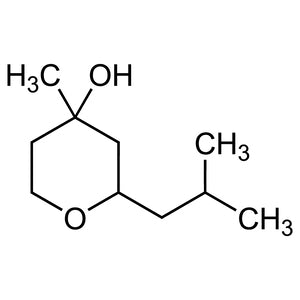
2-Isobutyl-4-methyltetrahydro-2H-pyran-4-ol(mixtureofisomers) TCI T4346
Regular price From Rp 1.378.650,00Regular price