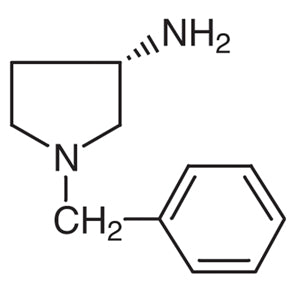
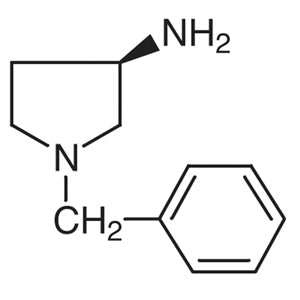
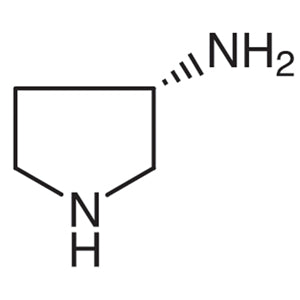
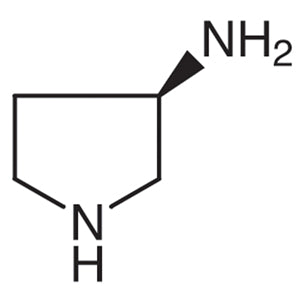
(3R)-(+)-1-(tert-Butoxycarbonyl)-3-aminopyrrolidine is a chiral building block widely used in asymmetric synthesis to construct complex molecular structures. This compound plays a crucial role in laboratories where the development of optically active compounds is essential. It is particularly valuable in the synthesis of molecules with specific stereochemistry, which is critical in pharmaceutical and industrial chemical applications. Its presence in research settings enables scientists to explore the properties of chiral compounds with high precision.
The compound's key feature is its asymmetric structure, which allows for the formation of optical isomers. This property makes it a preferred choice for researchers aiming to achieve controlled stereochemistry in their reactions. Its stability under standard laboratory conditions further enhances its reliability in various synthetic processes. Additionally, its compatibility with a range of chemical environments ensures its utility in diverse experimental setups.
In Indonesian laboratories, this compound is commonly used in organic chemistry research, especially in academic and research institutions. It supports the development of pharmacological compounds and industrial chemicals requiring precise stereochimical control. Its application is particularly relevant in the creation of new drug candidates and advanced chemical materials. The compound’s importance in both academic and industrial research makes it a valuable resource for chemists in Indonesia.
TCI brochures (PDF)
- Chiral Building Blocks 2025-04-14 · p. 3
Related TCI products
- TCI B2921 147081-44-5 (3S)-(-)-1-(tert-Butoxycarbonyl)-3-aminopyrrolidine
- TCI A1174 114715-38-7 (3S)-(+)-1-Benzyl-3-aminopyrrolidine
- TCI A1173 114715-39-8 (3R)-(-)-1-Benzyl-3-aminopyrrolidine
- TCI A1168 128345-57-3 (3S)-(-)-3-Aminopyrrolidine
- TCI A1167 116183-82-5 (3R)-(+)-3-Aminopyrrolidine
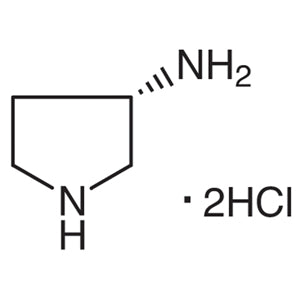
- TCI A1054 116183-83-6 (3S)-(+)-3-Aminopyrrolidine Dihydrochloride
- Asymmetric Synthesis: This compound is ideal for creating chiral molecules with specific stereochemistry, essential in pharmaceutical research.
- Drug Development: Its role in synthesizing optically active compounds makes it critical for the development of new therapeutic agents.
- Organic Chemistry Research: Widely used in laboratories for building complex molecular structures with controlled stereochemistry.
- Industrial Chemical Synthesis: Applied in the production of chemicals requiring precise stereochimical control for industrial applications.
- Academic Research: Frequently utilized in Indonesian universities and research centers for teaching and experimental studies in organic chemistry.
| Brand | TCI |
|---|---|
| CAS number | 147081-49-0 |
| Molecular formula | — |
| Purity | — |
| Category | Chemistry > Asymmetric Synthesis > Chiral Building Blocks |
| Pack sizes | Available in various quantities as per standard laboratory supply |
| Physical form | Solid |
| Storage | Store in a cool, dry place away from light and moisture |
This compound should be stored in a cool, dry environment, away from direct light and moisture to maintain its stability. It is recommended to use airtight containers to prevent exposure to air and humidity. Due to its chemical nature, it should be handled with appropriate personal protective equipment, such as gloves and safety goggles. Proper ventilation is essential when working with this material to minimize inhalation risks. It is important to keep it away from incompatible substances to avoid any chemical reactions. Regular inspection of storage conditions ensures the compound remains in optimal condition for use in laboratory applications.
—
Produk Terkait
-
(3S)-(-)-1-(tert-Butoxycarbonyl)-3-aminopyrrolidine TCI B2921
Regular price From Rp 1.192.800,00Regular priceRp 849.450,00Sale price From Rp 1.192.800,00 -
(3S)-(+)-1-Benzyl-3-aminopyrrolidine TCI A1174
Regular price From Rp 5.617.500,00Regular priceRp 3.943.800,00Sale price From Rp 5.617.500,00 -
(3R)-(-)-1-Benzyl-3-aminopyrrolidine TCI A1173
Regular price From Rp 900.900,00Regular priceRp 645.750,00Sale price From Rp 900.900,00 -
(3S)-(-)-3-Aminopyrrolidine TCI A1168
Regular price From Rp 1.856.400,00Regular priceRp 1.313.550,00Sale price From Rp 1.856.400,00 -
(3R)-(+)-3-Aminopyrrolidine TCI A1167
Regular price From Rp 2.411.850,00Regular priceRp 1.702.050,00Sale price From Rp 2.411.850,00 -
(3S)-(+)-3-AminopyrrolidineDihydrochloride TCI A1054
Regular price From Rp 4.399.500,00Regular priceRp 3.092.250,00Sale price From Rp 4.399.500,00 -
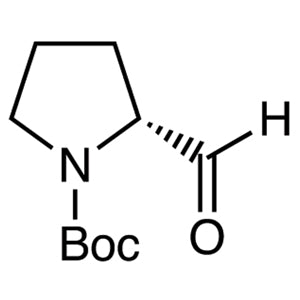
N-(tert-Butoxycarbonyl)-D-prolinal TCI B5395
Regular price Rp 1.934.100,00Regular priceRp 1.368.150,00Sale price Rp 1.934.100,00 -
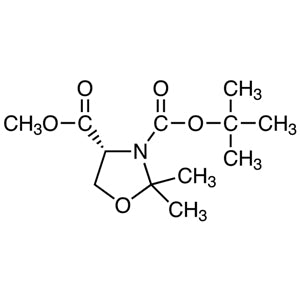
(R)-(+)-3-(tert-Butoxycarbonyl)-4-methoxycarbonyl-2,2-dimethyl-1,3-oxazolidine TCI B5352
Regular price From Rp 1.643.250,00Regular priceRp 1.164.450,00Sale price From Rp 1.643.250,00