(3S)-(-)-1-(tert-Butoxycarbonyl)-3-aminopyrrolidine is a chiral building block widely used in asymmetric synthesis to create molecules with specific biological activities. This compound plays a crucial role in organic chemistry research, particularly in the development of optically active compounds. It is essential for laboratories aiming to achieve precise control over molecular configurations during complex syntheses. Its chiral nature allows for the formation of different isomers, making it a valuable tool in the synthesis of bioactive molecules.
The compound's unique properties, including its ability to react with various reagents and its stability under specific reaction conditions, make it a preferred choice for researchers. Its chiral center ensures that only the desired enantiomer is formed, which is critical in pharmaceutical and medicinal chemistry. This specificity enhances the efficiency of synthesis processes and reduces the need for additional purification steps.
In Indonesian laboratories, this compound is commonly used by chemists and pharmacologists in the development of new therapeutic agents. It is also integral to research in academic and institutional settings focused on the synthesis of biologically active compounds. Its application spans across both academic and industrial research, supporting advancements in drug discovery and chemical innovation.
TCI brochures (PDF)
- Chiral Building Blocks 2025-04-14 · p. 3
Related TCI products
- TCI B2920 147081-49-0 (3R)-(+)-1-(tert-Butoxycarbonyl)-3-aminopyrrolidine
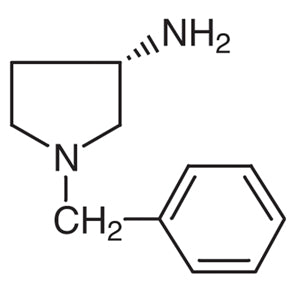
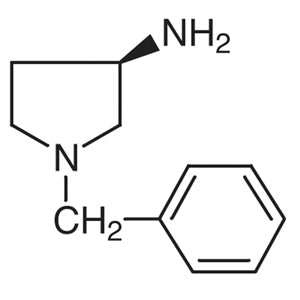
- TCI A1174 114715-38-7 (3S)-(+)-1-Benzyl-3-aminopyrrolidine
- TCI A1173 114715-39-8 (3R)-(-)-1-Benzyl-3-aminopyrrolidine
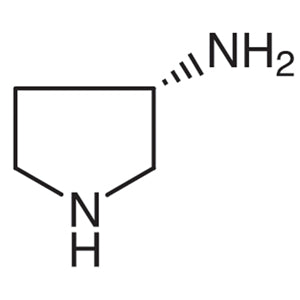
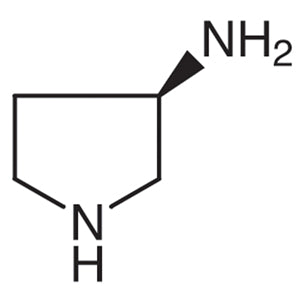
- TCI A1168 128345-57-3 (3S)-(-)-3-Aminopyrrolidine
- TCI A1167 116183-82-5 (3R)-(+)-3-Aminopyrrolidine
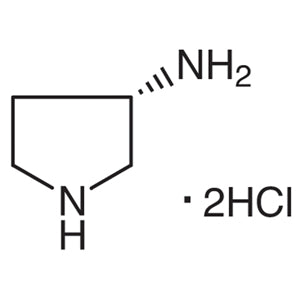
- TCI A1054 116183-83-6 (3S)-(+)-3-Aminopyrrolidine Dihydrochloride
- Asymmetric Synthesis: This compound is ideal for creating enantiomerically pure compounds, which is essential in pharmaceutical research where stereochemistry significantly affects biological activity.
- Organic Chemistry Research: Its chiral structure makes it a key component in the synthesis of optically active molecules, supporting studies in natural product chemistry and drug development.
- Bioactive Compound Development: It is used in the design of new therapeutic agents, enabling the creation of molecules with specific interactions in biological systems.
- Academic and Industrial Research: Widely utilized in both educational and commercial laboratories for training and innovation in chemical synthesis techniques.
- Chiral Building Block Applications: It serves as a foundational element in the construction of complex molecules requiring precise stereochemical control.
| Brand | TCI |
|---|---|
| CAS number | 147081-44-5 |
| Molecular formula | — |
| Purity | — |
| Category | Chemistry > Asymmetric Synthesis > Chiral Building Blocks |
| Pack sizes | Available in various quantities as per supplier specifications |
| Physical form | Solid (as per standard product description) |
| Storage | Store in a cool, dry place away from light and moisture |
This compound should be stored in a cool, dry environment, away from direct sunlight and moisture to maintain its chemical integrity. It is recommended to use airtight containers made of glass or high-density polyethylene to prevent contamination and degradation. Due to its chiral nature, it is important to handle it with care to avoid any unintended racemization during synthesis. Laboratories should ensure that proper ventilation is maintained when working with this material to minimize exposure. Always follow standard safety protocols, including the use of personal protective equipment, to ensure safe handling and storage.
—
Produk Terkait
-
(3R)-(+)-1-(tert-Butoxycarbonyl)-3-aminopyrrolidine TCI B2920
Regular price From Rp 1.590.750,00Regular priceRp 1.127.700,00Sale price From Rp 1.590.750,00 -
(3S)-(+)-1-Benzyl-3-aminopyrrolidine TCI A1174
Regular price From Rp 5.617.500,00Regular priceRp 3.943.800,00Sale price From Rp 5.617.500,00 -
(3R)-(-)-1-Benzyl-3-aminopyrrolidine TCI A1173
Regular price From Rp 900.900,00Regular priceRp 645.750,00Sale price From Rp 900.900,00 -
(3S)-(-)-3-Aminopyrrolidine TCI A1168
Regular price From Rp 1.856.400,00Regular priceRp 1.313.550,00Sale price From Rp 1.856.400,00 -
(3R)-(+)-3-Aminopyrrolidine TCI A1167
Regular price From Rp 2.411.850,00Regular priceRp 1.702.050,00Sale price From Rp 2.411.850,00 -
(3S)-(+)-3-AminopyrrolidineDihydrochloride TCI A1054
Regular price From Rp 4.399.500,00Regular priceRp 3.092.250,00Sale price From Rp 4.399.500,00 -
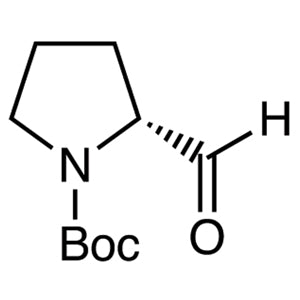
N-(tert-Butoxycarbonyl)-D-prolinal TCI B5395
Regular price Rp 1.934.100,00Regular priceRp 1.368.150,00Sale price Rp 1.934.100,00 -
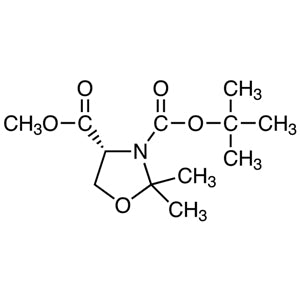
(R)-(+)-3-(tert-Butoxycarbonyl)-4-methoxycarbonyl-2,2-dimethyl-1,3-oxazolidine TCI B5352
Regular price From Rp 1.643.250,00Regular priceRp 1.164.450,00Sale price From Rp 1.643.250,00