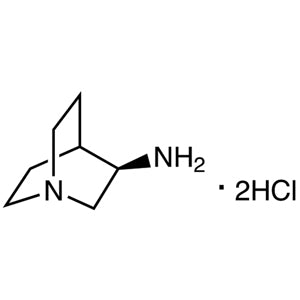
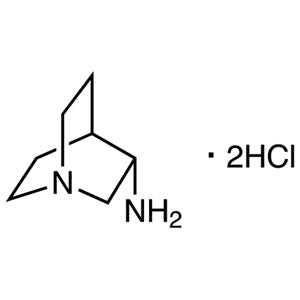
(3S)-(+)-3-Aminopyrrolidine Dihydrochloride is a chiral compound widely used in asymmetric synthesis to construct molecular structures with specific biological activities. This material plays a crucial role in organic chemistry laboratories, where it serves as a building block for creating complex molecules with defined stereochemistry. Its utility extends to pharmaceutical and chemical research, where precise control over molecular configuration is essential. As a chiral compound, it enables researchers to explore stereochemical effects and develop compounds with enhanced biological properties.
The compound is valued for its stability under various experimental conditions and its ability to participate in a wide range of chemical reactions. Its solid form and ease of handling make it suitable for use in both small-scale and large-scale laboratory settings. The compound's chiral nature ensures that it can be used to selectively influence reaction outcomes, making it a preferred choice for researchers focused on asymmetric synthesis and stereoselective reactions. Additionally, its availability in standardized forms supports reproducibility and consistency in experimental results.
In Indonesian laboratories, (3S)-(+)-3-Aminopyrrolidine Dihydrochloride is commonly used in organic chemistry research, drug development, and molecular reactivity studies. Its role in creating chiral intermediates is vital for the synthesis of pharmaceutical compounds with specific therapeutic effects. The compound's versatility and reliability make it a key component in many research projects aimed at advancing chemical and medicinal science.
TCI brochures (PDF)
- Chiral Building Blocks 2025-04-14 · p. 2
Related TCI products
- TCI B2921 147081-44-5 (3S)-(-)-1-(tert-Butoxycarbonyl)-3-aminopyrrolidine
- TCI B2920 147081-49-0 (3R)-(+)-1-(tert-Butoxycarbonyl)-3-aminopyrrolidine
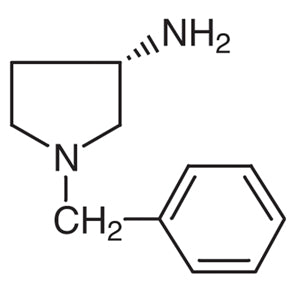
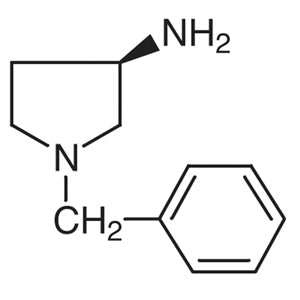
- TCI A1174 114715-38-7 (3S)-(+)-1-Benzyl-3-aminopyrrolidine
- TCI A1173 114715-39-8 (3R)-(-)-1-Benzyl-3-aminopyrrolidine
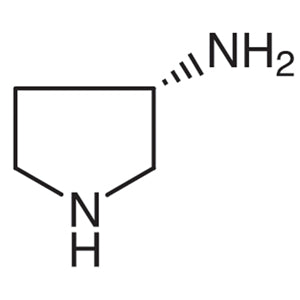
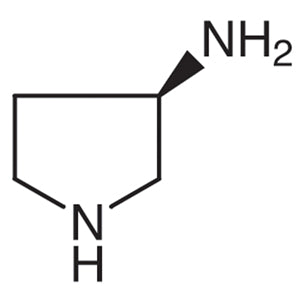
- TCI A1168 128345-57-3 (3S)-(-)-3-Aminopyrrolidine
- TCI A1167 116183-82-5 (3R)-(+)-3-Aminopyrrolidine
- Asymmetric synthesis is a key application where this compound is used to create chiral molecules with specific stereochemical configurations, enabling the development of pharmaceuticals with enhanced biological activity.
- Organic chemistry research benefits from this compound's ability to participate in various chemical reactions, allowing for the synthesis of complex molecular structures with controlled stereochemistry.
- Drug development projects often utilize this compound to generate chiral intermediates, which are essential for the creation of active pharmaceutical ingredients with targeted therapeutic effects.
- Molecular reactivity studies rely on this compound to investigate stereochemical effects and understand how different molecular configurations influence chemical behavior.
- Chemical synthesis experiments use this compound as a chiral building block, supporting the production of compounds with precise stereochemical properties for further research and application.
| Brand | TCI |
|---|---|
| CAS number | 116183-83-6 |
| Molecular formula | — |
| Purity | — |
| Category | Chemistry > Asymmetric Synthesis > Chiral Building Blocks |
| Pack sizes | Available in various quantities as per standard laboratory supply |
| Physical form | Solid |
| Storage | Store in a cool, dry place away from moisture and direct sunlight |
This compound should be stored in a cool, dry environment to maintain its stability and prevent degradation. It is recommended to use airtight containers to protect it from moisture and humidity, which can affect its chemical integrity. Due to its solid form, it is easy to handle and measure in laboratory settings. Researchers should ensure proper ventilation when working with this compound to avoid inhalation of any airborne particles. It is important to follow standard laboratory safety protocols, including the use of personal protective equipment such as gloves and safety goggles. Proper storage and handling will help preserve the compound's effectiveness and ensure safe usage in chemical experiments.
—
Produk Terkait
-
(3S)-(-)-1-(tert-Butoxycarbonyl)-3-aminopyrrolidine TCI B2921
Regular price From Rp 1.192.800,00Regular priceRp 849.450,00Sale price From Rp 1.192.800,00 -
(3R)-(+)-1-(tert-Butoxycarbonyl)-3-aminopyrrolidine TCI B2920
Regular price From Rp 1.590.750,00Regular priceRp 1.127.700,00Sale price From Rp 1.590.750,00 -
(3S)-(+)-1-Benzyl-3-aminopyrrolidine TCI A1174
Regular price From Rp 5.617.500,00Regular priceRp 3.943.800,00Sale price From Rp 5.617.500,00 -
(3R)-(-)-1-Benzyl-3-aminopyrrolidine TCI A1173
Regular price From Rp 900.900,00Regular priceRp 645.750,00Sale price From Rp 900.900,00 -
(3S)-(-)-3-Aminopyrrolidine TCI A1168
Regular price From Rp 1.856.400,00Regular priceRp 1.313.550,00Sale price From Rp 1.856.400,00 -
(3R)-(+)-3-Aminopyrrolidine TCI A1167
Regular price From Rp 2.411.850,00Regular priceRp 1.702.050,00Sale price From Rp 2.411.850,00 -
(R)-(+)-3-AminoquinuclidineDihydrochloride TCI A2830
Regular price From Rp 1.483.650,00Regular priceRp 1.053.150,00Sale price From Rp 1.483.650,00 -
(S)-(-)-3-AminoquinuclidineDihydrochloride TCI A2434
Regular price Rp 1.483.650,00Regular priceRp 1.053.150,00Sale price Rp 1.483.650,00