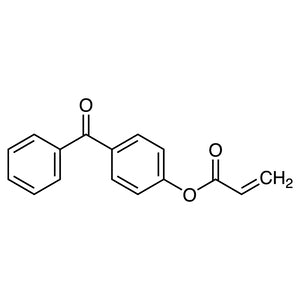
2-(3-Benzoylphenyl)propionitrile is a chemical compound widely used as a foundational building block in organic synthesis. It serves as a versatile intermediate in the creation of complex organic molecules, enabling researchers to explore various chemical transformations. In laboratory settings, this compound plays a critical role in facilitating reactions that involve nitrile functional groups, which are essential in many synthetic pathways. Its ability to participate in substitution and other organic reactions makes it a valuable tool for chemists working in both academic and industrial environments.
The compound's stability and reactivity make it a preferred choice for organic chemists. Its molecular structure, featuring both a nitrile group and a benzoyl group, contributes to its functional versatility. These groups allow it to interact with a wide range of reagents, making it suitable for multiple synthetic strategies. Additionally, its predictable chemical behavior ensures reliable outcomes in controlled laboratory conditions. The compound's resistance to degradation under certain conditions further enhances its usability and longevity in research applications.
In Indonesian laboratories, 2-(3-Benzoylphenyl)propionitrile is commonly used in organic chemistry research, particularly in higher education institutions and research organizations. Due to its availability and stability, it is a go-to compound for researchers aiming to develop new organic compounds. Its role in synthetic chemistry makes it an essential component in the toolkit of any laboratory focused on chemical innovation and discovery.
- Organic synthesis applications benefit from this compound's ability to participate in a variety of reactions, making it ideal for creating complex organic molecules.
- It is widely used in academic research settings where the development of new chemical structures is a priority.
- The compound's reactivity supports the creation of derivatives that are essential in pharmaceutical and material sciences.
- Its stability allows for reliable use in long-term research projects and repeated experimentation.
- It is frequently employed in the synthesis of compounds with potential applications in drug development and chemical engineering.
| Brand | TCI |
|---|---|
| CAS number | 42872-30-0 |
| Molecular formula | — |
| Purity | — |
| Category | Chemistry > Building Blocks > Non-Heterocyclic Building Blocks |
| Pack sizes | Available in various quantities as per supplier specifications |
| Physical form | Solid or liquid, depending on the specific product variant |
| Storage | Store in a cool, dry place away from direct sunlight |
This compound should be stored in a cool, dry environment, away from direct sunlight and sources of heat. It is recommended to use airtight containers to prevent moisture absorption and contamination. Due to its chemical nature, it should be handled with appropriate personal protective equipment, including gloves and safety goggles. Ensure proper ventilation in the laboratory when working with this compound to minimize exposure. Avoid contact with incompatible substances to maintain its stability and ensure safe laboratory practices. Regular monitoring of storage conditions is essential to maintain the compound's integrity and usability in research applications.
—
Produk Terkait
-
Propionitrile TCI P0514
Regular price From Rp 530.250,00Regular priceRp 386.400,00Sale price From Rp 530.250,00 -
3-(Methylamino)propionitrile TCI M2312
Regular price From Rp 2.041.200,00Regular priceRp 1.442.700,00Sale price From Rp 2.041.200,00 -
3-Benzoylpropionitrile TCI B5378
Regular price Rp 2.411.850,00Regular priceRp 1.702.050,00Sale price Rp 2.411.850,00 -
4-BenzoylphenylAcrylate TCI A3715
Regular price From Rp 1.590.750,00Regular priceRp 1.111.950,00Sale price From Rp 1.590.750,00 -
3-Bromopropionitrile TCI B1762
Regular price Rp 2.173.500,00Regular priceRp 1.535.100,00Sale price Rp 2.173.500,00 -
3-AminopropionitrileFumarate TCI A0796
Regular price From Rp 1.961.400,00Regular priceRp 1.387.050,00Sale price From Rp 1.961.400,00 -
3-Aminopropionitrile(stabilizedwithK2CO3) TCI A0408
Regular price Rp 2.384.550,00Regular priceRp 1.683.150,00Sale price Rp 2.384.550,00 -
3-Anilinopropionitrile TCI A0477
Regular price From Rp 1.140.300,00Regular priceRp 812.700,00Sale price From Rp 1.140.300,00