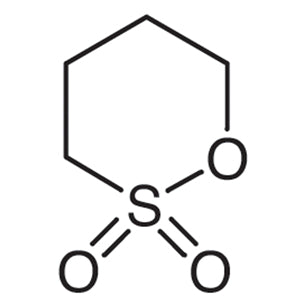
1,4-Butanesultam is a chemical compound widely used in laboratory settings for the synthesis of heterocyclic compounds. It serves as a key building block in organic chemistry, enabling the creation of complex molecular structures with biological activity. This compound is particularly valuable in research focused on the development of pharmaceuticals and agrochemicals due to its versatile reactivity and structural adaptability. Its role in the laboratory extends beyond mere reagent use, as it supports the design and synthesis of molecules with specific functional groups and stereochemistry.
The chemical properties of 1,4-Butanesultam make it a preferred choice for researchers. It exhibits good solubility in organic solvents such as ethyl acetate and acetone, facilitating efficient handling and reaction processes. Its stable nature under controlled conditions ensures minimal degradation during storage and use, which is critical for maintaining the integrity of experimental results. Additionally, its controlled reactivity allows for precise manipulation in synthetic pathways, making it ideal for applications requiring high accuracy and reproducibility.
In Indonesian laboratories, 1,4-Butanesultam is commonly used in chemical synthesis and research projects. It is a fundamental component in the development of heterocyclic compounds, particularly in the fields of pharmaceutical and agricultural chemistry. Its availability and reliability make it a go-to material for scientists working on complex molecular structures and bioactive compounds. Its role in supporting innovation and research in the chemical sciences is well established in the Indonesian scientific community.
- Synthetic chemistry for the preparation of heterocyclic compounds due to its structural versatility and reactivity.
- Pharmaceutical research for the development of bioactive molecules with specific functional groups and stereochemistry.
- Agrochemical synthesis as a building block for the creation of compounds with pesticidal or herbicidal properties.
- Organic chemistry experiments requiring controlled reactivity and stability in reaction conditions.
- Analytical chemistry applications for the study of molecular interactions and reaction mechanisms.
| Brand | TCI |
|---|---|
| CAS number | 37441-50-2 |
| Molecular formula | — |
| Purity | — |
| Category | Chemistry > Building Blocks > Heterocyclic Building Blocks |
| Pack sizes | Available in various quantities as per supplier specifications |
| Physical form | Solid (as per standard product description) |
| Storage | Store in a cool, dry place away from direct sunlight and moisture |
1,4-Butanesultam should be stored in a cool, dry environment to maintain its chemical stability and prevent degradation. It is recommended to keep the compound in a sealed container to minimize exposure to moisture and air. Suitable storage containers include glass or high-density polyethylene (HDPE) bottles with airtight closures. Handling should be done with appropriate personal protective equipment, such as gloves and safety goggles, to ensure laboratory safety. The compound is generally non-hazardous under normal conditions but should be handled with care to avoid contamination. Proper labeling and storage practices are essential to maintain the integrity of the material and ensure safe usage in laboratory settings.
—
Produk Terkait
-
1,4-Butanesultone TCI B0136
Regular price From Rp 1.723.050,00Regular priceRp 1.220.100,00Sale price From Rp 1.723.050,00 -
1-ButanesulfonylChloride TCI B0866
Regular price From Rp 2.016.000,00Regular priceRp 1.409.100,00Sale price From Rp 2.016.000,00 -
Sodium1-Butanesulfonate TCI B0379
Regular price From Rp 1.749.300,00Regular priceRp 1.223.250,00Sale price From Rp 1.749.300,00 -
Perfluoro-1-butanesulfonylFluoride TCI P1098
Regular price From Rp 1.405.950,00Regular priceRp 982.800,00Sale price From Rp 1.405.950,00