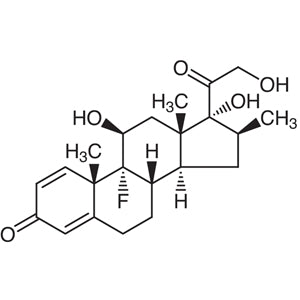
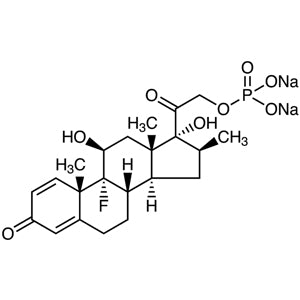
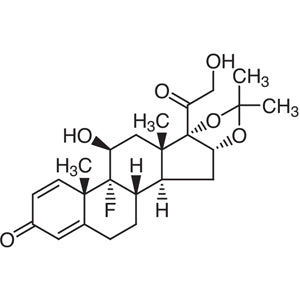
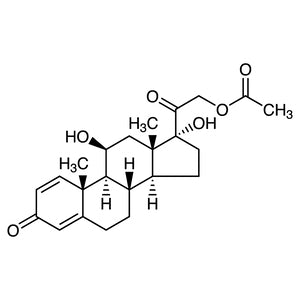
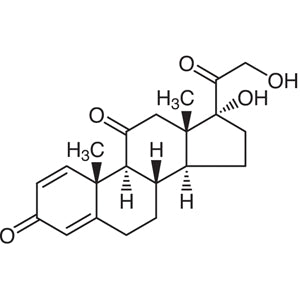
Betamethasone 17,21-Dipropionate is a chemical compound widely used in pharmaceutical research and biochemical studies. As a propionate derivative of betamethasone, it belongs to the class of synthetic corticosteroids, known for their potent anti-inflammatory, immunosuppressive, and anti-allergic properties. This compound plays a crucial role in laboratory settings where researchers aim to understand the mechanisms of corticosteroid action in both human and animal systems. Its chemical stability and solubility in organic solvents make it a versatile material for various experimental applications.
The compound's high purity and consistent physical and chemical properties make it a preferred choice for researchers. These characteristics ensure reliable results in experiments, which is essential for accurate scientific conclusions. Its stability under controlled conditions allows for long-term storage and repeated use, enhancing its value in laboratory workflows. Additionally, its solubility in organic solvents simplifies handling and integration into complex chemical processes, making it a go-to material for many research protocols.
In Indonesian laboratories, Betamethasone 17,21-Dipropionate is commonly used in pharmaceutical, biomedical, and health science research. It supports studies on drug development, therapeutic applications, and hormonal regulation. Researchers in educational and research institutions frequently utilize this compound to advance their work in these fields, contributing to scientific innovation and medical advancements.
TCI brochures (PDF)
- Anti-Rheumatoid Arthritis Ingredients 2025-01-29 · p. 1
- Steroids 2026-07-28 · p. 5
- Immune System, Inflammation, Allergy Research Reagents 2025-05-26 · p. 2
- Pharmaceutical Ingredients for Research and Experimental Use 2026-03-09 · p. 31
- Reagents for Biological Research 2025-03-11 · p. 46
- Pharmaceutical research for drug development and formulation studies due to its corticosteroid properties and chemical stability.
- Biochemical experiments to investigate the mechanisms of corticosteroid action in cellular and physiological systems.
- Hormonal therapy studies to explore the effects of synthetic corticosteroids on human and animal models.
- In vitro and in vivo testing for evaluating the efficacy and safety of corticosteroid-based treatments.
- Development of reagents and formulations for use in clinical and diagnostic applications.
| Brand | TCI |
|---|---|
| CAS number | 5593-20-4 |
| Molecular formula | — |
| Purity | — |
| Category | Life Science > Biochemicals and Reagents > Pharmaceutical Research Reagents |
| Pack sizes | Available in various packaging options for experimental use |
| Physical form | Solid (exact form may vary depending on packaging) |
| Storage | Store in a cool, dry place away from light and moisture |
Betamethasone 17,21-Dipropionate should be stored in a cool, dry environment, away from direct light and moisture to maintain its chemical stability. It is recommended to use airtight containers to prevent exposure to humidity and contaminants. Due to its potential chemical reactivity, it should be handled with appropriate personal protective equipment, such as gloves and safety goggles. In laboratory settings, it should be kept in a designated chemical storage area to ensure safety and compliance with standard operating procedures. Proper labeling and documentation are essential for safe handling and traceability in research environments.
—
Product Categories
- Biochemicals and ReagentsPharmaceutical Research Reagents (for Experimental Use)Anti-inflammatory Ingredients (for Research and Experimental Use)
- Biochemicals and ReagentsPharmaceutical Research Reagents (for Experimental Use)Anti-rheumatoid Arthritis Ingredients (for Research and Experimental Use)
- Biochemicals and ReagentsSteroidsPregnanes (Corticoids) [Steroids]
- Cell BiologyCell Signaling and NeuroscienceCytokines, Growth Factors and Hormones
- Cell BiologyCell Signaling and NeuroscienceNeuroscience
- Cell BiologyImmune System, Inflammation, Allergy ResearchAdrenocortical Hormones
- Pharmaceutical Development and Drug Discovery ResearchPharmaceutical Research Reagents (for Experimental Use)Anti-inflammatory Ingredients (for Research and Experimental Use)
- Pharmaceutical Development and Drug Discovery ResearchPharmaceutical Research Reagents (for Experimental Use)Anti-rheumatoid Arthritis Ingredients (for Research and Experimental Use)
Produk Terkait
-
BetamethasoneValerate TCI B4157
Regular price From Rp 1.405.950,00Regular priceRp 998.550,00Sale price From Rp 1.405.950,00 -
Betamethasone TCI B1837
Regular price From Rp 1.405.950,00Regular priceRp 998.550,00Sale price From Rp 1.405.950,00 -
BeclometasoneDipropionate TCI B4464
Regular price From Rp 2.411.850,00Regular priceRp 1.702.050,00Sale price From Rp 2.411.850,00 -
Betamethasone21-PhosphateDisodiumSalt TCI B4110
Regular price Rp 4.743.900,00Regular priceRp 3.332.700,00Sale price Rp 4.743.900,00 -
TriamcinoloneAcetonide TCI T2308
Regular price From Rp 1.431.150,00Regular priceRp 1.016.400,00Sale price From Rp 1.431.150,00 -
Triamcinolone TCI T2303
Regular price Rp 3.815.700,00Regular priceRp 2.683.800,00Sale price Rp 3.815.700,00 -
PrednisoloneAcetate TCI P1283
Regular price Rp 4.266.150,00Regular priceRp 2.998.800,00Sale price Rp 4.266.150,00 -
Prednisone TCI P1276
Regular price From Rp 1.643.250,00Regular priceRp 1.164.450,00Sale price From Rp 1.643.250,00