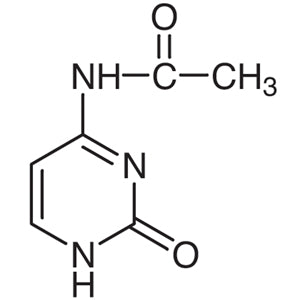
N4-Benzoylcytosine is a chemical compound widely used in laboratory settings for constructing complex molecular structures. As a heterocyclic building block, it plays a crucial role in organic chemistry research by enabling the synthesis of diverse compounds with specific functional properties. This compound is particularly valued for its ability to participate in various chemical reactions, making it an essential tool for researchers aiming to develop new materials or pharmaceutical compounds. Its versatility allows it to be integrated into a wide range of synthetic pathways, supporting innovation in both academic and industrial research environments.
The compound’s chemical stability and predictable reactivity make it a preferred choice for synthetic chemists. Its well-defined structure ensures consistent performance in laboratory experiments, allowing for accurate prediction of reaction outcomes. These properties contribute to its reliability in both small-scale and large-scale synthesis processes. Additionally, its compatibility with a variety of reaction conditions enhances its utility across different experimental setups. The combination of stability and reactivity ensures that N4-Benzoylcytosine remains a valuable resource for researchers working on complex molecular designs.
In Indonesian laboratories, N4-Benzoylcytosine is commonly used in organic chemistry research, especially in pharmaceutical and synthetic chemistry applications. Its role in creating complex molecular structures makes it a key component in the development of new drugs and advanced materials. Researchers in Indonesia rely on this compound for its consistent performance and predictable behavior, which are essential for successful chemical synthesis and experimentation.
TCI brochures (PDF)
- Nucleosides, Nucleotides, Nucleic Acids and Related Reagents 2026-03-23 · p. 8
- Organic synthesis in pharmaceutical research due to its ability to form complex molecular structures with high specificity.
- Development of new materials through controlled chemical reactions that benefit from its stable and reactive nature.
- Analytical chemistry applications where precise molecular building blocks are required for compound characterization.
- Structural modification of nucleosides and nucleotides in bioorganic chemistry studies for drug design purposes.
- Custom compound synthesis in academic and industrial laboratories requiring reliable and predictable chemical intermediates.
| Brand | TCI |
|---|---|
| CAS number | 26661-13-2 |
| Molecular formula | — |
| Purity | — |
| Category | Chemistry > Building Blocks > Heterocyclic Building Blocks |
| Pack sizes | Available in various quantities as per standard chemical supply practices |
| Physical form | Solid (as per typical chemical compound presentation) |
| Storage | Store in a cool, dry place away from direct sunlight |
N4-Benzoylcytosine should be stored in a cool, dry environment to maintain its chemical stability. It is recommended to keep the compound in a tightly sealed container to prevent moisture absorption and contamination. Suitable storage containers include glass or high-density polyethylene vessels that are resistant to chemical degradation. Laboratory personnel should handle the compound with appropriate personal protective equipment, such as gloves and safety goggles, to ensure safe handling. Avoid exposure to strong acids or bases, as they may affect the compound’s integrity. Regular inspection of storage conditions is advised to ensure optimal preservation of the material.
—
Produk Terkait
-
N4-Acetylcytosine TCI A2089
Regular price From Rp 637.350,00Regular priceRp 460.950,00Sale price From Rp 637.350,00 -
AdenineHydrochlorideHemihydrate TCI A0150
Regular price From Rp 717.150,00Regular priceRp 516.600,00Sale price From Rp 717.150,00 -
Uracil TCI U0013
Regular price From Rp 742.350,00Regular priceRp 534.450,00Sale price From Rp 742.350,00 -
4-Thiouracil TCI T2757
Regular price Rp 2.835.000,00Regular priceRp 1.998.150,00Sale price Rp 2.835.000,00 -
8-Bromo-7-(2-butyn-1-yl)-3-methylxanthine TCI B4454
Regular price Rp 1.458.450,00Regular priceRp 1.035.300,00Sale price Rp 1.458.450,00 -
O~6~-Benzylguanine TCI B4208
Regular price From Rp 1.220.100,00Regular priceRp 868.350,00Sale price From Rp 1.220.100,00 -
6-Benzyloxypurine TCI B3355
Regular price Rp 2.650.200,00Regular priceRp 1.869.000,00Sale price Rp 2.650.200,00 -
N6-Benzyladenine TCI B1088
Regular price From Rp 955.500,00Regular priceRp 683.550,00Sale price From Rp 955.500,00