

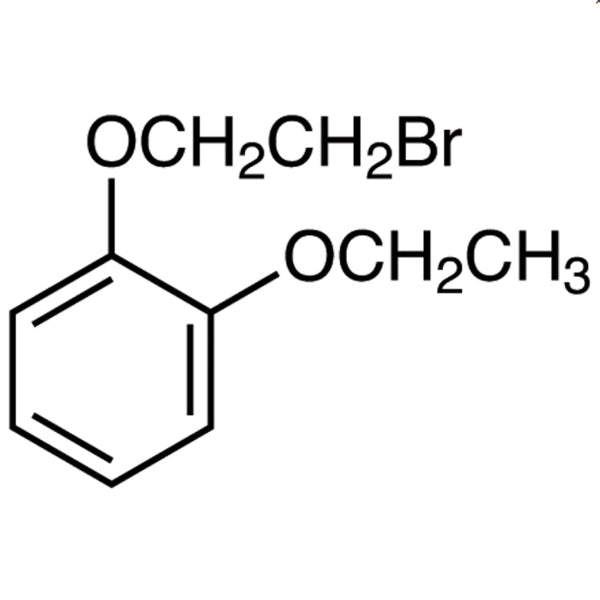
1-(2-Bromoethoxy)-2-ethoxybenzene is a chemical compound widely used in laboratory settings for various chemical experiments and scientific research. As an organic compound with a complex molecular structure, it plays a crucial role in synthetic chemistry, particularly in the development of new chemical compounds. Its unique reactivity makes it a valuable tool for researchers in both academic and industrial environments. This compound is often employed as a building block in the synthesis of other organic molecules, contributing to advancements in pharmaceutical and chemical research. Its presence in laboratory workflows highlights its importance in the pursuit of scientific discovery and innovation.
The compound's molecular structure, featuring bromoethoxy and ethoxy groups attached to a benzene ring, gives it distinct chemical properties that make it a preferred choice for specific reactions. Its reactivity allows it to participate in substitution and electrophilic reactions, making it suitable for a range of synthetic applications. The compound's versatility and chemical stability under controlled conditions further enhance its appeal for laboratory use. These characteristics ensure that it remains a reliable and effective material for researchers working on complex chemical processes and molecular transformations.
In Indonesian laboratories, 1-(2-Bromoethoxy)-2-ethoxybenzene is commonly used in scientific research, particularly in academic institutions and research centers. It supports studies in organic chemistry and pharmacology, contributing to the development of new compounds and therapeutic agents. Its availability and reliability make it an essential component for experimental work, ensuring that researchers can conduct their studies with confidence and precision.
Related TCI products
- Organic synthesis is a key application where this compound serves as a versatile building block for creating complex molecules.
- Pharmaceutical research benefits from its reactivity, allowing the development of new drugs and therapeutic agents.
- Chemical reaction studies utilize its unique structure to investigate substitution and electrophilic mechanisms.
- Academic research in Indonesian universities relies on this compound for teaching and experimental purposes.
- Industrial chemical processes incorporate it as a component in the production of specialty chemicals and intermediates.
| Brand | TCI |
|---|---|
| CAS number | 3259-03-8 |
| Molecular formula | — |
| Purity | — |
| Category | TCI |
| Pack sizes | — |
| Physical form | — |
| Storage | Store in a cool, dry place away from light |
This compound should be stored in a cool, dry environment, away from direct sunlight and sources of heat. It is recommended to use airtight containers to prevent exposure to moisture and air, which could affect its stability. Due to its chemical reactivity, it should be handled with appropriate personal protective equipment, including gloves and safety goggles. In laboratory settings, it should be stored separately from incompatible substances to avoid any potential chemical interactions. Proper labeling and secure storage are essential to ensure safety and maintain the integrity of the compound during handling and use.
—
Produk Terkait
-
1-(2-Bromoethoxy)-4-chlorobenzene TCI B4298
Regular price From Rp 1.829.100,00Regular priceRp 1.278.900,00Sale price From Rp 1.829.100,00
