1-(2-Bromoethoxy)-4-chlorobenzene is a chemical compound widely used as a foundational building block in the synthesis of complex organic compounds. This versatile reagent plays a crucial role in laboratory settings, where it is employed to create aromatic structures with halogen and alkoxide substituents. Its presence in various chemical reactions makes it an essential component for researchers working in organic chemistry and pharmacology. The compound's ability to participate in substitution and electrophilic reactions enhances its utility in the development of new chemical entities.
The chemical properties of 1-(2-Bromoethoxy)-4-chlorobenzene make it a preferred choice for synthetic chemists. Its stability under controlled conditions, combined with its reactivity, allows it to be used in a wide range of reaction types. The presence of bromo and chloro groups contributes to its reactivity, enabling it to be a key intermediate in the synthesis of more complex molecules. Its solubility in organic solvents further simplifies its handling and application in laboratory processes, making it a reliable and efficient reagent.
In Indonesian laboratories, this compound is commonly utilized by researchers and students in the fields of organic chemistry, pharmaceutical sciences, and materials science. It is a fundamental tool in the development of new compounds and is frequently used in academic and industrial research settings. Its availability and chemical properties make it an essential component of many synthetic pathways, supporting both educational and practical applications in the chemical sciences.
Related TCI products
- TCI B2278 18995-35-2 1-tert-Butoxy-4-chlorobenzene
- TCI T2035 51527-73-2 2,4,6-Trichlorobenzenesulfonyl Chloride
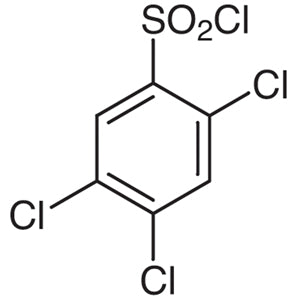
- TCI B0247 15945-07-0 2,4,5-Trichlorobenzenesulfonyl Chloride
- TCI T0628 62625-17-6 Potassium 2,4,5-Trichlorobenzenesulfonate
- TCI D4222 6579-54-0 2,6-Dichlorobenzenesulfonyl Chloride
- TCI D4037 16271-33-3 2,4-Dichlorobenzenesulfonyl Chloride
- Organic Synthesis: This compound is ideal for creating complex aromatic structures with halogen and alkoxide substituents, making it a key reagent in the development of new chemical entities.
- Pharmacological Research: Its reactivity and structural versatility make it suitable for the synthesis of pharmaceutical compounds, supporting drug discovery and development efforts.
- Materials Science: The compound's chemical properties enable its use in the creation of functional materials, aiding in the development of advanced materials with specific chemical functionalities.
- Academic Research: It is widely used in university laboratories for teaching and research, providing students with hands-on experience in synthetic chemistry techniques.
- Industrial Chemistry: Its stability and reactivity make it a valuable component in industrial chemical processes, supporting the production of specialty chemicals and intermediates.
| Brand | TCI |
|---|---|
| CAS number | 2033-76-3 |
| Molecular formula | — |
| Purity | — |
| Category | Chemistry > Building Blocks > Non-Heterocyclic Building Blocks |
| Pack sizes | Available in various quantities as per standard laboratory supply |
| Physical form | Solid or liquid, depending on the specific formulation |
| Storage | Store in a cool, dry place away from direct sunlight and incompatible substances |
This compound should be stored in a cool, dry environment, away from direct sunlight and sources of heat. It is recommended to use airtight containers made of glass or high-density polyethylene to prevent contamination and maintain chemical integrity. Due to its reactivity, it should be kept away from incompatible substances such as strong oxidizers and strong bases. Proper ventilation is essential when handling this material to minimize exposure. Laboratory personnel should wear appropriate personal protective equipment, including gloves, safety goggles, and a lab coat, to ensure safe handling and reduce the risk of chemical exposure. Regular monitoring of storage conditions is advised to maintain the compound's stability and effectiveness in laboratory applications.
—
Produk Terkait
-
1-tert-Butoxy-4-chlorobenzene TCI B2278
Regular price Rp 3.075.450,00Regular priceRp 2.150.400,00Sale price Rp 3.075.450,00 -
2,4,6-TrichlorobenzenesulfonylChloride TCI T2035
Regular price From Rp 2.016.000,00Regular priceRp 1.409.100,00Sale price From Rp 2.016.000,00 -
2,4,5-TrichlorobenzenesulfonylChloride TCI B0247
Regular price From Rp 2.439.150,00Regular priceRp 1.705.200,00Sale price From Rp 2.439.150,00 -
Potassium2,4,5-Trichlorobenzenesulfonate TCI T0628
Regular price Rp 2.359.350,00Regular priceRp 1.649.550,00Sale price Rp 2.359.350,00 -
2,6-DichlorobenzenesulfonylChloride TCI D4222
Regular price From Rp 505.050,00Regular priceRp 352.800,00Sale price From Rp 505.050,00 -
2,4-DichlorobenzenesulfonylChloride TCI D4037
Regular price From Rp 1.035.300,00Regular priceRp 723.450,00Sale price From Rp 1.035.300,00 -
2,3-DichlorobenzenesulfonylChloride TCI D3568
Regular price Rp 1.298.850,00Regular priceRp 908.250,00Sale price Rp 1.298.850,00 -
3,5-DichlorobenzenesulfonylChloride TCI D3503
Regular price From Rp 1.273.650,00Regular priceRp 890.400,00Sale price From Rp 1.273.650,00